
Dangerous Moments at Playa de Palma: Knife, Theft and the Question of More Security
Dangerous Moments at Playa de Palma: Knife, Theft and the Question of More Security
At Playa de Palma a German holidaymaker is said to have threatened tourists with a kitchen knife. Who protects beach visitors during the day?
Dangerous Moments at Playa de Palma: Knife, Theft and the Question of More Security
Between Balnearios 5 and 6 a German national was arrested — a judge ordered pretrial detention
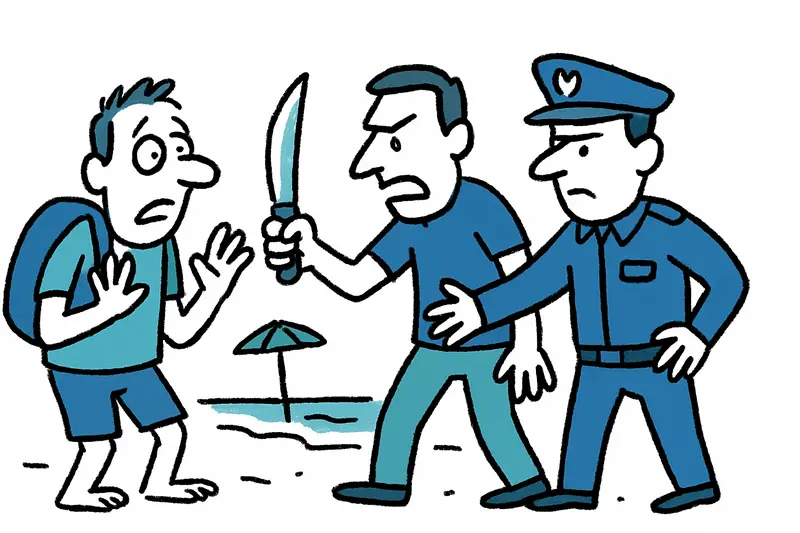
On 6 June 2026 an incident occurred at Playa de Palma that gives cause for concern: according to authorities, a German holidaymaker allegedly distracted several people to steal a pack of tobacco. When the victims confronted him, the man is said to have pulled a kitchen knife and threatened them with death. The Guardia Civil and the Policía Nacional found the suspect shortly afterwards nearby; a judge ordered pretrial detention.
Key question: How safe is Playa de Palma for people who come here to swim, stroll or work — and what gaps does this incident reveal?
Reality check: The facts are sparse but serious. A knife on the beach promenade is not a trivial matter. The order for pretrial detention shows that the justice system considers the allegations serious enough to temporarily remove the man from public life. At the same time, publicly available reliable details are lacking: Was the alleged theft part of a series? Did the accused have prior convictions or mental health issues? Were there eyewitnesses, and how quickly did emergency services respond? Such questions remain unanswered — and that is a problem for public understanding.
Critical analysis: Playa de Palma is a hectic place. Between sun loungers, umbrellas and the balnearios you find day-trippers, families with small children, street vendors and catering staff who set up tables early in the morning. In high season this means narrow paths, many distractions and short observation periods for unrest. That facilitates pickpockets' distraction techniques and gives those with malicious intent access to potentially dangerous items. When a knife in someone's hand escalates a dispute or theft, a minor incident can quickly become a criminal act with high risk potential (see how a verbal exchange escalated in another case).
What is missing from the public debate: the discussion usually stops at the headline. Reliable information about prior convictions, how the police handle weapons offenses on the beach and prevention measures for tourism staff rarely appears. There are no clear figures on checks at beach accesses, inventories of knife and weapon finds during the season months, or statements about how quickly police and rescue services arrived at this specific location. Even routine controls have sparked controversy in the past; readers can consult reports of routine checks that ended in scuffles and arrests.
An everyday scene from Palma: In the morning, shortly after seven, the clean-up along the Paseo at Playa de Palma begins. The waves roll in, the smell of coffee rises from small cafés, delivery vans squeeze between umbrella poles and bicycle couriers. A hotel employee pushes a crate of fresh towels past; two retirees struggle with their walkers over the warm sand. In such a hustle and bustle a tense situation can quickly go unnoticed — until the sirens arrive.
Concrete approaches: We need measures that work in practice and can be implemented quickly. 1) Visible presence: Foot patrols by the Policía Local or Policía Nacional on the promenade during peak times increase the sense of security and deter potential offenders. 2) Strengthen cooperation: Better information exchange between hoteliers, beach-bar operators and police — for example a local WhatsApp or messenger group for danger reports, moderated by an authority. 3) Prevention training: Short trainings for service staff, beach vendors and lifeguards to recognize risky behavior patterns and report incidents. 4) Infrastructure: More public emergency call posts or SOS buttons along the promenade and better lighting in the early morning and evening hours. 5) Make legal steps visible: Increased checks at entrances and exits to the promenade, targeted searches when there is reasonable suspicion and transparent statistics on knife finds.
Longer term, education helps: multilingual information boards for tourists about codes of conduct, safe routes and contact points; decentralized prevention campaigns in hotels and among sun-lounger rental operators. This is not alarmism but everyday hygiene in a region that depends heavily on tourism.
Pointed conclusion: A kitchen knife at Playa de Palma must not become normal. The current case shows how quickly an alleged theft can become a threatening situation. The authorities' response and pretrial detention are first steps; even more important, however, are visible, practical measures on site — so that parents can continue to let their children play carefree on the beach and the stretch between Balneario 5 and 6 does not become a place of fear.
Anyone at Playa de Palma should stay alert: keep bags closed, report suspicious behavior and keep distance if in doubt. The island is loud, lively and full of tourism — but that must not mean that safety gaps are accepted.
Frequently asked questions
What is the weather usually like in Mallorca in spring?
Can you swim in Mallorca in early spring?
What should I pack for Mallorca in spring?
Is spring a good time to visit Mallorca?
What is Palma like in spring?
What is Sóller like in spring?
What is Valldemossa like in spring?
What outdoor activities are best in Mallorca during spring?
Similar News

Adrien Brody strolls through Mercat de l'Olivar – celebrity visit leading to Sa Pobla
Actor Adrien Brody was casually spotted at the Mercat de l’Olivar: tapas, fish stalls and later a stop in Sa Pobla spark...
Who can pick up whom? The complicated life of Mallorca's taxis
Three years after the inter-municipal service, empty runs are rarer — but there is a lack of equal treatment, transparen...

When the Tap Only Runs Sometimes: Why Municipalities in the Balearic Islands Are Now Rationing Water
Deià, Valldemossa, Esporles, Sóller and several places on Menorca are scaling back water supply. Who is responsible, why...
Battle for the Ramp: Why Cala Gamba Needs More Than Enforcement
The Guardia Civil intervened in Cala Gamba — residents breathed a sigh of relief, but unease remains. Key question: Are ...

He dances at the Duty-Free: How an airport employee brings a smile to Palma
A Duty-Free employee at Palma Airport created a viral TikTok with dancing breaks. Why the scene is more than just an int...
More to explore
Discover more interesting content

Boat Tour with BBQ along Es Trenc Beach

Private transfer from Mallorca Airport (PMI) to Pollensa
