
Weeks-long search in Mallorca: Missing expat contacts family — questions remain
Weeks-long search in Mallorca: Missing expat contacts family — questions remain
A 33-year-old woman who had been reported missing in Palma since mid-April contacted her family by phone and, according to relatives, is well. Why the search took so long and why the Policia Nacional did not confirm it remains unclear.
Weeks-long search in Mallorca: Missing expat contacts family — and leaves questions behind
Key question
Key question: How could a woman who was reportedly robbed at Palma's city beach in mid-April and had since been considered missing only be located by her family weeks later — and what does this say about procedures, communication and assistance on the ground?
Summary
According to the family, the 33-year-old expat contacted them by phone and is "well." She was reportedly seen in a hostel and later recognized in a shop where a TV report was shown to staff. An official confirmation from the Policia Nacional is still outstanding. The relatives sharply criticized the handling of the case and say they even hired a private detective.
Critical analysis
The chronology as described by the family: contact was lost in mid-April in Palma, allegedly after a theft on the beach in which her phone, ID and money were taken. Weeks later a call comes — enough to trigger relief. Nevertheless gaps remain. Why could a person who apparently regularly visited the police station to retrieve personal items not have been reported earlier as present or systematically checked? Why has the police unit that normally handles missing person reports not issued a brief explanatory statement?
From our perspective there are several possible reasons: data gaps in reports, prioritization in the daily routine of a busy island station in early summer, language barriers between those affected and officers, or simply information loss when reports come in via different channels. Not all of these explanations are reassuring — they indicate structural weaknesses that affect more than just this single case. This is seen in New leads in the Malén Ortiz case: Why answers in Mallorca are taking so long.
What is missing from the public debate
The public debate usually focuses on the happy ending — the woman was found — and on criticism of the police. What is asked too rarely: How do the procedures work in practice? Are there binding protocols when a person reported missing later shows up at a police station "only asking about belongings"? Who verifies identity, who links reports from different sources (family, hostel, shops)? And finally: what support is available for people without documents or a phone who cannot immediately organize help themselves?
Similar questions have been raised in other island incidents, for example 18 People Missing off Mallorca — A Call to Politics and Society and Missing on Lombok: Family from Palma Demands Answers.
Everyday scene from Palma
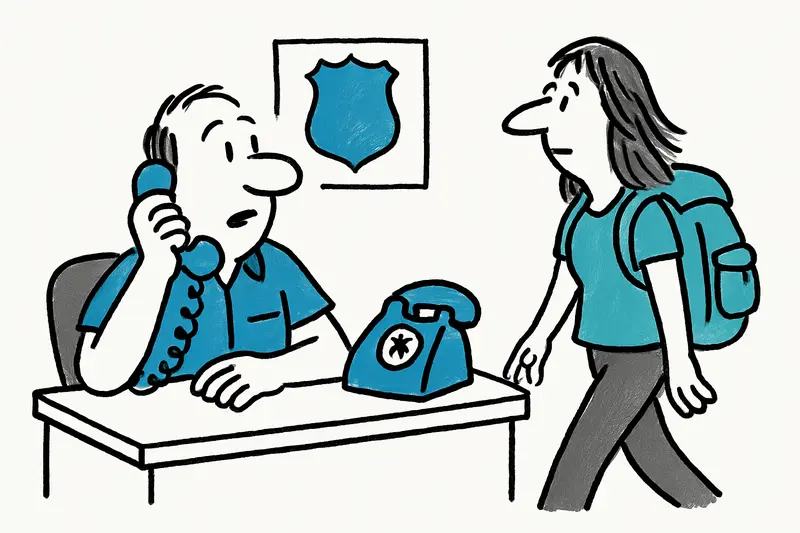
It is early morning on the Passeig on a hot June day. On the city beach you can hear the gentle rustle of the sea, the bucket cart clatters, vendors with ice cream chat. In front of the police station a woman strolls by carrying a simple backpack. For locals it is a normal sight; for relatives who have been waiting for weeks, every shadow is a glimmer of hope. Such scenes show how thin the line between everyday life and exception can be — and how easily a person can be overlooked amid the island's routine.
Concrete solutions
1) Unified reporting and linking protocols: When a missing-person report is filed, visible notices must be entered in all relevant systems so that any later appearance at a station can be immediately cross-checked. 2) Rapid language and support services: On a holiday island language barriers are everyday. Mobile interpreting services or clearly marked information in several languages at stations and tourist points could speed things up. 3) Training for hostels and businesses: Training on how to act when a missing person is suspected — whom to inform, how to proceed carefully, which documents to secure — would help resolve cases more quickly. 4) Digital emergency file for travelers: It's recommended that expats and travelers store a secure contact list (emergency contact, copies of documents in the cloud, PINs for lost devices) so relatives can receive verifiable information faster. 5) Transparency obligation: Police authorities should briefly and clearly explain why searches are ended, without disclosing operational details.
Concise conclusion
It is fortunate that the woman was found alive and returned to her family. Still, relief is no substitute for answers. On an island whose summer brings a pulse and commuters from around the world, the system must not treat human emergencies as a footnote. Anyone who works, shops or lies on the beach in Palma should know: a lost phone, a lost document — the chain of help must engage immediately — otherwise all that remains may be a call and many unanswered questions.
For the woman's family: the happy ending does not change that they had to spend time, money and nerves searching. For the island: improvement is only possible if gaps are identified and addressed — otherwise the same bureaucratic grinding will repeat while people get lost between beach and police station.
Frequently asked questions
What weather can I expect in Mallorca in late May?
Is it warm enough to swim in Mallorca in late May?
What should I pack for Mallorca in late May?
Is late May a good time to visit Mallorca?
What is Palma like in late May?
Is Alcúdia good for a beach holiday in late May?
What is Sóller like in late May?
Can you still enjoy hiking in Mallorca in late May?
Similar News

More water than last year: Mallorca's reservoirs breathe easier
September rain refilled the Tramuntana's reserves: overall fill around 35 percent, Cúber at 40.42 percent, Gorg Blau at ...

Three Luxury Hotels in Banyalbufar: Lots of Money, Many Questions
A Danish investor plans three exclusive accommodations in Banyalbufar — including the historic Son Valentí. The announce...
2.1 tonnes of cocaine on sailing yacht off Spain's coast – a reality check for the coastguard
A 14-metre yacht was seized with 2.1 tonnes of cocaine. Who monitors the ports, how does the international hunt succeed ...

Heat Bonus in Mallorca: 100 Euros Extra for Outdoor Staff at MarSenses
MarSenses pays employees who worked outdoors in August an extra €100 as recognition. Lighter uniforms, reduced hours for...
Renovating in Mallorca: What You Really Can Do Without Neighbour Consent
Many think they can do whatever they want in their apartment. That's partly true — but only as long as structural elemen...
More to explore
Discover more interesting content

Can Cap de Bou

Townhouse Lleo 72
