
Dead dolphin in Caló des Moro: Who takes care — municipality or coastal authority?
Dead dolphin in Caló des Moro: Who takes care — municipality or coastal authority?
A dead dolphin lies on the narrow bay of Caló des Moro near Santanyí. Removal is stalled because only land-based resources are available and authorities must clarify responsibilities. Who pays, who acts — and how do we protect beachgoers and research?
Dead dolphin in Caló des Moro: Who takes care — municipality or coastal authority?
Key question: Why is the recovery of a dead marine animal stuck in the Instagram bay, even though the danger to people and the chance for scientific insights are obvious?
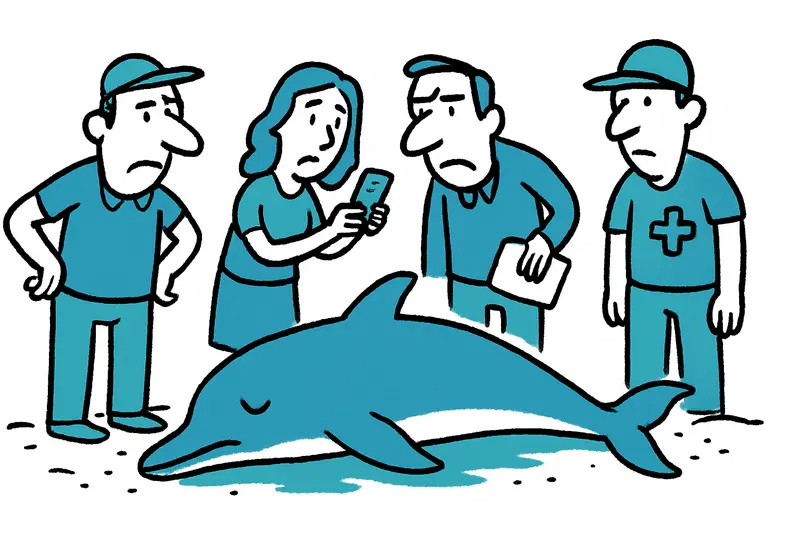
Early on Monday morning bathers at the narrow sandbank of Caló des Moro near Santanyí discovered a large dead dolphin. The cove is famed — and notorious — for its clear water and steep rock walls that make access difficult. People stopped, took out phones, some took photos, others kept their distance. The smell of sea and pine mixed with the metallic hint of a dead body; voices in Spanish, German and English blended with the clatter of flip‑flops on the path.
The most dramatic consequence: removal is delayed. The South Coast at the Limit: When Boats and Plastic Overwhelm Communities Santanyí municipal administration apparently only has vehicles and personnel that can operate from land. Recovering the animal from the water would require a boat from the competent coastal authority or the regional government. Such jurisdictional questions are not new — they often slow down swift decisions on Mallorca’s coasts.
Critical analysis: The problem is not an isolated case but symptomatic, as shown in Two Dead on Balearic Coasts: When the Sea Withholds Answers. Many municipalities lack maritime recovery logistics, while central authorities have boat capacities but insist on formalities. The result: dead animals remain where they are, potential pathogenic risks to beachgoers are not dealt with promptly, and valuable samples for autopsies decay. At the same time the public is left without clear information: Who is responsible now? When will the animal be removed? What do lab results say about origin or cause of death?
What is missing from the public debate: transparent responsibility rules and a simple, reliable communication chain. Citizens see a lifeless dolphin, worry and expect quick answers. Instead you hear sentences like “we have to coordinate first.” That is not satisfactory for those affected. Also rarely discussed are the follow-up costs: Who pays for recovery, transport and examination? And how are sensitive data from necropsies made usable for local research?
A typical everyday scene from Mallorca, up close: Between the parking bay and the short, steep path to the cove there are only a few olive trees and the metallic noises of tattooed tourists jostling for space. Past parked bikes, families drag strollers over uneven ground while lifeguards at the nearest official beach adjust their sunglasses. No one wants concern for nature to be replaced by bureaucracy.
Concrete, immediately applicable solutions:
1) Temporary closure and health notices: The municipality should immediately set up temporary barrier tape, post notices advising distance and hygiene measures, and assign beach wardens to keep visitors away.
2) Cost and responsibility catalogue: A short public document outlining the roles of the Ayuntamiento (municipality), the coastal authority (Demarcación de Costas) and Salvamento Marítimo. Short procedures, clear phone numbers, a priority list — that saves time.
3) Mobile recovery brigade: Establish a regional response unit, small and field-tested, with an inflatable boat, winch and folding stretcher. The unit could support municipalities like Santanyí on call.
4) Secure scientific follow-up: Cooperation with the local marine museum or research centers for necropsies, sampling and data sharing. The Palma Aquarium foundation has already announced its identification assistance in Mystery at the Mole: Striped Dolphin as a Warning for Palma's Sea; this expertise should be formally integrated.
5) Volunteer management: Protect the public through coordinated volunteer teams (Protección Civil, local environmental groups) that do not handle the animal themselves but take care of cordoning off, documenting and communicating, as in Who cleans up the sea? Almost eight tons of waste off the Balearic Islands — and the uncomfortable answers.
In the long term, Mallorca needs a binding manual for strandings: who calls whom, what priority do recovery, sampling and public safety have, and how are costs allocated? Such procedures exist in parts, but not island-wide and not easily accessible to traffic police, municipal staff or tourist information centers.
Conclusion: A dead dolphin is sad and at the same time reveals a gap in local crisis logistics. It is not only about animal carcasses but about public health, scientific opportunities and public trust in authorities. Those who act quickly, transparently and professionally now will prevent a natural event from becoming a municipal nuisance.
On site the scene remains striking: a small audience at the edge, the cove shimmering in the heat, the sound of the sea as background music. If responsibility is not finally clarified, we will see such images more often — and that is not a promising outlook for an island that lives from the sea.
Frequently asked questions
Who is responsible for removing a dead dolphin on Mallorca’s beaches?
How should beachgoers react if they encounter a dead marine animal on Mallorca shores?
What steps can Mallorca towns take to improve response to wildlife strandings?
Why is dead animal recovery sometimes slow on Mallorca’s coast?
Are there opportunities for science when a dead dolphin is found near Mallorca?
Costs and responsibilities in Mallorca strandings: a clearer protocol needed
How can residents stay informed about beach safety and wildlife incidents in Mallorca?
Caló des Moro: what makes its access challenging, and how does that affect responses there?
Similar News
Adrien Brody strolls through Mercat de l'Olivar – celebrity visit leading to Sa Pobla
Actor Adrien Brody was casually spotted at the Mercat de l’Olivar: tapas, fish stalls and later a stop in Sa Pobla spark...
Who can pick up whom? The complicated life of Mallorca's taxis
Three years after the inter-municipal service, empty runs are rarer — but there is a lack of equal treatment, transparen...

When the Tap Only Runs Sometimes: Why Municipalities in the Balearic Islands Are Now Rationing Water
Deià, Valldemossa, Esporles, Sóller and several places on Menorca are scaling back water supply. Who is responsible, why...

Battle for the Ramp: Why Cala Gamba Needs More Than Enforcement
The Guardia Civil intervened in Cala Gamba — residents breathed a sigh of relief, but unease remains. Key question: Are ...

He dances at the Duty-Free: How an airport employee brings a smile to Palma
A Duty-Free employee at Palma Airport created a viral TikTok with dancing breaks. Why the scene is more than just an int...
More to explore
Discover more interesting content

Boat Tour with BBQ along Es Trenc Beach

Private transfer from Mallorca Airport (PMI) to Pollensa
