
Dead Squatter and Nighttime Break-in Attempt in Santa Ponsa: Who Fills the Legal Gap?
In Santa Ponsa three men tried to force open a previously occupied apartment. The Policia Local of Calvia prevented the re-occupation; the fate of the former resident is unclear. A look at the legal and social grey area behind such cases.
Dead Squatter and Nighttime Break-in Attempt in Santa Ponsa: Who Fills the Legal Gap?
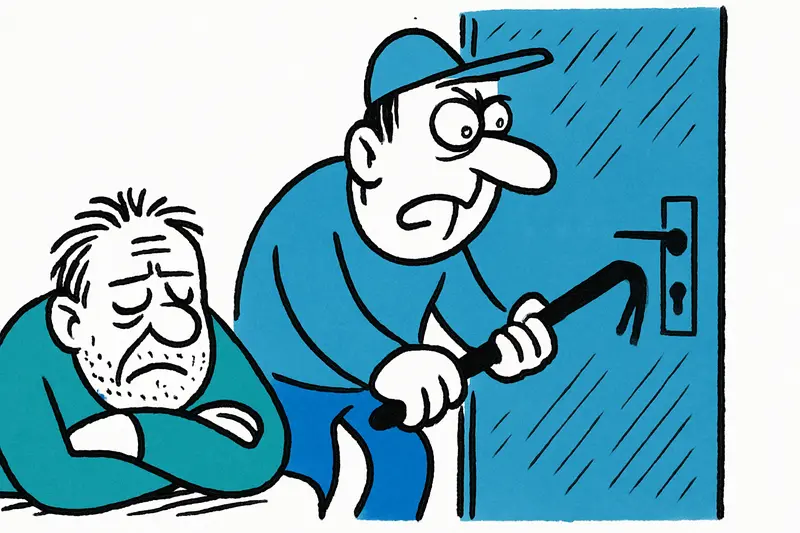
An incident in a residential building in Santa Ponsa caused a stir in recent days: three people, two men of Polish origin and a British citizen, were arrested by the Local Police of Calvia after they tried to force open the door of an apartment. Neighbors had heard the noise and alerted the police. Officers prevented the opening, sealed the apartment and fitted additional locks, an outcome reminiscent of Santa Ponsa: Release after knife and assault allegations sparks unrest.
Key question
What happens to apartments that sit in a legal and social grey area — and who bears responsibility when there is uncertainty about the whereabouts of former occupants?
Brief summary of known facts
According to neighbors, the flat had previously been occupied by a man of Polish origin who was considered a squatter. Some residents say he recently died; others suspect he was taken to hospital for treatment. Before that tenant lived there, a British woman had occupied the apartment and she also passed away. The homeowners' association is now seeking a permanent solution to prevent further incidents.
Critical analysis
Such cases reveal two problems at once: legal uncertainty surrounding vacant properties and a practical lack of quick, clear communication between neighbors, owners, police and social services. When no one appears officially responsible, a vacuum forms that is sometimes filled by various actors — occasionally by illegal means. The result is nighttime scenes in which doors are threatened with crowbars and entire residential complexes are jolted awake, a pattern that echoes concerns raised in Valldemossa: Violence During Attempted Occupation — Who Protects the Houses in the Village?.
What's missing in the public discourse
People often talk about “squatters” but rarely about the mechanics behind it: Why do apartments remain unmanaged for months or years? Who regularly checks whether an allegedly absent resident has actually died or is merely temporarily away? And how can it be prevented that third parties exploit the situation because procedures take too long or information does not come together? The situation in Who Acts First? Squatters in Santa Margalida Cause Trouble in Half-Finished Housing Blocks illustrates how these questions escalate when oversight and coordination are lacking.
A scene from everyday life in Santa Ponsa
Imagine the evening: the coastal promenade has already calmed down, occasional voices from guests in the taverns drift through the streets, a dog barks in a backyard. Then the metallic clink at an apartment door. Windows tilt open, lights go on, a neighbor in slippers comes down the stairs and calls the police — that is exactly how this incident began. Such visual and acoustic details shape coastal community life: close, sometimes too close.
Concrete solutions
1) Temporary administrative arrangements: Municipalities like Calvia could agree with homeowners' associations on rules that grant management certain rights for a clearly defined transition period, such as access for inspections or the ability to temporarily secure a property.
2) Rapid check in cases of uncertainty: A short, formalized verification procedure — police in cooperation with health services — should quickly clarify whether a person poses a danger or has died. This speeds up decisions and prevents speculation.
3) Registry of vacant properties: A digital list of vacant properties, accessible to authorities and registered homeowners' associations, could reduce the risk that properties become hotspots for illegal occupation.
4) Social alternatives: Where people without stable housing temporarily use living space, low-threshold services and binding transition models are needed instead of immediate criminalization.
Why this matters for Mallorca
On an island like Mallorca, where ownership, holiday apartments and long-term residents live close together, unclear responsibilities quickly lead to neighborhood conflicts. Owners' economic interests meet social hardship — and residents in the middle worry about their safety. A functioning, transparent system would help everyone: owners, authorities and people without stable housing.
Conclusion
The door in Santa Ponsa is now sealed, the three arrested individuals were taken away, and the homeowners' association is discussing a more permanent solution. That offers short-term reassurance but does not resolve the structural problem: vacant apartments in legal limbo remain vulnerable. Binding processes, faster clarifications and more cooperation between local services are needed so that neighborhoods do not have to become improvised protection squads. And one more thing: when locks are rattled at night, people do not want tabloid stories — they want clear answers, and those should come from the authorities before someone targets a lock with a crowbar again.
Frequently asked questions
What happens in Mallorca when an apartment has no clear legal occupant?
Can neighbours in Santa Ponsa call the police if someone tries to force open a flat door?
Why do vacant apartments in Mallorca sometimes become targets for occupation?
What should a homeowners’ association in Santa Ponsa do after a squatter or tenant dies?
How can Mallorca authorities quickly check whether an absent resident has died or is in hospital?
Are there temporary ways to secure a vacant flat in Calvià?
Why do residents in Santa Ponsa worry when an empty apartment stays unmanaged for months?
Is there a better long-term solution for empty apartments in Mallorca than calling the police after each incident?
Similar News

Ancient Piece Brought to Light: Guardia Civil Recovers Roman Anchor Fragment off North Coast of Mallorca
Divers from the Guardia Civil recovered a massive iron piece from Roman times off Mallorca's north coast. The roughly 35...

Who Benefits from the Half‑Hourly Flight on the Edge? Aena, Investments and the Island's Interests
Almost one billion euros is flowing into Son Sant Joan. The figures show the scale of investment and expected beneficiar...

Are the Balearic Islands the Southern Border of Europe? A Reality Check on Immigration
The Balearic Islands are again calling for EU aid after a sharp rise in arrivals by sea. Conflicting priorities between ...

"Expensive chaos" and many open questions: What clients can do when a lawyer suddenly stops responding
Several clients complain that a well-known German lawyer in Mallorca has been unreachable for months. Key question: What...

TV tip: 'The Last Problem' — Mallorca as the setting of a classic crime
A classic whodunit on Mallorca: A new miniseries set in spring 1959 brings storm, an isolated hotel and a dense web of s...
More to explore
Discover more interesting content

Can Cap de Bou

Townhouse Lleo 72
