
Deadly night in Palma: Who bears responsibility for the accident on Camí de Can Capó?
Deadly night in Palma: Who bears responsibility for the accident on Camí de Can Capó?
A 29-year-old Italian was hit by a car on the Camí de Can Capó at night and died. The Guardia Civil is investigating — but the question remains: were the infrastructure, lighting and oversight at this location adequate?
Deadly night in Palma: Who bears responsibility for the accident on Camí de Can Capó?
Key question
Key question: Was what happened on the night to Thursday on the Camí de Can Capó an accident that suddenly occurred out of nowhere — or an event that reveals avoidable gaps in infrastructure, traffic safety and nighttime operations?
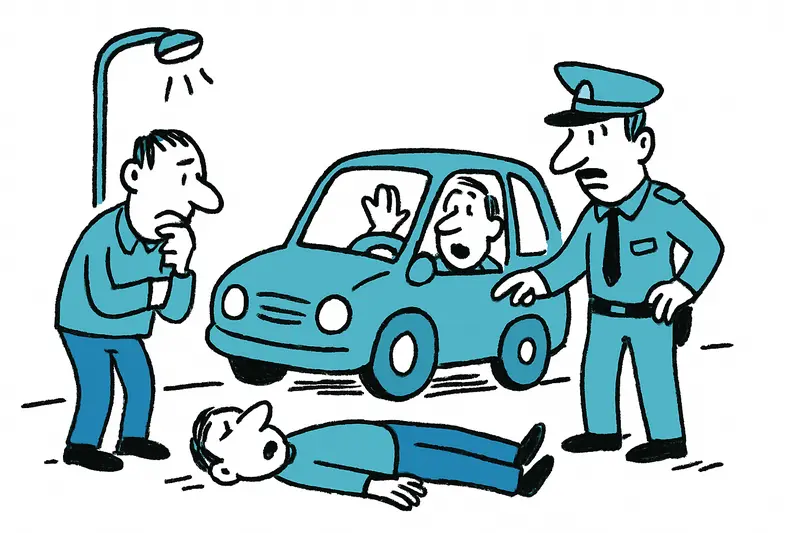
In the early hours, around 00:25, a serious accident occurred on the Camí de Can Capó in Palma. A 29-year-old Italian was struck by a Dacia Sandero traveling toward Manacor. Emergency services from SAMU 061 immediately began resuscitation efforts but were unable to save the man's life. The traffic police of the Guardia Civil have taken over the investigation; the driver tested negative for alcohol and drugs, as in the Fatality on the MA-19 near Palma: How did a pedestrian get onto the highway?. According to initial indications, the pedestrian was walking at the roadside near a well-known nightclub and probably entered the road.
Critical analysis: At first glance the chronology reads like a typical nighttime traffic accident. But three details are enough to look closer: the proximity to a nightclub, the late hour and the car's direction toward Manacor. Taken together, these factors suggest that not only an individual's behavior but also the surrounding environment may have played a role.
What is missing from the public debate: Discussions about lighting, pedestrian protection and taxi availability at nightlife hotspots often remain abstract; the Fatal Accident on the Paseo Marítimo: Trial Raises Questions About Safety and Control is one example. In Palma we talk in bars and on street corners about loud nights, about taxis, about routes home — but rarely about the narrow strip between curb and carriageway, which in many sections is insufficiently protected.
Everyday scene from Palma: It's just before one o'clock, music still spills from the glass doors of bars on the street in the center, on Plaça Gomila voices mix with the rumble of buses. In the area around Camí de Can Capó the streetlights are not necessarily the brightest; taxi drivers honk, young people hurry in small groups along the sidewalks. Those who walk at night in such neighborhoods often feel how narrow the separation between pavement and road is. Recent incidents, including the Third traffic death in a few days: Do Palma's night streets need to be safer?, underscore these risks.
The official lead: Investigators are now examining the circumstances. That the driver was not under the influence of alcohol or drugs does not rule out human error. Nor should infrastructure be let off the hook from the outset: missing pedestrian crossings, poorly marked road edges, excessive permitted speeds and unclear curves increase the risk that a pedestrian may be endangered.
Concrete solutions that could take effect immediately: better, directed street lighting at critical sections; clear separations between sidewalk and carriageway (bollards, raised curbs); lower speed limits at night; additional pedestrian crossings with flashing beacons in bar districts; a planned night taxi system with waiting zones so people do not have to dash across the road.
What needs to be tackled in the longer term: coordinated measures by urban planning, police and nightclub operators. These include binding concepts for taxi ranks and weekend shuttles, awareness campaigns in multiple languages for nightgoers and better technical accident investigation (more cameras at critical points, improved data on nighttime pedestrian flows).
Practical steps for rescue and prevention: clearly mark emergency zones, promote first aid training for night venue staff and make rapid analysis of accident sites mandatory so that sidewalks or lighting columns are not only improved after a tragedy.
What matters now: The deceased's relatives and friends need space to grieve, and the Guardia Civil's investigations must transparently establish the facts. At the same time, the public debate must not stop at assigning blame. It is about concrete measures so that not more names hang from the pale glowing streetlights.
Punchy conclusion: This night revealed a gap — not only in the body of a person who stepped into the road, but in a system that does not always safely combine pedestrians, nightlife and traffic. Those who want to change that must tackle several areas at once: lighting, barriers, mobility and clear rules for night businesses. Otherwise, after the candlelight, the only question left will be whether we learned enough from a tragedy.
Frequently asked questions
What happened on the Camí de Can Capó in Palma and what does it say about night safety?
How does street lighting affect pedestrian safety in Palma at night?
What infrastructure changes could improve pedestrian safety in Mallorca's nightlife districts?
Why is taxi availability part of Palma's nightlife safety conversation?
What should travelers know about Mallorca evenings and weather for night outings?
What practical safety tips help pedestrians near Palma's bars and clubs?
Who is responsible for a night-time accident in Palma?
What long-term steps could reduce night-time risks in Palma?
Similar News
Eviction in El Arenal: Who protects neighbors — and who protects the homeless?
A vacant hotel on Carrer Girona was cleared and secured. The neighborhood breathes a sigh of relief. But the action trea...
'La Tapita' loses its home: Who will protect Palma's last affordable meeting places?
The bar 'La Tapita' on Simó-Ballester Street will close at the end of December. For neighbors, police officers and small...
Million Heist at Bulgari: Who Is Responsible for Palma's Security Gaps?
Three men stole jewelry worth around one million euros – the crime series began at the end of September and was likely c...

Who pays the bill? Tourists, prices and the reality in Mallorca
Rising costs are felt by travelers and locals alike. A walking observation through Palma's old town shows how tourists e...
Phone robbery at Playa de Palma: Two juveniles arrested — a reality check
On Monday morning three young women were attacked at Playa de Palma; two youths snatched a phone from one of them. The N...
More to explore
Discover more interesting content

Can Cap de Bou

Townhouse Lleo 72
