
Death While Bathing in Paguera: Who Really Protects Beachgoers?
Death While Bathing in Paguera: Who Really Protects Beachgoers?
A 73-year-old man died after a cardiac arrest at Caló de ses Llises. Beachgoers and lifeguards attempted resuscitation but failed. A reality check: Are prevention and the rescue chain on Mallorca sufficient?
Death at Caló de ses Llises: An afternoon that raises questions
73-year-old German dies after cardiac arrest while bathing in Paguera
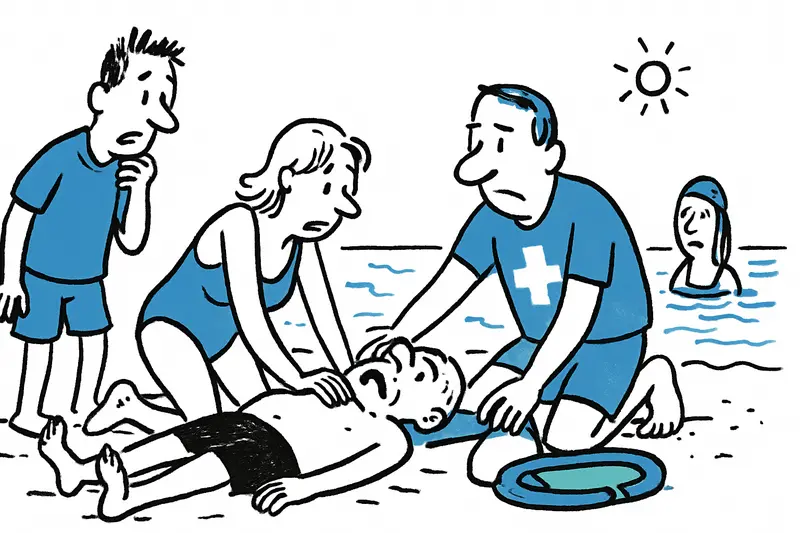
The facts are brief and clear: On the afternoon of June 2, beachgoers at the small cove Caló de ses Llises in Paguera noticed a man in the water. He was brought ashore, and lifeguards and bystanders began resuscitation efforts. Emergency services continued the resuscitation, but the 73-year-old victim succumbed to the cardiac arrest at the scene.
Key question: What would need to change in Mallorca so that a cardiac arrest on the beach has better chances of survival?
In short: the chain of survival must work — and that begins long before an emergency occurs. In this case people on the beach reacted correctly: they pulled the man from the water and started CPR immediately. But every second counts. Public debates often focus on beach rules or beach management; less frequently discussed are publicly accessible defibrillators, widespread first-aid training and fast emergency routes to small coves. Such concerns have surfaced before after incidents like Tragedy in Son Bauló: Small Cove, Big Questions — How Safe Are Mallorca's Unassuming Beaches?.
What is missing in the public discourse: reliable figures on the availability of AEDs (automated external defibrillators) along the coast, benchmarks for emergency service response times in more rural coves and clear information in several languages for tourists. Much energy is spent on debates about sunbeds and parking. When someone depends on help, other priorities matter.
An everyday scene from Paguera paints the picture: children building sandcastles on the sandy shore; the whir of an e-scooter on the avenue, voices from the ice cream shops; a lifeguard on an elevated chair, whistle at the ready. At some coves there are signs with safety rules, at others there is not even a small notice explaining how to call the European emergency number 112 or where the nearest AED is located.
Concrete, practical solutions that could make an immediate difference:
1) Defibrillators at central points: Publicly accessible AEDs should be visibly installed on promenades, in parking lots near popular coves and at lifeguard posts. The devices are robust and require minimal maintenance.
2) Signage and digital maps: Standardized pictograms at cove entrances showing emergency numbers, AED locations and meeting points for rescue teams. A maintained, official map (also in apps) with AED locations would make work easier for helpers and emergency services.
3) Refresher offers for first aiders: Beach operators, hotels and local businesses could offer short, certified trainings for staff. A 60-minute course on basic measures and AED use substantially lowers the inhibition threshold.
4) Better communication between lifeguards and emergency services: Check radio ranges, define meeting points and run practice scenarios at small coves — especially in the pre-season when staff changes occur.
5) Prevention and information for older people: Information about health risks when bathing, especially in heat or after taking medication, should be easily available in pharmacies, tourist information centers and hotels.
These proposals are practicable and cost less than many imagine. Some island towns (see Cala Blava: A Day at the Beach Ends in Death — Who Must Act?) already have parts of this in place; other beaches still have gaps to fill.
What remains unresolved: official figures on resuscitation statistics at beaches and a unified island-wide solution for AED locations. Without transparent data, it is difficult to prioritize measures. It also must be clarified who will ensure long-term maintenance and accessibility of the devices — municipalities, tourism associations and private operators are all called upon.
Conclusion: A single, tragic incident like the one in Paguera shows how vulnerable beachgoers can be. The good news is that many protective measures are pragmatic and can be implemented locally. If you walk along the Paseo de Paguera in the morning, you hear clinking coffee cups, cyclists pass by and you see the small lifeguard posts — where people work and live, the chain of survival can also be strengthened. A targeted, solidarity-driven effort by municipalities, businesses and locals would save lives.
Pointed conclusion: More AEDs, pragmatic trainings and clear information at access points could prevent a tragic isolated incident from becoming a catastrophe.
Frequently asked questions
What is the weather like in Mallorca in December?
Can you swim in Mallorca in winter?
What should I pack for Mallorca in December?
Is December a good time to visit Mallorca?
What is Sant Elm like in December?
What is Peguera like in December?
What can you do in Mallorca on a rainy day in winter?
Is Mallorca warm enough for walking in December?
Similar News
Body in the Basin of Port Adriano: Who Protects People During Crossings?
In the morning, just before noon: employees of a luxury marina discovered a floating body in the basin of Port Adriano. ...
Raised from the Sand: A Late Antique Merchant Ship Tells of the Sea off Can Pastilla
A 1,700-year-old Roman merchant ship was raised off Can Pastilla. Finds such as sail fragments and amphorae provide rare...
After the Storm: Why Many Fish Died at Riuet de s'Illot — and What's Still Missing
After the severe storm, numerous dead fish were found in the Riuet de s'Illot wetland. Who is affected, why it may have ...
Fire in Can Picafort: Family Rescued at the Last Minute – a Safety Check for the Promenade
A fire in a sports shop on the Can Picafort seafront forced the evacuation of a mother with four children. How safe are ...
Nine-year-old rescued after cliff fall at Cala Murada — How safe are Mallorca's coastal paths?
A boy fell roughly five meters down the rocks near Cala Murada. The dusk rescue was elaborate; a helper also had to be r...
More to explore
Discover more interesting content

Boat Tour with BBQ along Es Trenc Beach

Private transfer from Mallorca Airport (PMI) to Pollensa
