
Motor scooter fire in Palma: Alarm on Calle Sindicat – How safe are our narrow shopping streets?
A burning delivery scooter on Calle Sindicat created a black plume of smoke and raised many questions: Is our fire protection in Palma's narrow shopping streets sufficient?
Black plume of smoke, anxious passersby – a morning that could have ended differently
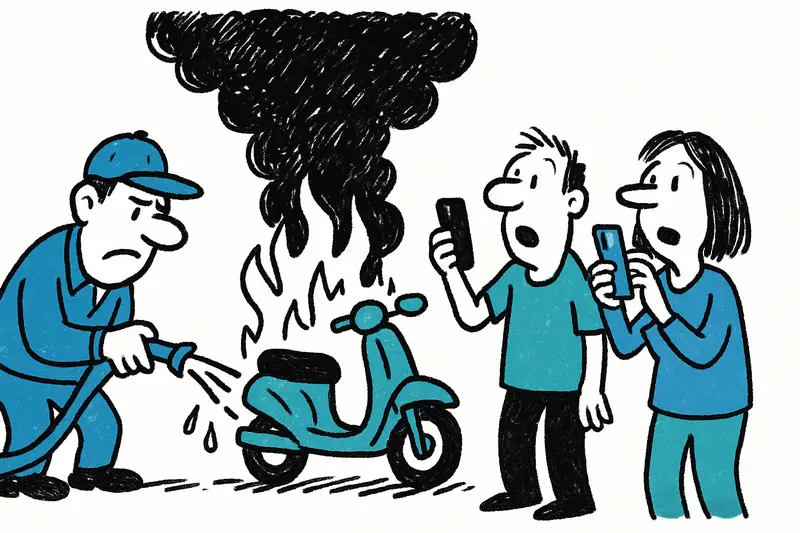
On Monday morning, shortly after 10:15 a.m., a thick, acrid cloud of smoke rose above Calle Sindicat. Shop owners hurriedly closed windows, market traders paused, and the chimes of the nearby church were drowned out by sirens. Within minutes, mobile phone cameras were out, neighbors helped carry out flower boxes, and an employee of the municipal utilities company Emaya tried to keep the flames in check with a water hose. Further coverage is available at Motor scooter fire in Palma: Alarm on Calle Sindicat – How safe are our narrow shopping streets?.
How did the fire start — and what happened next?
A parked delivery scooter in the roadway in front of several shops caught fire for reasons that are still unclear. The Palma Fire Department was quickly on the scene, extinguished the vehicle—which burned out completely—and was apparently able to prevent larger damages to facades. The local police regulated traffic; nevertheless, short queues formed on the Avenidas as the accesses to Porta de Sant Antoni were secured. According to emergency crews there were no injuries—a stroke of luck given how narrow the streets are here.
Central question: What if it had been worse?
The incident raises a simple but pressing question: How well protected are Palma's narrow shopping streets, really? In the old town, cafes, boutiques and apartments often sit side by side, escape routes are tight and delivery traffic squeezes through the alleys morning and evening. If at night one battery or several vehicles catch fire, or a truck goes up in flames—how quickly can help arrive, and how great is the danger to people and historic buildings?
Behind the headlines: three aspects that are too often overlooked
First: the role of the battery. Electric scooters and delivery vehicles increasingly use lithium batteries, which can react suddenly and violently when damaged or improperly charged. A standard water extinguisher is not always sufficient in such cases, and incorrectly applied water can worsen the situation.
Second: parking practices and delivery logistics. Many vehicles park in loading zones, on sidewalks or directly in front of shop windows—for convenience or lack of alternatives. Third: clarifying responsibility. Who is responsible for safe parking spots—the municipalities, the landlords, the delivery companies or the drivers themselves?
What the city and business owners could do in the short term
Pragmatic measures can help immediately: clearly marked, visible loading and parking zones for delivery scooters along main axes such as Calle Sindicat and around Plaça Major would reduce chaos. Public or semi-public fire extinguisher stations at central points, regular checks of parking rules and an information campaign on the safe handling of batteries—all of this costs little and can bring great benefits. In a neighborhood where people love the clatter of coffee cups and the hum of market stalls, simple tools are often the most effective.
Medium-term steps: rules, enforcement, technology
In the long run, binding rules are needed: regulated delivery times for the historic center, compulsory registration for commercially used scooters, mandatory technical checks for older vehicles and rental scooters, and defined collection points for used batteries. Registration could also clarify liability in the event of a fire—who pays for damage, who is liable if a poorly maintained scooter catches fire?
Controversial but necessary: liability and deposit systems for batteries
Discussions about deposit systems for lithium batteries or regulated take-back systems are not romantic, they are practical. If delivery services and landlords are made more accountable—through regular inspections and reporting obligations—many risks could already be reduced. Such rules are inconvenient, but in narrow streets with heavy pedestrian traffic they are probably sensible.
Between everyday life and prevention
The fire on Calle Sindicat ended without major harm, but the soot on shop windows and the bitter smell lingered for days. Palma lives from its closeness: market sellers, delivery drivers, tourists and residents share tight spaces. Precisely for that reason, more judgment and concrete measures are needed now—not just agitation and quick photos for the internet. Other recent incidents on the island are documented in local reports such as Major fire in Son Castelló: Bakery hall puts fire safety on Mallorca's agenda, Car on the Paseo Marítimo in Flames — Bang, Smoke and Many Questions and Fire on the Paseo Marítimo: A Blaze, Many Questions.
The authorities are investigating the cause of the fire. Until the results are available: keep your distance, avoid smoke, and in an emergency call 112. And a simple reminder for politicians, businesses and all of us: a fire extinguisher, clear loading zones and a bit more oversight can make the difference between jitters and a real catastrophe in such a lively city.
Frequently asked questions
What should I do if I see a scooter fire in Palma?
Are the narrow shopping streets in Palma safe in a fire?
Why do delivery scooters pose a fire risk in Palma?
What caused the scooter fire on Calle Sindicat in Palma?
Was anyone injured in the Calle Sindicat fire in Palma?
What happened to traffic around Porta de Sant Antoni during the Palma scooter fire?
What fire safety improvements could help Palma’s old town?
How should businesses in Palma handle delivery parking more safely?
Similar News
Release after bloody attack in Palma: Why the court's decision raises questions
An 18-year-old who allegedly inflicted a serious neck injury on a man at Plaza Gomila using a wristwatch wrapped around ...
Kidnappings in Inca: Three young men forced into car trunks and abused in the forest – a reality check
In Inca, three 18-year-old men were forced into car trunks by masked assailants at the Plaça des Bestiar, taken to a for...
Spreading Massification: The Brake That Still Has Much Work to Do
Marga Prohens announces limits on volume tourism. The measures sound harsh — but are they enough to save everyday life, ...

Through the Keyhole onto the Party Yacht: How Daniela Katzenberger Is Planning Her 40th on Mallorca
Daniela Katzenberger turns 40 and wants to celebrate it on the island — likely with a boat, cake and her mother. A relax...
By Boat Instead of the Road: Palma's Water Bus — a Reality Check
The 'Bus Nàutic' launches in two stages — but questions remain over interim operations, fares and environmental requirem...
More to explore
Discover more interesting content

Can Cap de Bou

Townhouse Lleo 72
