
Major fire in Son Castelló: Bakery hall puts fire safety on Mallorca's agenda
Thick smoke over Son Castelló, hours-long road closures and fortunately no injuries. The fire in a bakery hall raises important questions about safety, inspections and the consequences for the island's supply chain.
Evening shock in Son Castelló: Smoke over Palma, questions in people's minds
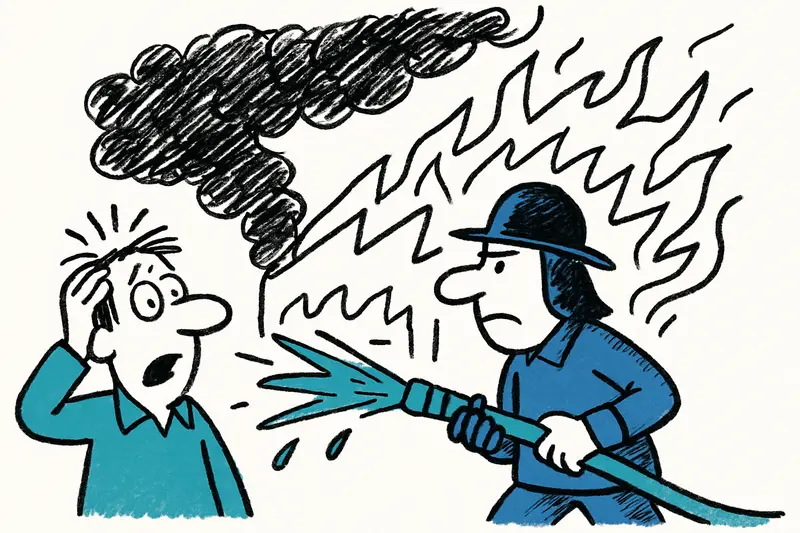
Yesterday at around 8:15 p.m., the industrial area Son Castelló in Palma was transformed for hours into a scene of sirens, searchlights and a dense, acrid plume of smoke. A production hall, which neighbors say produced baked goods for large parts of the island, was ablaze. The smoke column was visible even from Coll d'en Rabassa — an image many residents will remember for a long time.
How did the operation proceed — and where did it hit limits?
Firefighters from Palma and surrounding municipalities responded quickly: fire engines, breathing apparatus teams, long hoses, and the constant beeping of radios. At around 10:30 p.m the emergency crews declared the situation under control, but there remained smoldering hotspots that still needed extinguishing. Avenida de Son Castelló was closed for hours, a safety perimeter was set up and vehicles were towed away — scenes that unsettled the neighborhood.
So far there appear to be only material damages and no injuries. Nevertheless, fundamental questions arise: Is the personnel and technical equipment of our rescue services sufficient for major fires in industrial facilities? And are the businesses themselves adequately protected to detect and contain fires early?
The often overlooked risks of a bakery hall
At first glance a bakery may sound harmless. On closer inspection, however, a variety of risk factors come together: hot ovens, flour dust, electrical controls, storage of packaging materials and oil. Flour dust can, similar to other organic dusts, be explosive; packaging and plastics fuel fires. Neighbors reported a loud popping sound shortly before the blaze — clues that investigators will now pursue.
Environmental risks must not be forgotten either: the smell of burnt dough and plastic spread into residential areas, and residents complained of eye and respiratory irritation. Let's look at air monitoring in such situations: are there rapidly deployable measurements to issue health recommendations to the public? Guidance such as the WHO air quality guidance can inform thresholds for advisories.
Central question: Are we prepared for the next major fire?
The incident raises the question whether existing rules and their implementation are sufficient. Technical minimum standards such as sprinkler systems — as described by NFPA information on sprinkler systems — fire detection systems and explosion-protected ventilation are not just band-aids but prevention. Equally important are regular inspections, realistic evacuation drills and clear communication channels to the public.
What is often missing in the debates
Public discussions usually focus on cause and damage. Less attention is paid to long-term consequences: supply shortages for local bakeries, psychological stress in affected neighborhoods, rising insurance premiums for business groups on the island. The question of responsibilities — city council, island council, industrial supervision — is also rarely addressed as concretely as it should be. Recent local cases like Acute Danger in Cala Major: Six Shops Cordoned Off — Who Bears Responsibility? highlight these responsibility questions.
Concrete steps that should be taken now
From the evening in Son Castelló, pragmatic conclusions can be drawn:
1. Mandatory equipment inspections: Annual audits for electrical systems, dust extraction systems and storage areas, documented and with sanctions for deficiencies.
2. Requirement for sprinklers and fire detection: Automatic extinguishing systems should be standard, especially in production halls with B2B supply obligations.
3. Evacuation plans and drills: Companies must conduct realistic emergency exercises — together with the fire department and, where necessary, representatives of local residents.
4. Better information for residents: An SMS/app alert for affected neighborhoods and clear recommendations (close windows, avoid outdoor areas) can be implemented quickly.
5. Air monitoring: Mobile monitoring stations should be deployed quickly to provide health guidance.
Conclusion: Relief — and a wake-up call
Relief that apparently no one was injured. At the same time, the realization of how close a major fire in an industrial hall can be. The evening in Son Castelló, with the thudding of pumps, the smell of burnt dough and the flicker of searchlights, should remain with us not only as a dramatic scene but as a reason to name and remedy shortcomings in fire protection. Previous incidents, such as Fire in Port d'Alcúdia: Why the big scare is also a wake-up call for fire safety, underscore the wider implications.
Investigations into the cause of the fire are ongoing. The city has announced further information. We will keep following the story — because this is about safety, health and the economic stability of our island.
Frequently asked questions
What should residents in Palma do when there is a large industrial fire and smoke is drifting across the city?
Why are bakery production halls in Mallorca considered a fire risk?
How long can roads stay closed after a major fire in Palma?
Can smoke from a fire in Son Castelló affect nearby neighbourhoods in Palma?
What safety measures should industrial businesses in Mallorca have to prevent major fires?
Who responds to major fires in Palma's industrial areas?
Why is air monitoring important after a fire in Mallorca?
What does the fire in Son Castelló mean for Mallorca's fire safety planning?
Similar News
Release after bloody attack in Palma: Why the court's decision raises questions
An 18-year-old who allegedly inflicted a serious neck injury on a man at Plaza Gomila using a wristwatch wrapped around ...
Kidnappings in Inca: Three young men forced into car trunks and abused in the forest – a reality check
In Inca, three 18-year-old men were forced into car trunks by masked assailants at the Plaça des Bestiar, taken to a for...
Spreading Massification: The Brake That Still Has Much Work to Do
Marga Prohens announces limits on volume tourism. The measures sound harsh — but are they enough to save everyday life, ...
Through the Keyhole onto the Party Yacht: How Daniela Katzenberger Is Planning Her 40th on Mallorca
Daniela Katzenberger turns 40 and wants to celebrate it on the island — likely with a boat, cake and her mother. A relax...
By Boat Instead of the Road: Palma's Water Bus — a Reality Check
The 'Bus Nàutic' launches in two stages — but questions remain over interim operations, fares and environmental requirem...
More to explore
Discover more interesting content

Can Cap de Bou

Townhouse Lleo 72
