
Departed empty, passengers left behind: A Mallorca case and the question of responsibility
Departed empty, passengers left behind: A Mallorca case and the question of responsibility
In September a flight allegedly left passengers in Palma and departed empty for Germany. One affected passenger has waited months for reimbursement. Who is responsible?
Departed empty, passengers left behind: A Mallorca case and the question of responsibility
Key question: How can a plane take off without paying passengers — and who assumes immediate responsibility?
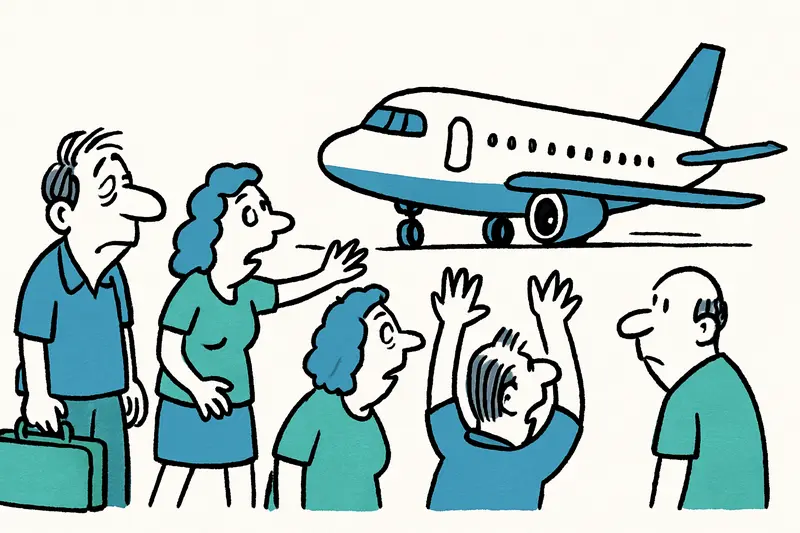
On the early evening of 21 September, a short Mallorca trip ended for some travelers with an image nobody wants: they sat sweating on the plane, were asked to disembark, collected their luggage from the belt and later learned that the aircraft had flown to Germany without them. One affected person, named Armin T., reports additional costs of around €1,200 for replacement flights and taxis; according to the traveler, the airline has not responded to this day.
In short: this is not an isolated case in the accounts of travelers from Palma in recent years, as reported in "An Outrage" at Palma Airport: Why Did Passengers Disembark — and the Plane Fly Off Empty? But when an aircraft — loaded with crew and fuel — takes off without passengers, it raises several questions: Who makes the decision on the ground? Who covers the costs for alternative transport? And how reliable are complaint procedures with smaller airlines?
Critical analysis
From the accounts it can be reconstructed that there were long waiting times on board beforehand, the cabin was overheated and the crew offered passengers a choice between waiting and disembarking. Shortly afterwards the aircraft apparently began the takeoff procedure without the people who had been on board a few minutes earlier. The pattern raises problems in three areas: operational communication, consumer law and enforceability of claims.
Operationally: The decision to send an aircraft off empty can be routine (crew shifts, slot restrictions, schedule reshuffling). For those affected, however, what matters is how transparently this decision is communicated and who on site offers a genuine short-term alternative.
Legally: In cases of delayed carriage, cancellation or denied boarding, EC Regulation 261/2004 and national administrative channels apply. In practice this case shows how slow out-of-court enforcement can be — especially when the airline does not respond to inquiries. Consumer protection organisations and specialised providers confirm that smaller carriers often meet notification obligations only sluggishly and delay payments until court judgments.
What is missing from public discourse
Single cases are often reported, but systemic gaps are discussed too rarely: How well are handling processes at Palma equipped to deal with unplanned departures without passengers? Who checks whether a decision was made for safety reasons or for operational convenience? Similar questions about responsibility arose in Fatal accident near Son Castelló: Three passengers come forward — where are the gaps in responsibility? And how closely do ground staff, the airport operator and the aviation authority cooperate when travelers suddenly have to improvise on site?
Practical information for travelers is also often missing: Which receipts are necessary? Exactly to whom should a complaint be submitted — the airline, the Spanish aviation authority (AESA) or the airport operator? Without a clear roadmap affected persons get lost in forms and wait months for answers.
Everyday scene from Palma
Imagine the airport café on the Paseo Marítimo: the scent of coffee hangs heavy, taxis honk outside, German voices mix with Mallorcan Català. Travelers who had been on the beach only hours earlier now sit tired and annoyed on the leather benches in the departure hall. Some scroll through old emails, search for boarding passes, upload video material — small private investigations in the hope of an answer.
Concrete solutions
1) Secure evidence: boarding pass, photo of the departure board, video/audio of announcements, receipts for replacement costs. These documents are worth their weight in gold later on.
2) Use and document complaint channels: file complaints in parallel with the airline, the Spanish aviation authority (AESA) and consumer protection agencies in Germany. Log emails, forms and registered mail.
3) Coordinate collectively: affected passengers should come together quickly (passenger groups in messenger apps or by email). Joint cases are easier for lawyers and consumer advocates to pursue.
4) Consider legal steps: if out-of-court routes fail, consumers can enforce claims through lawsuits or external debt-collection measures. A consultation with a law firm specialised in passenger rights helps to assess costs and prospects of success.
5) Strengthen the airport side: local actors — airport operators, ground staff representatives, tourism organisations — should establish binding information hubs so that travelers quickly know who to turn to when they are stuck at the gate.
Conclusion
The case from Palma shows how quickly travel comfort can turn into frustration when communication breaks down and institutions do not respond in a networked way. The real problem is less the one-off delay than the lack of reliable, easily accessible mechanisms for compensation and transparency. Those sitting in Palma waiting for an answer want nothing more than clarity and an end to uncertainty. Until then it is the task of airports, authorities and consumer advocates to create practices that quickly prevent such cases.
Frequently asked questions
What should I do if my flight from Mallorca leaves without the passengers who were asked to get off?
Can I claim compensation if I had to pay for a replacement flight from Palma?
Who is responsible when passengers are left behind at Palma Airport?
Which receipts should I keep after being stranded at Palma Airport?
Should I contact AESA if my airline does not respond after a Mallorca flight problem?
Why would a plane from Mallorca depart empty after passengers disembark?
What can passengers do if they are stuck at Palma Airport for hours?
How long does it usually take to get a reply to a Mallorca flight complaint?
Similar News
Released with Conditions: The Plus Ultra Suspicion and a Mallorcan Finca as Residence
A Dutch entrepreneur, sought in connection with the Plus Ultra case, was extradited to Spain after his arrest in Germany...

Haute Nuit in Puerto Portals: Fashion, Art and Indulgence by the Water
On October 2 the Lobster Club in Puerto Portals will be transformed into a stage for curated fashion, art and culinary e...

Magaluf: Watchtower Alarm – Lifeguards Pull Unconscious Beachgoer from the Water
After a drama in the late afternoon, two lifeguards at Magaluf beach rescued an unconscious 44-year-old man. He was stab...

Turquoise in the City: How dangerous is the color play of the Sa Riera?
The Sa Riera in Palma suddenly turned turquoise — a pretty motif, but behind the effect lies a discharge of saline waste...

Jeckliner at Sunnesching: Cologne spirit sets sail from Palma
In September 2027 the Mein Schiff 2 briefly becomes a floating carnival stage: four days with Cologne bands, comedy and ...
More to explore
Discover more interesting content

Can Cap de Bou

Townhouse Lleo 72
