
Drama at an Animal Clinic near Palmanyola: Blind Pitbull Severely Bites New Owner — a Reality Check
Drama at an Animal Clinic near Palmanyola: Blind Pitbull Severely Bites New Owner — a Reality Check
At a veterinary clinic near Palmanyola a woman was seriously injured and required emergency surgery after adopting a blind Pitbull. What went wrong with the adoption, behavior assessment and clinic safety? A critical look with concrete suggestions for the island.
Drama at an Animal Clinic near Palmanyola: Blind Pitbull Severely Bites New Owner — a Reality Check
A woman was taken to the University Hospital Son Espases in the morning after being so badly injured by her own recently adopted blind Pitbull at a veterinary practice near Palmanyola that she required emergency surgery. According to information from the incident report, the woman suffered fractures to both arms and deep bite wounds to the chest. The dog, which comes from the Son Reus shelter, was secured by staff from the municipal shelter and taken to Santa Eugènia, where it was placed in quarantine. The police in Bunyola have opened an investigation into the circumstances.
Key question
How could it happen that a recent adoption and a routine veterinary visit ended in such a dramatic injury?
Critical analysis
On Mallorca, shelters, municipal institutions and private prospective adopters work daily to create space for animals while matching people with animals that often have traumatic pasts. This incident brings together several risk factors: a dog with special support needs (blind), a new relationship between animal and person, an environment with unfamiliar stimuli (veterinary practice) and apparently a situation in which the use of a muzzle escalated. If the dog was already showing stress—mouth full of blood, agitated state—then the existing safety barriers at the moment of the incident were insufficient.
Legally, certain dog breeds in Spain are classified as potentially dangerous; this entails mandatory measures such as registration and wearing a muzzle and leash in public areas. But that is only one component. Crucial is the assessment of the individual animal before adoption and a clear, mandatory aftercare concept: training plans, behavioral assessments, close monitoring in the first weeks. Many of these steps are not comprehensively secured on the islands due to personnel and funding shortages. Recent cases such as Horror at Palma Port: 27 Dogs Dead After Ferry Crossing — What Went Wrong? illustrate systemic gaps.
What's missing in the public discourse
The debate often stays at the level of "dogs are dangerous" or "shelters irresponsibly rehome animals." Local coverage of other incidents, like Playground attack in Palma: Who protects our children from unleashed dogs?, fuels polarized debate. More important is to illuminate the gap between law and practice: How is an adoption prepared? Who assesses the acclimation capacity of a dog that is blind? How are veterinary practices prepared for unforeseen aggression—spatially and in terms of staff? And finally: who bears responsibility when an animal snaps shortly after adoption—the new owner, the shelter, or the supervising authority, a question raised by cases such as Who Is Responsible? Dog Injures Four-Year-Old on Playground in Son Armadans?
Everyday scene from Mallorca
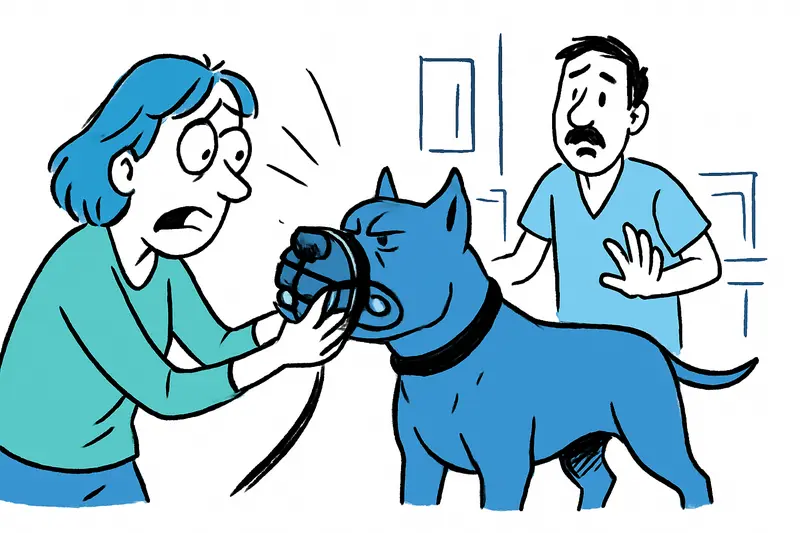
You can imagine the scene: in the clinic waiting area, cicadas chirp outside, the air conditioning fights the heat, a device beeps softly, the smell of disinfectant. A woman tries to put a muzzle on a blind dog, the leash is too loose, the dog is unsettled. A staff member calls out for help, footsteps on the tiled floor, a sliding door slams shut—minutes in which decisions are made that change lives. Such simple moments are often missing in the abstract discussion.
Concrete solutions
1. Before adoption: mandatory behavior assessments and clear information materials for adopters, especially for dogs with disabilities or traumatic histories.
2. Aftercare: mandatory check-ins by the shelter during the first four weeks, possibly a supervised introduction program with an experienced trainer.
3. Clinic safety: veterinary clinics should have standard protocols for aggressive or unsettled animals: separate waiting areas, extra hands when fitting a muzzle, quickly accessible protective equipment and staff training.
4. Authorities and legislation: closer coordination between municipal shelters, veterinary authorities and police; clear responsibilities after an adoption; funding for evaluation and training services.
5. Public outreach: realistic information campaigns—not only prohibitions but practical guidance: how to fit a muzzle, how to recognize stress signals, when to call professional help.
Concise conclusion
The incident is a wake-up call: on the island we need better interfaces between shelters, new owners and clinics. This is not about blanket judgments against breeds but about systems that protect people and animals. If we take adoptions seriously, we must accompany them seriously—with assessments, aftercare and clear procedures in critical moments. Otherwise, a scene that already caused enough harm on a hot Mallorcan morning will repeat itself.
Frequently asked questions
What should I know about adopting a dog with disabilities or special needs in Mallorca?
Why is aftercare important after adopting a dog from a Mallorca shelter?
What should veterinary staff consider when dealing with an unsettled or stressed dog during a clinic visit in Mallorca?
What are the legal expectations for potentially dangerous dogs in Spain and how does that apply in Mallorca?
How can new dog owners in Mallorca recognize stress signals in adopted dogs?
What adoption options exist near Palmanyola for learning about dog adoption and aftercare?
If a dog bites, what steps are typical in Mallorca to address safety and accountability?
How can Mallorca clinics and shelters improve safety around dog adoptions?
Similar News

"Expensive chaos" and many open questions: What clients can do when a lawyer suddenly stops responding
Several clients complain that a well-known German lawyer in Mallorca has been unreachable for months. Key question: What...

TV tip: 'The Last Problem' — Mallorca as the setting of a classic crime
A classic whodunit on Mallorca: A new miniseries set in spring 1959 brings storm, an isolated hotel and a dense web of s...

Nipping Sea Creatures: Why Bathers in Cala Major and Elsewhere Should Be Cautious
In Cala Major, bathers have reported being nipped by small fish. What is behind it, how can problems be avoided — and wh...
Forced eviction in Santa Catalina: When a 65-year-old slept in her car and showered on the beach — a question of responsibility
The story of Pilar López from Santa Catalina represents a problem affecting many Mallorcans: How can an island with a bo...
New traffic rules from October 1: What Mallorca visitors and locals need to know
From October 1, 2026, Spain will implement far-reaching changes to traffic regulations. Important for Mallorca: greater ...
More to explore
Discover more interesting content

Can Cap de Bou

Townhouse Lleo 72
