
Children, tents and electricity-generating bikes: How the eBlue Challenge Llucmajor promotes water awareness
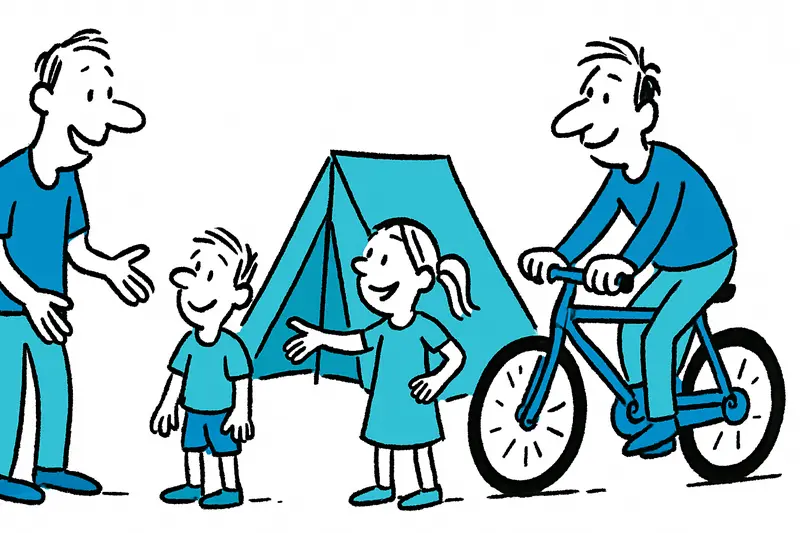
At the beach of s'Arenal, almost 560 pupils gathered late last week for workshops on water, recycling and sustainable mobility. A local collaboration of schools, clubs and the municipality showed that environmental education can be hands-on, noisy and a lot of fun.
Children, tents and electricity-generating bikes: How the eBlue Challenge Llucmajor promotes water awareness
A morning at the start of Avinguda Miramar made environmental education tangible
On a mild morning at the beach of s'Arenal, where the sea gently laps the sand and seagulls circle above the roofs of the beach bars, 558 pupils from Llucmajor gathered. Between tents, colourful stations and the smell of freshly cut fruit, fourth- to sixth-graders learned in a playful way why water is not a given and how everyone can handle it in everyday life.
The municipal administration organised the area in front of Avinguda Miramar as a learning space from 9:15 to 13:30. Five primary schools (CEIP Rei Jaume III, Son Verí, S’Algar, Badies and Urbanitzacions) as well as the Sant Viçent de Paul and Sant Bonaventura schools came on foot or by bus from the districts. In small groups the children went through nine stations with short, action-oriented exercises – just right to keep attention and make the learning stick.
Simple but memorable formats were on display: bicycle generators that produce electricity explained physical effort as an energy source; a relay race about recycling made clear which waste belongs where; and at one corner experts explained local water treatment and the natural water cycle with easy-to-understand illustrations. Between the workshops there were breaks with local fruit and water – a small sign that ecological topics can also be enjoyable.
Maritime everyday life was not neglected. The Club Nàutic de s'Estanyol showed how to tie sailor's knots, while the Club Nàutic de s'Arenal demonstrated compass work and how to set a sail. The Associació Alzinaires added a look at traditional boats, the llaüt, and explained responsibility at sea. Such practical insights often resonate longer than pure theory, especially when you get hands-on and feel the rope in your fingers.
The event was the result of a cooperation between the municipality of Llucmajor, the eMallorca Experience initiative and several partners from business and civil society: representatives from Aqualia, BYD Quadis Dream, Qwello, the Saica Foundation, Viveros Can Juanico, TBC and the nautical clubs supported with materials and know-how. The administration provided tents, tables, signage and staff – the collaboration between the public sector and partners was tangible and practical that morning, mirroring wider efforts such as 86 interactive screens and 400 bike racks.
What stands out positively on Mallorca: environmental education does not have to be a dry matter. When children learn on the beach how drinking water is created through technology and natural cycles, when they combine recycling with a race or generate electricity themselves with a bicycle, an immediate awareness grows. And this awareness can later mean not leaving the tap running at home, choosing a bike ride instead of a short car trip, or paying attention to local products when shopping.
Looking ahead: such formats are easy to repeat and expand. It would be practical to deepen the content during the school year— for example a visit to a treatment plant, a project to map a school's water balance using a real-time water map, or regular cooperation with the nautical clubs. Parent evenings with demonstrations could bridge school knowledge and household routines. There is no one-size-fits-all solution: the more places on the island that offer such tangible experiences, the more everyday behaviour will change, as do other local measures such as cleaning torrents against heavy rain.
At the end of the morning, when the tents were taken down and the children streamed back onto the buses, the impression remained that a piece of Mallorca's future had become a little more conscious. Sounds of cheerful bustle, applause during the closing round and the soft murmur of the sea felt like a promise: when education is fun and locally rooted, it finds its way into households, into small decisions and thus into the island's future.
Frequently asked questions
What is the eBlue Challenge in Llucmajor?
Why is water awareness important for children in Mallorca?
What did pupils learn at the beach event in s'Arenal?
How can children learn about recycling in a more practical way?
Can children in Mallorca learn how electricity is generated from physical effort?
What role do the nautical clubs play in environmental education in Llucmajor?
Who took part in the water awareness event in Llucmajor?
What kind of school activities help children build better habits around water and sustainability?
Similar News
More Electric Cars in the Balearic Islands: Sales Rise Sharply
Between January and August, 14,185 vehicles without petrol or diesel propulsion were sold — an increase of more than 40 ...
Autumn in Mallorca: What Truly Remains of Summer
The days grow shorter, the evenings cool — and yet more of summer lingers than you might think: sounds, recipes, people,...
Rescue operation at Tolleric: Why nighttime cliff parties become dangerous
A British holidaymaker fell about ten meters at the cliffs of Tolleric during the night, later climbed back up and was r...
Car accident on the MA-1: Mother and daughter on a bicycle struck by a fellow countryman – Who protects cyclists here?
On the MA-1 between Portopí and the Cala Major exit, a mother and her daughter on a bicycle were struck by a car. A para...
Smoke over the UIB: Who is responsible for the fire on the roof?
On Saturday afternoon a fire broke out on the roof of the Arxiduc Lluís Salvador building at the University of the Balea...
More to explore
Discover more interesting content

Can Cap de Bou

Townhouse Lleo 72
