
The Nameless at Sea: Why Mallorca Must Not Brush Off More Than 150 Unidentified Dead
The Nameless at Sea: Why Mallorca Must Not Brush Off More Than 150 Unidentified Dead
More than 150 people lie buried or stored in refrigerated chambers in the Balearics without an identity — mostly migrants, some victims of violence. A reality check: How can we establish their names, who is missing from the discourse, and what practical steps could be taken?
The Nameless at Sea: Why Mallorca Must Not Brush Off More Than 150 Unidentified Dead
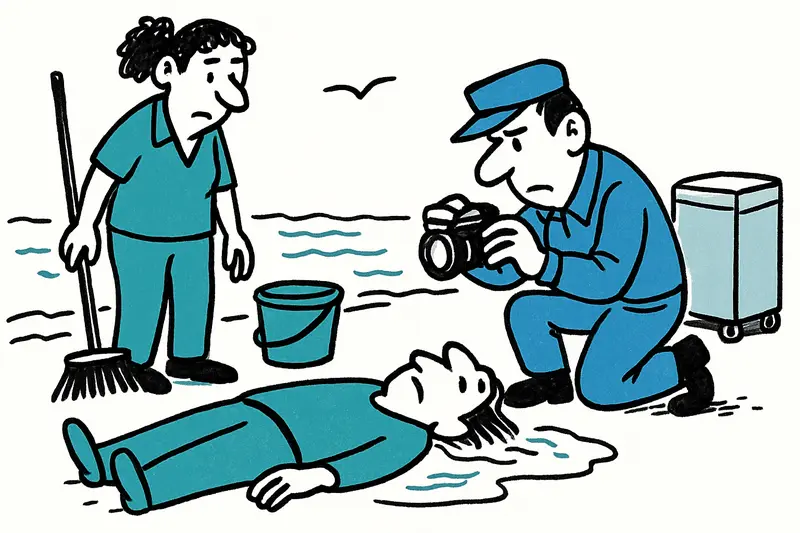
On the Paseo Marítimo it smells of old diesel, gull cries and espresso. A fisherman on the quay hauls in his nets, speaking quietly of a carcass that washed up at Cala Major last week. Such scenes are everyday here: people cleaning the beach, police taking photos, and—more and more—refrigeration units reaching their limits. Numbers barely discussed at the bar: more than 150 cases of unattended corpses and body parts in the Balearics in recent years, a trend reflected in local reporting such as Two Dead on Balearic Coasts: When the Sea Withholds Answers.
Key question
How can an island community that relies heavily on the sea ensure that people who die on its shores do not remain anonymous — and that possible crimes do not sink away in the water?
Critical analysis
The facts are sober: since 2022 the registered number of unidentified dead in the Balearics has risen significantly (from around 90 to over 150 by 2026). Around 100 cases are currently being processed with DNA traces. A large share of those found at sea come, according to authorities, from North Africa; many of these deaths are part of a migration dynamic in which boats capsize or people die from exhaustion and deprivation. Incidents like Shipwreck at Cala Millor: One Dead, Many Questions — How Can We Better Protect People? illustrate this. In addition, there continue to be cases in which violence is involved — historical examples show that murders can also end up in the sea.
The systems we rely on show weaknesses: cooling capacity at the forensic institute in Palma is limited, international coordination with countries of origin does not work reliably, and many identification procedures take years or run into dead ends. DNA analyses help but reach their limits when no reference profiles exist or consulates do not cooperate. Added to this is the fact that corpses are often washed ashore over long distances by currents — a logistical and forensic problem at once, as highlighted by reports such as Body Recovered off East Coast: A Sign of Larger Problems at Sea?.
What's missing from the public discourse
Conversations mostly revolve around numbers or political debates on migration. Three practical levels are missing: first, a clear breakdown of how long cases are archived and who has access to the data; second, binding protocols for international cooperation in identification; third, transparent documentation of anonymously buried persons so families can find information later. Equally rarely discussed is the preventive side: more rescue capacity at sea reduces suffering and the number of unclaimed remains alike. The political and rescue imperatives are stressed in coverage such as 18 People Missing off Mallorca — A Call to Politics and Society.
Everyday scene from Mallorca
A Guardia Civil officer sits on a lamppost in Portixol, a thermos beside him. He speaks softly about how months ago he recovered a swollen piece of clothing that apparently belonged to a migrant. 'We give them a number, a protocol, a photo,' he says, 'but a name — that's something else.' Next to him a woman sweeps the promenade; her hands smell of saltwater and cleaning agents. Such images linger: the routine of helpers, the exhaustion of colleagues in forensic medicine, the hope of the few searching for relatives.
Concrete solutions
Complaining is not enough. Practical steps would include:
1. Expanded cooling and storage capacity: Modular refrigerated containers could bridge bottlenecks. In the short term, such units could be placed at ports or at the institute of forensic medicine.
2. Central, publicly accessible registry: A data-protection-compliant database with photos, described features and find location that relatives and aid organisations can search. Not a sensational archive, but a service for identification.
3. Concentration of forensic resources: More staff for DNA analysis, training for forensic pathologists in isotope analysis and forensic anthropology, and cooperation with universities.
4. Improved international cooperation: Open channels to consulates and NGOs in North Africa, agreed procedures for comparing DNA samples and faster responses to inquiries.
5. Strengthen on-site search and rescue capacities: More buoy patrols, closer coordination with sea rescue and clearer reporting channels for dangerous boats.
Conclusion
The nameless dead are not statistics; they are traces of human lives that end on our coasts. Mallorca cannot prevent everything, but it can do more so that these deaths do not disappear in bureaucratic indifference. Improving processes — from the place where a body is found to an anonymous grave with clear documentation — increases the chance of assigning a name to victims and, where necessary, finding perpetrators. This is a matter of humanity and the rule of law alike.
At the end of the day, when the promenade is empty and the lamps switch on, the question remains: do we want the island to be only sea and rocks, or also a place that returns a face and a name to the deceased?
Frequently asked questions
Why are so many unidentified bodies found in the sea around Mallorca and the Balearics?
How does Mallorca identify unidentified dead found on the coast or at sea?
What happens when an unidentified body is found in Mallorca?
Why is the forensic institute in Palma struggling with unidentified bodies?
Are unidentified bodies in Mallorca always linked to migration?
What can Mallorca do to improve the identification of people who die at sea?
Where are unidentified dead from Mallorca usually processed or kept?
Can families search for missing relatives who may have died near Mallorca?
Similar News

More Electric Cars in the Balearic Islands: Sales Rise Sharply
Between January and August, 14,185 vehicles without petrol or diesel propulsion were sold — an increase of more than 40 ...
Autumn in Mallorca: What Truly Remains of Summer
The days grow shorter, the evenings cool — and yet more of summer lingers than you might think: sounds, recipes, people,...
Rescue operation at Tolleric: Why nighttime cliff parties become dangerous
A British holidaymaker fell about ten meters at the cliffs of Tolleric during the night, later climbed back up and was r...
Car accident on the MA-1: Mother and daughter on a bicycle struck by a fellow countryman – Who protects cyclists here?
On the MA-1 between Portopí and the Cala Major exit, a mother and her daughter on a bicycle were struck by a car. A para...
Smoke over the UIB: Who is responsible for the fire on the roof?
On Saturday afternoon a fire broke out on the roof of the Arxiduc Lluís Salvador building at the University of the Balea...
More to explore
Discover more interesting content

Can Cap de Bou

Townhouse Lleo 72
