
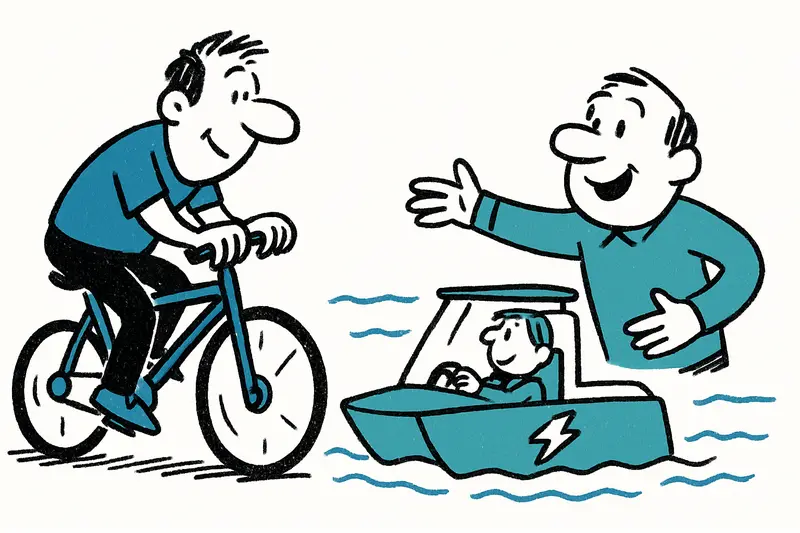
Electric Pedals and Electric Catamaran: eBoat Brings Sustainability to Parc de la Mar
Electric Pedals and Electric Catamaran: eBoat Brings Sustainability to Parc de la Mar
Over the weekend eBoat turned Parc de la Mar into a small workshop for sustainable mobility: children crafted, families tried electric buses, and a silent catamaran rested at sea. An event that inspires a different way of thinking.
Electric Pedals and Electric Catamaran: eBoat Brings Sustainability to Parc de la Mar
A noisy afternoon without exhaust fumes – playful, local, practical
On the waterfront in front of the cathedral, where the salt hangs in the air and the seagulls flap over the flags, an unusual bustle could be observed on Saturday. Not loud engines, but children's laughter and the occasional click of a model car set the soundscape. eBoat aims to make technology and environmental topics approachable – and the simplest way worked best here: try rather than lecture.
In the Parc de la Mar tents, stands and small activity islands stood close together. The theatre group with the workshop "Mar y Energía" drew the youngest into an improvised performance about sea, wind and sun. Nearby, children crafted new toys from packaging materials at Saica's recycling stand; parents applauded, some looked rather surprised at how skillfully boats suddenly emerged from paper plates.
For the technically curious the BYD Quadis Dream was on display: an electric car meant to be touched. The municipal transport company EMT brought a fully electric bus, and anyone who wanted could take a look into the cockpit with driver Carolina Bernabé. Such encounters are important: many who otherwise only stand at bus stops could get an idea of how a bus runs without diesel.
The event was much more than a motor show. Scoobic Baleares explained how cargo can be moved electrically in the city, and Melib showed a map of charging stations that makes recharging transparent. Those who wanted could pedal at EcoPower Bikes: by pedaling visitors generated electricity for small devices – a highly visual moment that surprisingly well illustrated how much energy we can produce with our bodies.
On the water was the quietest moment of the day: the fully electric catamaran Blue Circle lay still in the bay. Under the command of Nico, who has accompanied previous editions, a small team explained how silent sailing on the sea works, a practice illustrated by a sailboat converted to an electric motor in Mallorca. This is no longer just future talk, but a tangible offering you can touch, board and ask about.
Between the stands Gonzalo and other volunteers kept things moving: the remote-controlled course at the lake proved a crowd puller. Young people and parents cheered on the mini racing cars, while nearby city officials together with visitors tested the stationary bicycle – the bike pedals became a symbol of change.
Mayor Jaime Martínez was on site and praised the format; Antonio Deudero (Mobility Department) and Antonio Román (Director General Mobility) also stopped by. Such visits are more than photo opportunities: they show that administration, manufacturers and people on the street come into conversation – often the first step toward noticeable changes, such as renewing the bus fleet or expanding bike lanes.
What stays with you from a day like this? Two everyday observations: first, the barrier to try something new falls when you can touch it. Second, sustainability gains credibility when it is fun – when crafting, pedaling, or boarding a quiet bus.
In Mallorca, where tourism, city traffic and nature are closely intertwined, formats like this work particularly well. They don't replace slogans, but they turn abstract concepts into concrete images: a map of charging stations, an electric delivery scooter, a child with a self-built cardboard boat. That's the kind of communication that reaches everyday life and sparks conversations – in cafés on the Passeig, in the neighbourhood around Plaça Cort or on an evening walk along the Passeig Marítim.
If eBoat leaves a small lesson, it's this: change needs stages. Not only studies, not only summits, but places where people can try, ask and laugh. Those looking for ideas on how to make the island less dependent on fossil fuels should not only look at big numbers, but repeat, expand and replicate such afternoons in small venues across the island.
At the end of the day many visitors went home feeling they'd seen something usually only found in brochures. And that may sound banal, but on Mallorca, between the promenade and the Tramuntana, that's exactly the beginning that's needed: a quiet catamaran, loud children's cheers and people who suddenly know how to find a charging station.
Outlook: More events like this would mean: more access, more hands-on practice, less fear of technology. A small, well-used Parc de la Mar can lead to many small changes – and many small changes add up.
Frequently asked questions
What was the eBoat event at Parc de la Mar in Mallorca about?
Is Parc de la Mar a good place for family events in Mallorca?
Can you see electric buses and cars in Mallorca events like eBoat?
How do children learn about recycling and energy at events in Mallorca?
What is it like to ride an electric catamaran in Mallorca?
What is the best way to get to Parc de la Mar in Mallorca?
Do events in Mallorca usually show where charging stations are located?
Why do sustainability events work well in Mallorca?
Similar News

Mueller continues expanding in Mallorca: Artà in 2026, Can Picafort in early summer 2027
The drugstore chain Mueller is opening two new stores in Mallorca: a 1,400 m² shop in Artà on 5 November 2026 and a bran...
The Painter Who Lived Mallorca: Franz Taussig and His Century-Old Secret
A hundred years ago a young Viennese arrived in El Terreno, sketched the island and called himself Francis Caron. Today ...

Airport dispute: Bridge, forecasts and the question of responsibility
A video by the Spanish transport minister has ignited the dispute over DORA figures, capacities and local governance pow...

The Painter Who Invented Himself: How a Young Viennese Drew Mallorca
A hundred years ago a 19-year-old draftsman arrived in El Terreno. His diary and sheets, long known under the pseudonym ...

Released with Conditions: The Plus Ultra Suspicion and a Mallorcan Finca as Residence
A Dutch entrepreneur, sought in connection with the Plus Ultra case, was extradited to Spain after his arrest in Germany...
More to explore
Discover more interesting content

Can Cap de Bou

Townhouse Lleo 72
