
Small but impactful? The 'Emerald Sakara' and Palma's intermediate format
The new boutique ship 'Emerald Sakara' doesn't fit the usual categories. Can a compact luxury liner relieve pressure on Palma while also benefiting local businesses — without creating new problems?
Small but impactful? The 'Emerald Sakara' and Palma's intermediate format
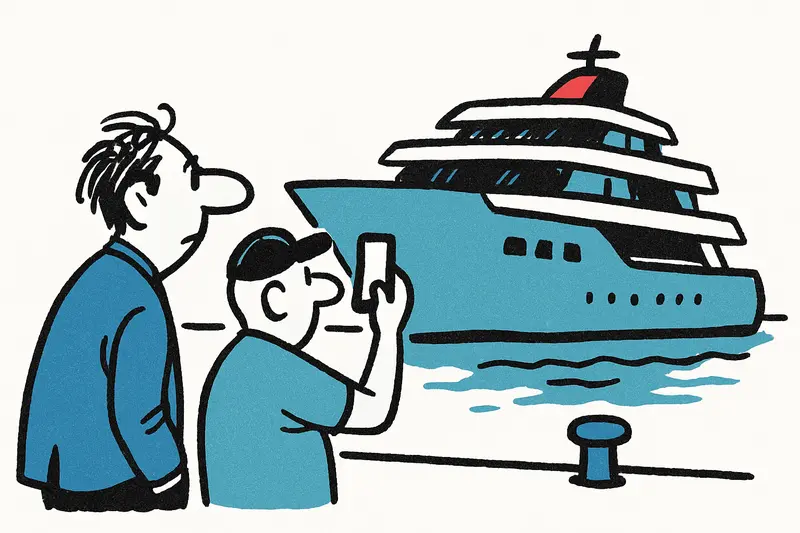
Early in the morning, before the sun had properly warmed the cathedral, the Emerald Sakara berthed in Palma. The Passeig Marítim smelled of sea, espresso and freshly polished railings. A few passersby stopped, seagulls cried, a harbor lamp clattered in the wind — a small scene that made the city pause for a moment. It is a different arrival than with the usual cruise giants: compact, quiet, visible but not overwhelming.
Main question: relief or displacement?
The central question is: can this in-between format actually help reduce pressure on Palma, or are we just shifting problems into a different form? At first glance the model seems attractive. Around 100 guests, a maximum of 50 cabins, four passenger decks — not a giant flooding the promenade. But a single number answers little. What matters are the patterns: how long do guests stay, how do they move around the city, how are emissions and waste handled, and how do local suppliers actually benefit?
Economic opportunities — but with caveats
Unlike a one-hour cruise stop, stays are often longer: dinner in small restaurants, shopping in the old town, comparing prices across the city known for large supermarket price differences, bookings for guided tours in Sóller or trips into the Tramuntana. For quay cafés, taxi drivers and private operators these are welcome revenues — especially in the off-season. But the effect is more fragmented. Instead of a large sales boost, money is spread across many actors; that does increase local embedding, but it also makes the impacts harder to measure and to plan.
Aspects that seldom make noise
What is often missing from public debates: the crew infrastructure and its consequences. Crews need food, accommodation and crew transfers — that increases on-site logistics. The supply chains of smaller ships are different too: more frequent fresh deliveries, more individual shipments, more short shuttle trips. There are also technical questions such as the availability of shore power or the disposal of onboard waste. These details determine whether the model is truly more environmentally friendly or merely less visibly burdensome.
Concrete solutions for Palma
Palma can seize the opportunity — with clear rules and practical partnerships. Proposals that could be implemented immediately:
1. Seasonal management and incentives: Lower berthing fees in the off-season, tied to sustainability criteria (e.g. use of shore power, waste reduction). These incentives could be aligned with municipal funding such as the €624M investment package.
2. Pilot zones and time windows: Designated quay zones for boutique ships and defined arrival/departure windows reduce traffic and noise peaks. A model of limiting numbers and setting rules can be seen in the city's measures to reduce stalls at market events like the reduction of stalls at Palma's Christmas market.
3. Crew and logistics management: Coordination of crew changes and deliveries through central hubs instead of many individual transfers; partnerships with local hotels for crew accommodations — possibly using upgraded transport hubs such as Palma's intermodal station modernization.
4. Make ecology measurable: Mandatory monitoring reports on emissions and waste that are publicly accessible — making transparency a condition for port access.
5. Strengthen local value creation: Preference for local suppliers for provisioning and services; training for local tour operators to better meet guest expectations.
A pilot project with restraint
A pragmatic approach would be a multi-year pilot: reserve specific berths, collect data (length of stay, spending, emissions) and develop rules together with operators, merchants and environmental authorities. If Palma acts proactively, it can find the balance between economic benefit and limited burden.
Finally: a culture of smallness
The Emerald Sakara represents a different tempo. You hear it in the faint whir of the engine instead of the dull bass of large ships, in the laughter of a handful of guests on the upper deck rather than the chorus of hundreds. That does not automatically make it a panacea — but it is a model Palma can use if the city sets the right rules. Otherwise, a well-intentioned in-between format could end up as an additional layer of bureaucracy and burden.
The morning on the Passeig is still fresh. A waiter wipes cups, a dockworker casts an appraising glance at the ship, and somewhere in the old town the first table service begins. Small can be charming — but only if you know how to handle it.
Frequently asked questions
What makes a small cruise ship in Palma different from a large cruise liner?
Can boutique cruise ships really reduce pressure on Palma?
What do cruise passengers usually do in Palma when they stay longer?
How does the Emerald Sakara fit into Palma's cruise scene?
What are the main environmental concerns with smaller cruise ships in Palma?
What can Palma do to manage boutique cruise ships better?
Why are local suppliers important for cruise ships in Palma?
Is there a better way to handle cruise arrivals in Palma during the off-season?
Similar News

Towel on It, Chair Gone? How Hotels Can Regulate Reservations of Sun Loungers
After a deadly dispute in Greece, the question has resurfaced in Mallorca: Are hotels allowed to ban or sanction the pra...

Illetas: Police Officer and Two Lifeguards Rescue Two Female Tourists from the Sea
Late on Friday afternoon emergency responders entered the water off the coast of Illetas: a local police officer and two...

Inca: Severely injured female dog found in garbage bags in a container – who has seen anything?
In Inca, a severely injured female dog was discovered wrapped in two garbage bags inside a container on Avenida Rei Jaum...

Pre-Nit de l’Art in Palma: Champagne, Spray Can and Studio Flash in the Old Town
Red carpets, a photographers' stand and live performance: the Pre‑Nit de l’Art filled Galerie Mensing with around 400 gu...
Failed before the first flight: How Fischer Air's plans for Palma were ground down
Announced routes, repeated postponements and now apparent insolvency: Why the Fischer Air project for Mallorca is not me...
More to explore
Discover more interesting content

Can Cap de Bou

Townhouse Lleo 72
