
Emergency in El Arenal: When a Burst Cocaine Capsule Becomes a Life-Threatening Risk
A man collapsed in the hotel area of El Arenal after a cocaine capsule he was carrying inside his body burst. A police officer's quick action likely saved his life. Why such cases are increasing in Mallorca and what can be done.
Emergency in El Arenal: When the hotel area suddenly becomes an incident site
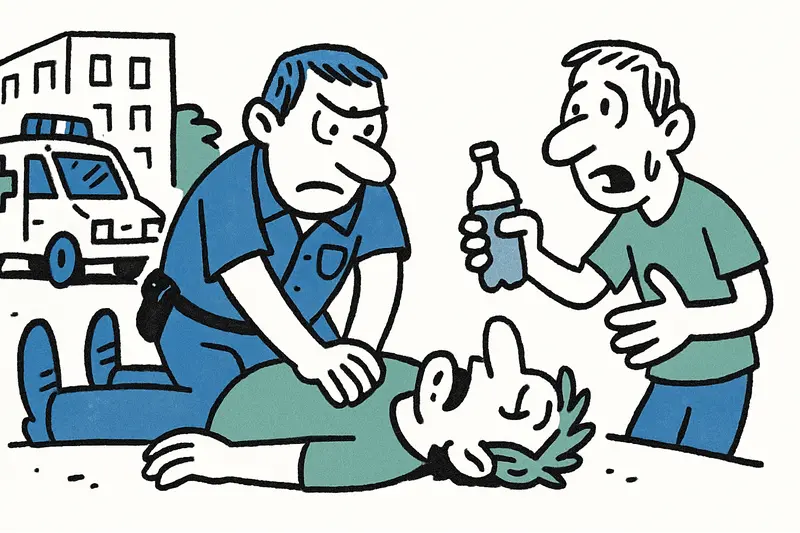
It was one of those typical mornings in El Arenal: delivery vans, palm trees, voices in different languages and the smell of sunscreen and freshly brewed coffee. Around 11 a.m. a 34-year-old man suddenly collapsed — convulsing, unconscious, in the middle of the pavement in front of a hotel, an event later reported as Emergency in El Arenal: When a Burst Cocaine Capsule Becomes a Life-Threatening Risk. A patrol officer from the Llucmajor area, who happened to be nearby, immediately began cardiopulmonary resuscitation and maintained the measures for about 15 minutes until rescue services arrived.
How does an incident like this fit into a holiday world?
The examination at Son Llàtzer hospital revealed a shocking answer: the man had several capsules filled with cocaine in his stomach — one of them had burst, as documented in Emergencia en El Arenal: hombre se desploma tras reventar cápsula de cocaína. The result: an acute poisoning that led to cardiac arrest. Such "bodypacker" cases are rare but always brutal and dangerous. They affect not only the people involved but also tourists, hotel staff and emergency personnel who must make decisions under time pressure.
The key question: Are we sufficiently prepared?
The operation raises a simple but pressing question: How well are our structures in Mallorca prepared for such scenarios? In El Arenal, where holiday life and everyday life meet closely, it was once again shown how much quick first aid can save lives. The police officer from Llucmajor acted decisively and professionally — his intervention is considered by medical professionals to have been decisive for the patient's chance of survival. But what about prevention, education and cross-border cooperation?
Problems that are often neglected in the public debate
First: the medical threat posed by burst drug capsules is specific and dangerous. Standard knowledge in emergency medical care should therefore be supplemented by training on drug poisonings and their particularities. Second: the hotel area is a public space in which there are fine divides between tourist operations and police control — the balance between security and hospitality is delicate. Third: international smuggling routes are constantly changing. Authorities are currently examining, among other things, flight connections from France as a possible arrival route — this requires rapid information exchange between airports, border police and local emergency services.
Concrete opportunities and approaches
A few proposals that would be relatively easy to implement in Mallorca and could improve safety:
1. More first aid and emergency training for hoteliers, lifeguards and taxi drivers: If more people in the hotel area know basic resuscitation measures, survival chances increase significantly.
2. Specialized further training for rescue and police teams on drug poisonings: knowledge about symptoms, first measures and risks with bodypackers can prevent treatment errors and optimize response times.
3. Better interinstitutional communication — faster reporting chains between airport and border authorities, police and hospitals, coordinated regionally and across Europe. Suspicion should be shared early without unnecessarily disrupting daily tourist life.
4. Prevention and education in the countries of origin and among tour operators: Many bodypackers travel out of economic necessity or desperation. In the long term, social measures and information help more than pure law enforcement.
What does this mean for residents and tourists?
For those in the immediate vicinity of incidents the rule is: stay calm and give emergency services room to work. For tourists the message is less dramatic than it sounds — Mallorca remains a safe destination. Nevertheless: the incident is a reminder of how fragile life can be and how much our safety depends on well-trained responders and functioning structures, a point also highlighted by other local emergencies such as the Critical Bathing Incident at Arenal: Call for Better Protective Measures. The sirens that echoed through the hotel area that morning are a reminder to act deliberately and in a coordinated manner rather than automatically when providing help.
Looking ahead
The patient remains in a critical condition in intensive care; investigations into suspected drug trafficking are ongoing. Whether the suspected route via France will be confirmed remains to be seen. One thing is clear: such cases demand more than outrage. They need a bundle of measures — medical, police and social. Previous cases such as Sudden death at Balneario 2: What the incident in Arenal reveals about our emergency preparedness underline that point. If politicians, authorities and local actors work together here, Mallorca can not only better cope with the acute consequences of such incidents but also become safer in the medium term without losing the island's open, touristic character.
If you observed anything suspicious that morning (people, vehicles, luggage), please contact the police. For neighbors the advice remains: stay calm, give room to emergency services and trust the helpers on site.
Frequently asked questions
What should I do if someone collapses suddenly in Mallorca?
Can swallowed drug capsules be life-threatening?
Is El Arenal in Mallorca still safe for tourists?
What kind of first aid training is useful for hotel staff in Mallorca?
What happens at Son Llàtzer hospital in a drug poisoning emergency?
How should tourists react if there is a medical emergency near their hotel in Mallorca?
Why are police and hospitals in Mallorca concerned about bodypackers?
What should residents do if they saw something suspicious in El Arenal?
Similar News
Seven Hours in the Heat: What Happens When the Ferry's Air Conditioning Fails?
Passengers report more than seven hours of sweaty travel between Palma and Valencia. A thermometer in the cafeteria show...
Blind dog, serious consequences: How safe are adoption processes in Majorca?
A blind American Bully named Bruno bites a volunteer severely. The incident raises questions about intake practices, car...
Between Welcome Banner and Demonstration: Camp de Mar Makes a Statement — Is It Enough?
A banner at the entrance to Camp de Mar declares: "Tourists are welcome here." The gesture coincides with a large demons...
Major fires near Madrid and Avila: A reality check for Mallorca
More than 60,000 people are affected, a state of emergency has been declared. What do the major fires around Madrid tell...
How far can protest against tourism go? A reality check from Mallorca
A guide, arrests and antisemitic graffiti — how does the island protect freedom of expression without tipping into viole...
More to explore
Discover more interesting content

Boat Tour with BBQ along Es Trenc Beach
Private transfer from Mallorca Airport (PMI) to Pollensa
