
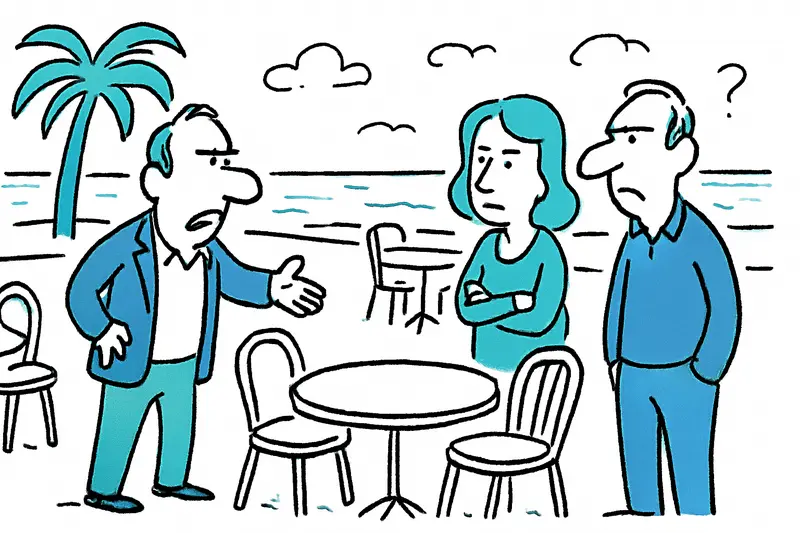
Empty tables on the Paseo Marítimo: Who is responsible for Palma's waterfront mile?
Empty tables on the Paseo Marítimo: Who is responsible for Palma's waterfront mile?
After years of construction, Palma's Paseo Marítimo remains sparsely visited. Parking problems, rising rents and a new nightlife in industrial areas are straining local businesses.
Empty tables on the Paseo Marítimo: Who is responsible for Palma's waterfront mile?
After renovation the customers stay away — and the nightlife moves elsewhere
Key question: Why don't venues on the Paseo Marítimo refill after major construction works — and who needs to act now?
If you walk along Avenida Gabriel Roca on a milder January evening, you don't just hear the distant churning of excursion boats, but above all empty chairs. The promenade shines clean, new lamps cast warm light on the palm trees, but many establishments have more reservation signs than guests. This is not a one-off impression — conversations with restaurateurs, suppliers and regulars confirm the pattern: after COVID and long construction phases, visitor numbers have clearly declined, as detailed in Paseo Marítimo: Big Spending, Little Everyday Usefulness.
Critical analysis
The facts are simple: months of building works break habits. Once people find their regular table elsewhere, they do not automatically return. Almost all businesses also report higher fixed costs. Rents are rising, energy and supply costs are squeezing margins, and access to the waterfront road remains a problem. Parking is scarce; for many visitors the car is still the most convenient option — a point raised in Who is Palma's new waterfront boulevard really for?. At the same time, event venues and club nights are shifting to industrial areas with large parking lots and cheaper spaces. People go there to party, order and park; visitors stay longer and apparently spend more.
This leads to a divided city: tourist façades by the sea with empty interiors and a functional nightlife on the outskirts where economics and logistics work better together. In this logic the Paseo suddenly appears as a beautiful but inefficient stage.
What is missing from the public debate
The public debate often focuses on construction delays and funding, and less on the return of customers. There is a lack of honest discussion about how mobility, price developments and usage patterns are changing in the long term. The perspective of employees is hardly heard either: service staff, delivery drivers, suppliers — they experience the structural change daily and could provide clues about which offerings are truly missing. There is also little talk about small infrastructural measures that could have a low-threshold effect, such as temporary parking areas or clear night bus lines on weekends, a practical angle explored in Paseo Marítimo: More boulevard, more questions — will Palma make the new waterfront part of everyday life?.
Everyday scene from Palma
In the past, on a summer evening, the area pulsed: late pedestrian traffic, music from open doors, the clinking of glasses. Today you see delivery vehicles, a couple walking and the occasional closed shutter. On the small plaza near the Moll de la Lonja an older waitress sits in her jacket counting beer crates, while a party bus tour laughs loudly across the way — it stops at the harbor, parks briefly and moves on. The tills, however, remain silent.
Concrete proposals
1) Short term: A trial phase with parking management could show whether more weekend parking brings customers back. Temporary parking zones at the edge of the center, combined with a shuttle service or discounted taxi vouchers, would be pragmatic.
2) Transport: Night bus lines on main weekends and coordinated taxi shifts for hot spots. If getting to the venue feels uncomplicated, visitors are more likely to stay longer.
3) Economic: Graduated commercial rents for renovation zones and temporary tax relief for small businesses would ease pressure. The city and property owners could agree on time-limited rental subsidies until footfall stabilizes again.
4) Offerings: Joint weekly events by restaurateurs, market stalls and cultural actors to concentrate visitor flows. An evening market, street music and extended terrace hours signal activity and create atmosphere.
5) Collaboration: A local working group of restaurateurs, hoteliers, transport providers and the city administration to plan and test measures within a few weeks. Small steps, implemented and evaluated quickly, instead of months of discussion.
Pointed conclusion
Palma's Paseo Marítimo is not lost, but it is hurt. The shiny promenade alone does not bring guests back — people need easy access, affordable offers and reasons to return. Those who now wait for large funding programs overlook the tangible levers on the doorstep: parking, transport links, flexible rents and joint programming. If city and businesses do not tackle these quickly, Palma risks losing its waterfront promenade as a lively meeting place to sober industrial parks — beautiful, but empty.
Frequently asked questions
Why are so many restaurants on Palma's Paseo Marítimo still half-empty after the renovation?
Is the Paseo Marítimo in Palma still worth visiting at night?
What makes it harder for visitors to return to Palma's waterfront restaurants?
Where is Palma's nightlife moving to instead of the Paseo Marítimo?
What practical changes could help the Paseo Marítimo in Palma feel busier again?
What is the Paseo Marítimo in Palma like on a quiet winter evening?
Who should be responsible for improving Palma's Paseo Marítimo now?
Why do some parts of Palma feel more useful for nightlife than the Paseo Marítimo?
Similar News
Injured captain, big plans: Germania Mallorca before the away match in Consell
The newly founded FC Germania Mallorca travels to Consell on Saturday. Captain Bastian Müller is out injured, but coach ...
Palma, Palma de Mallorca, Palma‑Mallorca: What is it really about?
The debate over the city's name is more than grammar: it concerns identity, law and branding policy. A sober reality che...
Warning to Bathers: Nipping Fish in Cala Major and Other Coves — a Reality Check
In Cala Major and several beaches around Mallorca, bathers report painful “nips”. Who are the animals, why are they gett...

Rental Car Theft in El Arenal: What This Incident Reveals About Our Gaps
A teenager steals a running rental car in El Arenal, flees on foot, climbs over walls and is caught by the Guardia Civil...

Red Rope in Palma's Library: What Helps Against Selfie Tourism — and What's Missing
Palma's city library cordoned off an area with a red rope to keep selfie tourism away from reading and working activitie...
More to explore
Discover more interesting content

Can Cap de Bou

Townhouse Lleo 72
