
Eviction in Palma: What remains after the 'House of Horrors'?
Eviction in Palma: What remains after the 'House of Horrors'?
The vacant building on Carrer de Reyes Católicos (No. 31) was cleared, cleaned and secured against re-occupation. Residents breathe a sigh of relief — but the eviction does not address the deeper problems of vacancy, housing shortage and social insecurity.
Eviction in Palma: What remains after the 'House of Horrors'?
Key question: Is a door and an alarm enough to solve a decades-old problem?
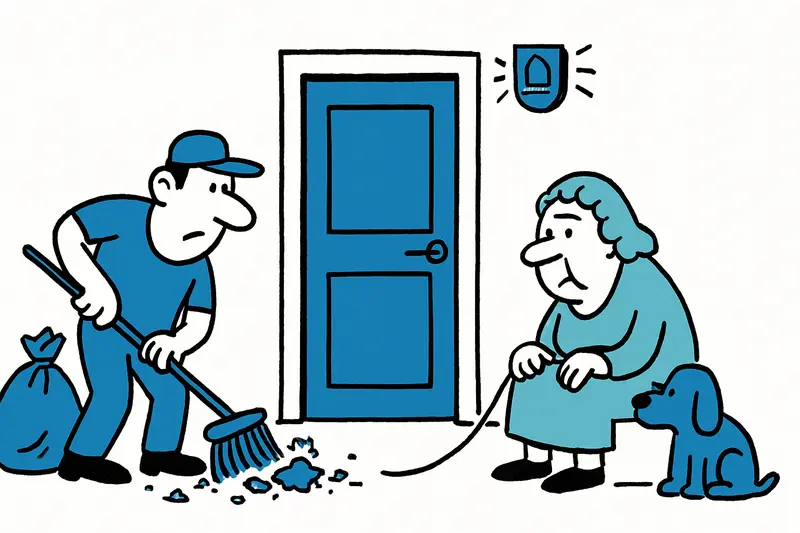
Early on Monday morning the smell of espresso and wet cement still hung over Carrer de Reyes Católicos when residents reported that the building at number 31, which had been occupied for years, had been cleared. Craftsmen installed a new reinforced door, an alarm flashed, and the same familiar sounds followed: brooms, trash bags, voices laughing with relief. For many people on the street it felt like a moment of deep breath after a long time.
The facts, as described by neighbors and visible measures: the unfinished residential block was cleared, cleaned and structurally secured. In recent years the property had shown various dark sides: drug use, dealing, signs of violence and even deaths. The insolvency of the developer left the building in a legal and practical no-man's-land, which attracted squatters and put residents on alert (court confirmation that Son Banya belongs to the city of Palma).
Critical analysis: A locked door is undoubtedly necessary. But it is primarily a short-term solution for a longer-term tangle of problems; a look at causes, blind spots and solutions in Palma's housing crisis explains the wider dynamics.
What is often missing in the public debate are concrete answers on reuse and social care. It is not enough to report that an eviction took place; we must ask which steps will follow to prevent re-occupation while offering help. Many squatters are not criminals per se, but people in precarious situations — without stable housing, with addiction problems or without access to support services (why tenants are now paying the price on the Balearic Islands). If this is solved only with police action, the problem will at best be shifted to another place.
An everyday scene from Palma: opposite the building an elderly woman sits on the stone steps of a café, the dog on a leash, and talks about nights of noise and sirens. Children from the neighboring house run by, their school cones clattering, a delivery van stops, and the man from the kiosk wipes the display. It is these small, dependable routines that need to reestablish themselves after years of uncertainty — they are the real measure of safety in the neighborhood.
Concrete solutions that should now be on the table: first, a binding inventory of all vacant buildings in Palma with deadlines for owners to carry out repairs and security measures. Second, a rapid, interdisciplinary response team: city administration, housing offices, social workers and police who not only clear properties but register people, offer support services and provide temporary solutions. Third, consideration should be given to whether properties like No. 31 can be converted quickly into social housing — with clear legal and financing paths so the city does not have to wait years for decisions.
We also need enforceable sanctions against owners who allow buildings to decay, as well as fiscal incentives to bring them into useful use. Finally: a transparent reuse plan that involves the neighborhood. Residents should know whether a house will become a rental unit, supported housing or another use — otherwise rumors and mistrust persist.
Another point: preventive work. Mobile addiction and social support teams, night patrols with low-threshold access to help and coordinated prevention work in schools and on the street reduce the likelihood that abandoned buildings will become refuge again for people in need.
Precise conclusion: The eviction of No. 31 is a beginning, not an end. It removes visible dangers and gives neighbors room to breathe. But without a plan for use, care and legal clarity the same problem risks reappearing elsewhere. Anyone who wants lasting peace in Palma's streets must think vacancy, social support and urban planning together — otherwise the security measure remains a patch on a deeper wound.
The picture in the evening: lamplight casts long shadows on the freshly secured door. A man stops briefly, knocks on the wood, shakes his head and says softly: 'Finally.' It is a human sentence that must not make us forget that the real work now begins.
Frequently asked questions
What happens after an abandoned building is evicted in Palma?
Why do some vacant buildings in Mallorca become occupied for years?
Is a new door and alarm enough to secure a building in Palma?
What should Mallorca cities do with derelict buildings after an eviction?
Why are neighbors in Carrer de Reyes Católicos relieved after the Palma eviction?
Can empty buildings in Palma be turned into social housing?
What role do social workers play in clearing occupied buildings in Mallorca?
How can Palma prevent another 'House of Horrors' situation?
Similar News

"Expensive chaos" and many open questions: What clients can do when a lawyer suddenly stops responding
Several clients complain that a well-known German lawyer in Mallorca has been unreachable for months. Key question: What...

TV tip: 'The Last Problem' — Mallorca as the setting of a classic crime
A classic whodunit on Mallorca: A new miniseries set in spring 1959 brings storm, an isolated hotel and a dense web of s...
Nipping Sea Creatures: Why Bathers in Cala Major and Elsewhere Should Be Cautious
In Cala Major, bathers have reported being nipped by small fish. What is behind it, how can problems be avoided — and wh...
Forced eviction in Santa Catalina: When a 65-year-old slept in her car and showered on the beach — a question of responsibility
The story of Pilar López from Santa Catalina represents a problem affecting many Mallorcans: How can an island with a bo...
New traffic rules from October 1: What Mallorca visitors and locals need to know
From October 1, 2026, Spain will implement far-reaching changes to traffic regulations. Important for Mallorca: greater ...
More to explore
Discover more interesting content

Can Cap de Bou

Townhouse Lleo 72
