
Explosion alarm at the shipyard: What went wrong on the 'Naya 7'
Explosion alarm at the shipyard: What went wrong on the 'Naya 7'
During maintenance on the 35-meter-long yacht 'Naya 7' an explosion occurred in the port of Palma. Two Spanish workers were injured, one seriously. A reality check on causes, responsibilities and improvements for shipyards in Mallorca.
Explosion alarm at the shipyard: What went wrong on the 'Naya 7'
Key question: How safe are welding operations on yachts in our ports, really?
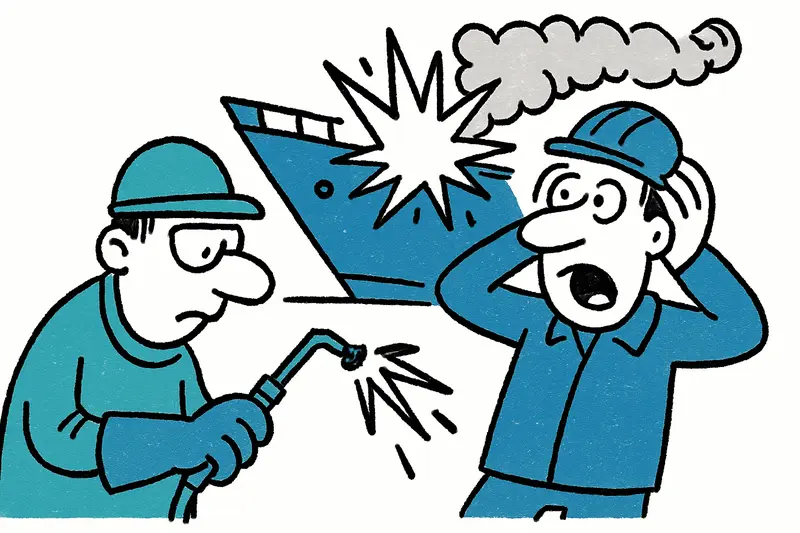
Late in the morning, an otherwise busy quay in Palma was suddenly on alert. Around 11 a.m., the approximately 35-meter-long yacht 'Naya 7' exploded during repair work. Two workers were struck; one suffered severe burn injuries to the face and upper body and was taken to the Son Espases University Hospital, while his colleague mainly suffered injuries to the legs. Passersby reported a blast wave, the smell of burned liquids and the piercing wail of emergency vehicles.
Preliminary indications point to a dangerous reaction between a welding torch and apparently present brake fluid. The machine, the vessel and the people have since been the focus of investigators: national police, port police, local emergency services and firefighters ensured the area was cordoned off while a special unit clarifies the circumstances, as happened when the USS Gerald R. Ford off Palma: Routine or wake-up call for better controls? was checked. The yacht had been in the harbor for maintenance for about ten days.
This situation requires more than concern; similar incidents, like the Boat in Flames off La Savina: A Wake-up Call for Recreational Boat Safety, emphasize how quickly fires and explosions can escalate when residues are present.
Viewed critically, the question arises why flammable residues such as brake fluid were not ruled out before preparations for welding. In a shipyard environment there must be clarity: What was checked before work began, who signed the risk assessment and which cleaning steps were documented?
Two things are often missing from public debate: concrete information about on-site safety protocols and an honest discussion about the role of subcontractors, as recent reporting on the Accident on the Marella Explorer 2: What Helps Prevent Onboard Accidents? shows. On Mallorca many yachts are serviced by rotating teams, sometimes with language barriers and differing safety standards. That makes it difficult to uphold responsibilities when something goes wrong.
I stood that morning on the pier, not far from the market, and heard the usual sounds: factory workers, the clinking of chains, the smell of diesel, older men on benches discussing boats. Then the sirens – a cut through routine. Such everyday scenes show how close danger and normality are: people working here are often just one move away from life-threatening situations.
Concrete solutions must be practical. First: mandatory hot-work permits before any welding, including compulsory measurement of combustible vapors with calibrated gas detectors. Second: mandatory cleaning and decontamination of components with documented inspection protocols before welding or cutting work begins. Third: firm rules for storage and labeling of hazardous substances on board and in the sheds – no improvised cans left in corners.
Further measures: training in the workers' languages, regular joint exercises of shipyards with port and rescue services, and a mandatory register for yacht maintenance work to create transparency. The Inspección de Trabajo should carry out random inspections and impose fines where documentation is missing or safety equipment is inadequate.
There are technically simple measures that can be implemented: portable extinguishing systems and fire blankets at workstations, automatic shut-off mechanisms for welding equipment, permanently installed extraction systems and local fire points at berths. Insurance terms should hold repair companies more accountable, for example by requiring proof of training and safety checks before each assignment.
What is currently missing in many discussions is honesty toward the workers. Too often safety is seen as a cost item. Yet it saves lives and prevents lengthy liability cases. Companies, owners and clients must accept that investments in prevention make economic sense – and are morally necessary.
The investigation will clarify whether there were lapses in preparation, communication or equipment. Until then the industry should set clear internal standards: written checklists, on-site inspections and a culture in which colleagues may give a stop signal without fear of reprisals.
Conclusion: The accident on the 'Naya 7' is a sad wake-up call for everyone who works with yachts in Mallorca. It is not only technical defects that lead to explosions, but often missing procedures and negligence in implementation. If we learn from this incident, we can prevent the same siren from sounding again tomorrow.
Frequently asked questions
What caused the explosion on the yacht Naya 7 in Palma?
How dangerous is welding on yachts in Mallorca ports?
What safety checks should happen before hot work on a boat in Mallorca?
Why are shipyard accidents in Palma often linked to poor preparation?
What happened to the workers injured in the Palma yacht explosion?
How long had the Naya 7 been in Palma for maintenance before the explosion?
What should yacht owners in Mallorca ask before approving repair work?
Can a small amount of brake fluid cause a fire during welding on a yacht?
Similar News

High heel slips, car accelerates: accident on Camí de Son Hugo
A woman lost a high-heeled shoe on the forecourt of the sports facility at Camí de Son Hugo. The car accelerated, mounte...

Phone Scam: How Two Hotel Employees at Playa de Palma Lost Thousands of Euros
One morning in September, two reception employees at Playa de Palma were pressured by alleged alarm-company staff — in t...

When the Wallet Becomes a Danger: Attack in Peguera and Lessons for Mallorca
In Peguera, two women are said to have stolen the wallet from a 75-year-old German couple. When the victim intervened, t...
Plata stays Plata: Young people take over, Llonguets remain
A small bar on Carrer de l'Argenteria will continue: Tolo Serra hands the place over to young Mallorcans at the end of t...
Unnoticed in the Luggage Compartment: How a Boy Traveled More Than 100 Kilometers in a Team Bus
A minor traveled in the undercarriage of a team bus for more than 100 kilometers until his cries for help were heard. A ...
More to explore
Discover more interesting content

Can Cap de Bou

Townhouse Lleo 72
