
Where Sailors Poured Their Wine: The Alcanada Cave Tells New Stories
Where Sailors Poured Their Wine: The Alcanada Cave Tells New Stories
Researchers analyze 189 ceramic fragments from the Font de ses Aiguades cave. The traces point less to drinking water and more to rituals performed before a dangerous sea voyage — a piece of Mallorca history that brings our coast to life.
Where Sailors Poured Their Wine: The Alcanada Cave Tells New Stories
189 amphora fragments, soot traces and stamps: a coastal sanctuary instead of a simple spring
On a windy morning along the Alcanada coast, when the salty breeze blows from the lighthouse and the fishermen in the harbor mend their nets, it becomes clear: the island breathes history. Recent analyses from the Font de ses Aiguades cave cast a different light on this place. What was long considered merely a water source now appears to have been a spot where ancient sailors apparently performed rituals — or more precisely: poured wine as offerings before undertaking one of the most treacherous stages of Mediterranean navigation. Such offerings have a modern echo in local wine traditions at Bodegas Sa Cabana in Binissalem.
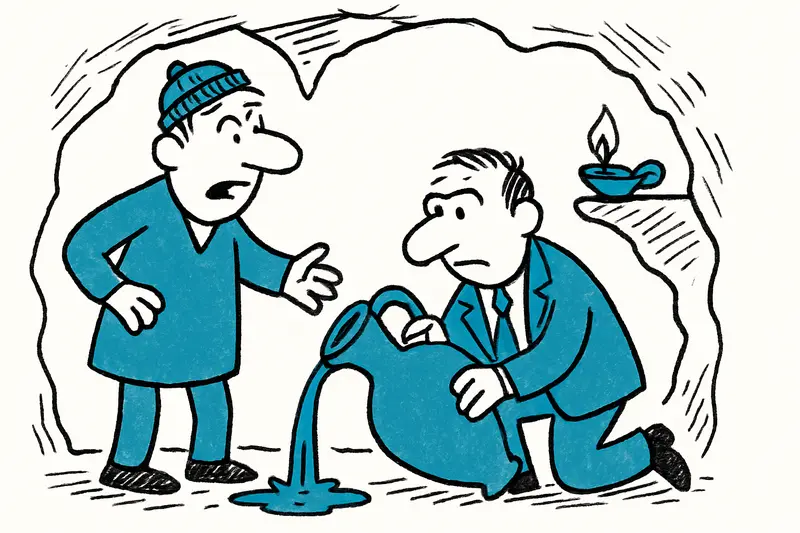
The conclusion is based on the analysis of 189 recovered ceramic fragments. Archaeologist Enric Colom interprets the traces to mean that visitors descended into the chamber carrying filled amphorae, stood at a single dry spot, opened the necks of the amphorae with a blunt tool and let the contents flow into the water. Exactly at that spot there is soot from oil lamps — an indication of ritual lighting.
Particularly striking are the break patterns: around 90 percent of the amphorae found show a very similar break around the neck area. Such a homogeneous breaking pattern fits better with a planned ritual act than with accidental breakage or random household waste. Added to this are 33 different stamps on the clay vessels; most of these marks can be traced back to Rome, only one has previously been documented on Mallorca, and five remain unexplained. Similar Roman connections have surfaced in studies of the Roman wreck off Can Pastilla: Piecemeal Recovery Raises Questions for the Island.
Taken together, this creates a vivid picture: amphorae with Roman marks, a deliberate breaking at the place of offering, and the light of burning lamps — all suggesting purposeful actions by sailors who likely paid respect to one another and to the sea gods shortly before a demanding passage. The route in question runs from Mallorca toward Corsica and Sardinia and on to the Italian peninsula — a stretch where navigation becomes more difficult and course is read less from landmarks than from the horizon.
For people today this holds more than archaeological charm. Such finds connect the harsh, present-day life at sea with a long tradition of human crossings. In Alcúdia one leaves the local bakery alley behind, walks along the paseo and hears the sea — and suddenly the past becomes tangible; a tiny fountain, a staircase, a cave where rituals once took place.
This is an invitation for the region. A coastal sanctuary of this kind can attract researchers, enrich local guided tours and enable schools to experience history on site. At the same time it brings responsibility: sites must be protected, excavations carried out gently and visitors informed rather than overrun. This echoes debates raised by Can Pastilla: The Roman Wreck and the Question of Responsibility and Funding.
For Mallorca's community this also means pride in its depth. The island's history is not only sun and beach; it also has these quiet places where people paused 2,000 years ago. The research results that Colom plans to summarize in a volume on Roman coastal sanctuaries could help develop new routes for cultural tourism — discreet, explanatory, and locally rooted.
In the coming months, those walking the north coast will more often hear conversations about old amphorae and stamp marks. The talk at Alcúdia's street cafés will grow richer: not only anecdotes about boat trips and restaurants, but also about seafaring, rituals and the small traces people leave behind. And that's a good thing — because it makes the island denser, linking everyday life with a history that surprises and piques curiosity.
In the end there remains a concrete outlook: more scientific investigations, protective measures for the cave and initiatives that introduce school classes and visitors to this past through simple local tours. Alcanada has thus found a new access to its identity — not as a relic, but as a living chapter of Mallorca.
Frequently asked questions
What is the Alcanada cave in Mallorca known for?
Why do archaeologists think wine was poured in the Alcanada cave?
What do the amphora fragments found in Mallorca tell us?
Is the Alcanada cave in Mallorca open to visitors?
What does the Alcanada discovery say about Roman Mallorca?
Why was the route from Mallorca toward Corsica and Sardinia so important for sailors?
What does the Alcanada site mean for cultural tourism in Mallorca?
What can visitors learn in Alcúdia from the Alcanada cave story?
Similar News

Fewer Airlines, Fewer Destinations: What Palma's Winter Flight Schedule Means for Mallorca
Analysis shows: Winter at Son Sant Joan Airport will be quieter, with significantly fewer airlines and destinations. Who...
German tourist dies in Sa Calobra – a reality check for emergencies on Mallorca's beaches
A 40-year-old tourist died at the Torrent de Pareis. The emergency call, a doctor who happened to be present, a defibril...

Deadly Tractor Accident in Bunyola: What Needs to Be Done Now
In a work accident on an estate near Bunyola, a roughly 40-year-old man lost his life. His wife and a small child were o...
Head-first dive into the shallow part of Cala Fonoll: An accident and the unresolved question of responsibility
A young tourist dove into Cala Fonoll and was seriously injured. Key question: Why are clear warning signs missing at da...

Mistaken identity with fatal consequences: Brutal assault in S'Aranjassa — what's missing in the follow-up?
At S'Aranjassa a visitor to a finca was tied up, beaten and thrown out of a van. Three men have been arrested, including...
More to explore
Discover more interesting content

Can Cap de Bou

Townhouse Lleo 72
