
Potholes, Tight Curves: The Dangerous Connection to Sant Elm
Potholes, Tight Curves: The Dangerous Connection to Sant Elm
The MA-1030 between s'Arracó and Sant Elm is narrow, bumpy and crowded in summer—graffiti at Coll de Sa Palomera says what many think. Who will ensure a safe access to the western tip of Mallorca?
Potholes, Tight Curves: The Dangerous Connection to Sant Elm
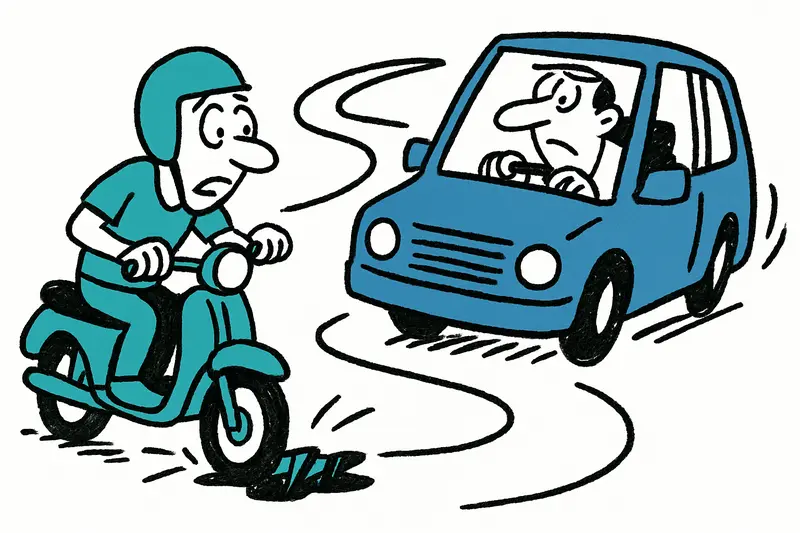
Who braked last here because the front wheel of a scooter fell into a depression? That's the question everyone asks when driving the MA-1030 between s'Arracó and Sant Elm in summer. Three kilometres that feel like a high-wire act: tight hairpins (Cars on Their Roofs near Valldemossa: A Wake-Up Call for Greater Safety on Mountain Curves), changes in elevation, patched asphalt and spots where vans and coaches have to take evasive action.
Central question
Who takes responsibility for a road that serves as the only access to Sant Elm and is obviously not safe for traffic as the summer season approaches?
Critical analysis
The facts are simple: the stretch just after s'Arracó shows clear damage—potholes, spalling, subsidence. At the Coll de Sa Palomera, just above the s'Arracó cemetery, road users have written their frustration directly on the asphalt: "Danger! Shit road". This is not an artistic message but a warning, as highlighted by local incidents such as Sant Elm: Car slides down the embankment — Driving without a license and insurance raises questions. In practice this means: lorries, TIB buses and rental cars search for the best tracks, drivers brake abruptly, and rear-end collisions become more likely. Narrow sections force vehicles to swerve, and oncoming traffic becomes a stress test—especially when a bus approaches.
What is missing from the public debate
There is a lot of talk about parking, beach maintenance and tourist numbers. Too little is said about how people, deliveries and emergency services can reach Sant Elm safely. Also rarely discussed: a long-term maintenance plan for the MA-1030, the burden from heavy vehicles and how seasonal peaks could be mitigated. No one has described the everyday life of residents in the narrow early hours: delivery vans bringing materials early, schoolchildren on their way, taxis picking up guests—all on the same damaged strip of asphalt.
Everyday scene from Mallorca
In the early evening, when restaurants in Sant Elm set the first tables out on the promenade, you hear behind the pedestrian zone the stuttering of a bus, the coughing of a van and the clack of a wheel hitting the edge of a pothole. From the Coll de Sa Palomera the smell of fried fish drifts down the hill, cicadas chirp, and from the valley comes the distant honk of a delivery van looking for a gap. For locals this has become normal. For visitors it is not—and that makes it dangerous.
Concrete solutions
There is no secret recipe, but practical steps: first, short-term targeted repairs at the most dangerous spots and clear, highly visible warning signs before each hazard; second, temporary speed limits and a routing rule for heavy vehicles during the high season; third, a clearly dated maintenance plan from the responsible road authority so residents and businesses know when larger works will take place; fourth, in the long term a complete renewal of the pavement in the critical section with improved drainage to prevent new subsidence; fifth, creation of small pull-outs at selected points so larger vehicles can pass each other without compromising safety; and sixth, monitoring by conducting traffic counts during the summer to obtain load data and prioritise measures accordingly.
Why this matters
Sant Elm is not just an excursion destination. It is the western tip of our island, a starting point for boat connections to Dragonera, and a workplace for hospitality and port services. If access is fragile, it affects supply, tourism and, in an emergency, the response time of rescue services; incidents such as Sant Elm: Car slides three meters down slope – many questions, few answers underline the human cost when infrastructure fails. Repairs are not a cosmetic fix but a safety task.
What should happen now
Officials at municipal and island level must make themselves visible: a dated action plan, prioritisation according to danger levels and transparent communication with residents and businesses. Who pays is a political decision; who informs can regain trust through simple steps. Until then caution is required—but caution alone is not a substitute for planning and action.
Conclusion: The graffiti at Coll de Sa Palomera says what many think: this road is no place for experiments. One more summer of patchwork and hoping for luck is too much. Anyone who lives or works in Mallorca knows: infrastructure shows how seriously a community takes its safety. Time to act—before a warning sign becomes an accident scene.
Frequently asked questions
What is the weather usually like in Mallorca in late spring?
Is Mallorca warm enough for swimming in spring?
What should I pack for Mallorca if the weather can change during the day?
When is a good time to visit Mallorca for outdoor activities?
Is Palma de Mallorca good to explore on foot in spring?
What is Sóller like to visit when the weather is mild?
Can you still enjoy the beach in Mallorca if it is not fully summer yet?
What is the weather usually like in Mallorca in the evening?
Similar News

Eurowings lets four aircraft carry names – a friendly idea that also reaches Mallorca
Eurowings is launching a campaign: four Airbus A320s are to carry the first names of people who help others in everyday ...
From the Reality Studio to the Pitch: Aleks Petrovic Makes Mallorca His Base
The former participant in numerous TV shows moves from Dubai to the island and launches a project with FC Germania Mallo...

When the Phone Falls Silent: Concern for Sarah Joelle in Mallorca — and What It Reveals
After days without a response, the TV personality's unreachability in Mallorca sparked concern. Shortly afterwards an al...

Ultraluxury on the Ground: Four Seasons Jet in Palma — a Reality Check for Formentor and the Island
A high-priced flight crosses Mallorca and its guests stay for days at the Formentor resort. What does the island get bes...
Death of a Witness and the Justice Backlog: Why the Kegel Brothers Trial Matters in Mallorca
A witness in the Playa de Palma fire case has died, and the trial against eight German holidaymakers has been delayed un...
More to explore
Discover more interesting content

Can Cap de Bou

Townhouse Lleo 72
