
Fire at the abandoned hotel in Cala Millor — two injured, many questions
Fire at the abandoned hotel in Cala Millor — two injured, many questions
Two people suffered smoke inhalation in a vacant hotel in Cala Millor. The fire at the former Hotel Calypso raises fundamental questions about the safety of empty buildings on Mallorca.
Fire at the abandoned hotel in Cala Millor — two injured, many questions
What happened and why does the debate remain open?
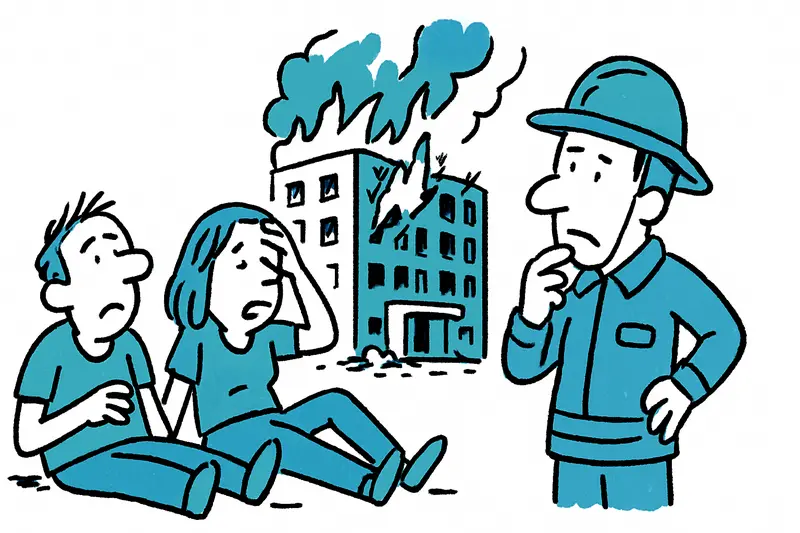
On 28 May 2026, part of the vacant Hotel Calypso in Cala Millor caught fire. Two people suffered smoke inhalation and were taken to Manacor Hospital. Other people who had been in the building were temporarily accommodated in a hostel. These are the facts we have — concise, factual and without official proclamations. But is that enough?
Key question: How safe are vacant hotels in Mallorca when left unattended, and who bears responsibility before an accident occurs?
The immediate scene at the incident can be described as follows: blue lights on the promenade and sirens echoing through the narrow side streets; firefighters with wet helmets fighting the remaining embers in the dusk; neighbors looking out from their kitchen windows with the smell of smoke in the air. Such scenes are familiar here between Cala Millor's promenade and the side streets — they have become commonplace when buildings stand empty and wind and heat come together, as seen in the Fire in Port d'Alcúdia: Why the big scare is also a wake-up call for fire safety.
Critical analysis: What is organizationally wrong?
Four points stand out. First: prevention. Vacant hotels need regular inspections — not only because vandals may enter, but because negligence, illegal occupants or technical defects can quickly become dangerous. Second: responsibilities are often diffuse. Owners, property managers, the municipality — who is concretely responsible for fire protection at an empty property? Third: emergency plans for temporarily housed people are often missing or hard to access. Who ensures that people who need short-term shelter receive information and assistance? Fourth: data situation. There is no comprehensive, reliable publicly accessible register of vacant tourist buildings with risk assessments.
What is missing from the public discourse
Reporting understandably focuses on the injured and the emergency services. What receives too little attention, however, is how often such fires at vacant properties actually occur — including incidents like the Fire in hotel at Playa de Palmanova: Evacuation, no injuries — and unanswered questions — and which preventive measures would be feasible. A sober inventory is missing: How many hotels are currently vacant? What condition are the electrical systems, gas lines or wooden ceilings in? Which contracts provide for regular inspections?
An everyday scene that illustrates the problem
The day after the fire a neighbor sits in the small café on the square and stirs her coffee. She says that youths sometimes sneak through the abandoned hotel at night to "hang out a little." No one really feels responsible, she says, and adds dryly: "Until something serious happens." This mix of routine and indifference is a problem that should not be laughed away.
Concrete solutions
From practical experience and with Mallorca in mind, I propose five concrete measures:
1) Public inventory of vacant tourist buildings: a municipal register, maintained digitally, with condition reports and owner contact details. This helps emergency services and creates transparency.
2) Mandatory inspections for fire risks: for prolonged disuse, certified checks should take place — similar to those for commercial buildings; incidents during low occupancy, such as the Fire at Hotel near Cala San Vicente: A Wake-up Call for Fire Safety in the Off-Season, underline this. A simple electrical and gas check every six months would minimize many risks.
3) Sanctions and incentives: those who leave their properties open or fail to secure them should face significant fines; at the same time, grants could be offered for sealing and basic securing of vacant houses.
4) Local coordination office: small municipalities like Sant Llorenç or Manacor could set up a contact point to collect reports on occupied or endangered buildings and organize swift assistance.
5) Local awareness work: neighborhood meetings, notices at the beach and information stands at weekly markets — simple measures so residents know who to turn to.
Who pays the price — and who foots the bill?
The immediate costs are borne by those affected, the emergency services and municipal infrastructure. In the long term it is insurers, owners and municipal budgets if prevention is neglected. And not to be forgotten: the trust of the people who live and work here. If protection gaps remain, quality of life and the sense of security suffer.
Conclusion
The fire at the former Hotel Calypso in Cala Millor is more than an isolated incident. It reveals weaknesses in how vacant buildings are handled — from responsibilities to inspections to communication with the neighborhood. The solution is pragmatic: more oversight, more binding inspections and local coordination. If politicians and owners do not act now, similar scenes will repeat — possibly with worse consequences.
The promenades of Cala Millor still smell faintly of smoke; the streets are filling again with tourists and locals. As quickly as the fire was extinguished, the discussion can drag on. We do not have unlimited time to close this gap in the debate.
Frequently asked questions
What happened at the abandoned hotel in Cala Millor?
Are abandoned hotels in Mallorca a fire risk?
Who is responsible for fire safety in an empty hotel in Mallorca?
What should neighbours in Cala Millor do if they notice people entering an abandoned hotel?
How are people usually housed after a fire in a vacant building in Mallorca?
What checks should vacant tourist buildings in Mallorca have?
What does a hotel fire in Cala Millor mean for the local community?
What can Mallorca municipalities do about vacant hotels and abandoned buildings?
Similar News
When the Wallet Becomes a Danger: Attack in Peguera and Lessons for Mallorca
In Peguera, two women are said to have stolen the wallet from a 75-year-old German couple. When the victim intervened, t...
Plata stays Plata: Young people take over, Llonguets remain
A small bar on Carrer de l'Argenteria will continue: Tolo Serra hands the place over to young Mallorcans at the end of t...

Unnoticed in the Luggage Compartment: How a Boy Traveled More Than 100 Kilometers in a Team Bus
A minor traveled in the undercarriage of a team bus for more than 100 kilometers until his cries for help were heard. A ...

Cap Vermell Grand: Second Michelin Key – a Gift for the East
The Cap Vermell Grand in Capdepera has been awarded its second Michelin key. For the region this elevates the luxury off...

Eurowings lets four aircraft carry names – a friendly idea that also reaches Mallorca
Eurowings is launching a campaign: four Airbus A320s are to carry the first names of people who help others in everyday ...
More to explore
Discover more interesting content

Can Cap de Bou

Townhouse Lleo 72
