
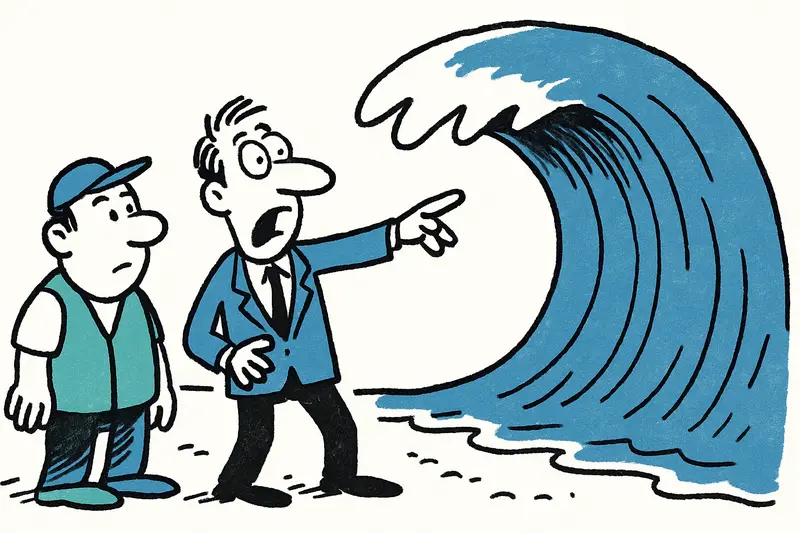
UNESCO warning: Tsunami in the Mediterranean almost certain – Is Mallorca prepared?
UNESCO warning: Tsunami in the Mediterranean almost certain – Is Mallorca prepared?
UNESCO speaks of an almost certain probability of a tsunami in the Mediterranean in the coming decades. A reality check for Mallorca: what's missing, what needs to be done, and how the island can protect itself concretely.
UNESCO warning: Tsunami in the Mediterranean almost certain – Is Mallorca prepared?
Key question: How real is the risk for Mallorca, and how can we respond sensibly instead of panicking?
The report from the UNESCO Intergovernmental Oceanographic Commission sits like a stone in the stomach: the probability that a wave of more than one metre will occur in the Mediterranean in the coming decades is described as 'almost 100 percent', with a regional timeframe of around 30 to 50 years. That sounds like a distant threat – and at the same time like a wake-up call. In Mallorca, where the sea is part of everyday life, we must look soberly instead of chasing headlines.
Critical analysis: The core of the UNESCO message is not a prophecy, but a probabilistic statement based on geology and history. The Mediterranean is no calm bathtub: the African and Eurasian plates grind against each other, there are active volcanoes, underwater faults and submarine landslides. A seemingly 'small' wave can cause significant damage near the coast because the entire column of water is set in motion and currents develop that can sweep away cars, boats and promenades. Important: 'more than one metre' in open water can be considerably higher at the coast, depending on the seafloor, bay shape and built environment.
What's missing in the public discourse: first, concrete local data. UNESCO names the risk for the region, but for people on the ground locally differentiated maps are missing: which bays on Mallorca are particularly vulnerable, where are sandbanks, steep coastal drops or incised ports that favour wave amplification? Second, the link between warning systems and everyday handling is often missing: sirens are good, but they do little without clear evacuation routes, assembly points and regular drills, a point raised in Severe Weather Warning for Mallorca: Are Our Towns and Beaches Prepared?.
Everyday scene in Mallorca: It's early morning on the Paseo Marítimo in Palma. Delivery vans rumble by, a fisherman in Portixol is mending his nets, the first cafés are filling up. No one is talking about tsunamis. This is exactly where the discrepancy becomes apparent, as Storm Alert: Is Mallorca Prepared for the Deluge? reporting on local storms has shown: waterfront restaurants, the bus station, port operations and holiday apartments – that's the vulnerable mix. If a warning were issued, guests, commuters, market traders and port workers would have to be informed quickly and precisely. That only works with clear routines, not with panic.
Concrete solutions for Mallorca: first, create and publish local hazard maps. Town halls, the Cabildo and municipalities must know which sections should be evacuated first. Second, clearly mark evacuation and assembly points (assembly points / puntos de encuentro), including barrier-free routes for older people and tourists with luggage. Third, link sirens, SMS alerts and an official app; users should be able to register in everyday life so that tourists receive warnings in English and German. Fourth, drills – twice a year, morning and evening, in cooperation with hotels, ports and schools. Fifth, inspect ports and critical infrastructure and, where possible, make them more resilient; this can mean securely anchoring floating debris, protecting access roads and keeping rescue boats accessible. Sixth, regulate coastal development more strictly and review the need for buffer zones.
Technical additions: the regional NEAMTWS system coordinates early warnings; Mallorca should ensure that messages from this network are automatically forwarded to local control centres and to AEMET and Protección Civil. Scientific monitoring (seismographs, tide gauges, underwater sensors) is expensive, but targeted measurement points in front of critical bays would be a sensible start. Monitoring submarine geology doesn't mean you can prevent every slide – but it buys time for evacuations.
What policymakers must do: provide resources for maps, sirens, training and monitoring. And: communication must not only be active when there is bad news. Long-term prevention will only work if tourism companies, port operators and municipalities pull together. That also includes transparent information for residents and visitors – without alarmism, but concrete.
Concise conclusion: the UNESCO warning is not a prophecy, but a call to prepare. Mallorca lives from the sea; that makes the island vulnerable and at the same time responsible for being better prepared. Those who now make plans, install signage, train evacuation routes and strengthen communication with NEAMTWS and local authorities reduce suffering and chaos in an emergency. It's not witchcraft, it's craftsmanship – and it's worth doing before the next summer arrives.
Frequently asked questions
Is Mallorca warm enough for swimming in spring?
What is the weather like in Mallorca in early spring?
What should I pack for a spring trip to Mallorca?
Is it a good time to visit Mallorca for a quieter holiday?
Is Palma de Mallorca nice to visit in spring?
What is Valldemossa like in spring?
Can you still go to the beach in Mallorca if the weather is mixed?
What activities are best in Mallorca during mild spring weather?
Similar News

Micaela Schäfer: Between Playa de Palma and a Berlin Law Firm — New Calm, an Old Tomcat and Solid Finances
The party artist from the Ballermann scene appears surprisingly down-to-earth: a new relationship with a Berlin lawyer, ...
At Playa de Palma: Fire in Residential Building – six people rescued on the roof, what is missing in prevention?
In the evening a fire broke out on the first floor of a five‑storey building on Calle Trasimé. Six residents fled to the...
New License Requirement for Mini-Boats in Mallorca: Protection Measure or Tourism Brake?
From October 1 renters of small recreational boats in the Balearics must present a boating license. Critical questions r...
After the Storm: Mallorca Breathes Easy — Warm Weekend with Short Showers
The thunderstorm left its mark, but calm returns for the weekend: sun, summer temperatures around 32 °C, isolated shower...
No More 'Just Hop on a Boat': Mallorca, Mandatory Boating License and the Open Questions
From October 1, the Balearic Islands will require a boating license for small rental boats under five meters/15 hp. A tr...
More to explore
Discover more interesting content

Boat Tour with BBQ along Es Trenc Beach

Private transfer from Mallorca Airport (PMI) to Pollensa
