
More Police in Palma: Security or Sense of Security?
More Police in Palma: Security or Sense of Security?
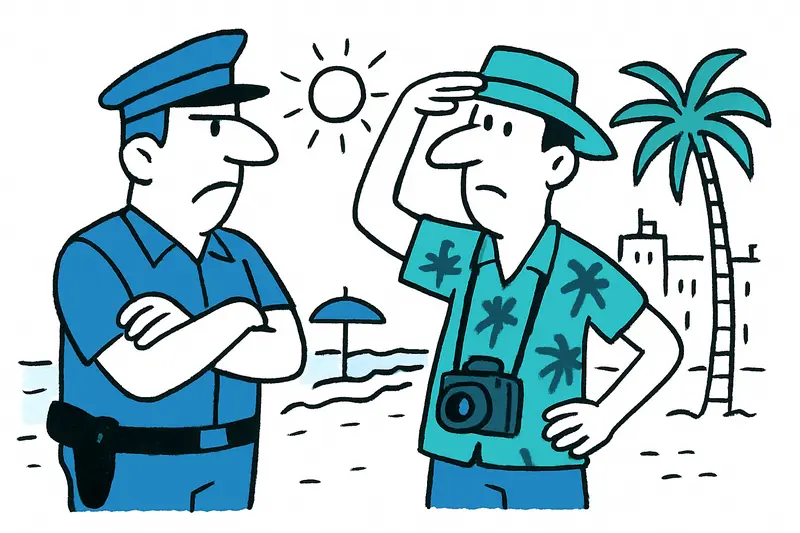
Palma plans to increase police presence in the old town and on Playa de Palma this summer. It sounds reasonable — but it raises questions: what exactly will be monitored, how will success be measured, and who will actually feel safer?
More Police in Palma: Security or Sense of Security?
Leading question: Will the announced reinforcement of the National Police and local police in Palma during the summer actually reduce crimes — or will it ultimately be mainly a more visible sign of presence without lasting effect?
The facts are simple and sparse: For the high season, the National Police and the local police have agreed on a coordinated strategy, including plans for 170 additional police officers for Playa de Palma. The focus is Palma's city center and Playa de Palma. More uniformed officers as well as plainclothes units will be deployed; checks on public transport and in shopping areas will be increased, as in a Night raid at Playa de Palma: assessment, questions and what's missing. The aim is to prevent thefts, robberies and property crimes and to increase safety for residents and tourists.
Such measures are understandable. In July and August you see delivery vans early in the morning, taxis with queues in the evening and late at night groups of tourists leaving Plaça Major laughing toward Passeig des Born. At Playa de Palma the sound from beach bars with loud music rattles down to Avinguda de Sa Caleta, while phones ring nearby—opportunities for pickpocketing. More police on the street can be preventive here: visible in uniform, deterrent in action.
But prevention has several levels. Visibility alone is an indicator of the sense of security, not automatically of the objective crime rate. Those who rely solely on more patrols risk treating symptoms and ignoring other causes: tightly positioned trash bins, poorly lit passages along the Moll Vell promenade, or a lack of informational offers for newly arrived seasonal workers and visitors. Public debate often lacks a clear answer to the question of how success should be measured: fewer reports? fewer suspects? or a lower level of fear among older residents on Calle Sant Miquel?
The use of plainclothes officers in particular deserves a reality check. Plainclothes presence can uncover suspicious behavior faster, but it is also less transparent: who monitors whether checks are proportionate? What rules apply for operations on buses running between the airport and Playa de Palma? Such details rarely appear in short press releases, yet they are central to public acceptance.
What is often missing from the discourse
1) Clear metrics: Saying "more presence" is not enough. Target values are needed — for example a percentage reduction in pickpocket incidents compared to the previous year or a measure for perceived safety among older residents.
2) Transparency rules for plainclothes operations: Protocols for when and how plainclothes officers are deployed, together with statistics and complaint records, should be publicly available — this reduces doubts about arbitrariness.
3) Preventive infrastructure: Better lighting on key routes (e.g. Passeig Marítim), clearer signage in tourist areas, more lost-and-found offices and multilingual information sheets at stops can remove opportunities for theft, as debated in Palma Tightens Controls: More Security — or a New Punitive Culture?.
4) Social support measures: Night-time wardens at popular meeting points, cooperation with hospitality businesses to ensure safe ways home, or a small advisory service for victims available in English, German and Spanish.
Concrete approaches
- Measurable goals: Police and city administration should publish before the season which indicators they aim to reach during the summer months and how they will make the data public.
- Community policing: Designated contacts for neighborhoods such as La Lonja, Pere Garau and Canamunt who hold regular office hours — visible in the urban landscape, close to the people.
- Controlled video surveillance with oversight: If cameras are used more widely, then clear rules on storage, deletion and independent control by the town hall or a data protection body must apply.
- Multilingual information campaigns: Flyers and digital notices in tourist centers about common scams, linked to information on where to hand in lost items or how to file a report.
- Cooperation with transport operators: Joint patrols on buses and at stops during peak times, combined with preventive announcements and visible contact points.
A simple number could ease the debate: If by the end of summer reports of pickpocketing have decreased by X percent and complaints about police conduct have not increased, the measure will have worked better.
Everyday scene: In the early evening, when the sun still warms the stones at Passeig des Born, old men sit on the wall reading newspapers, children run by with ice cream cones, and somewhere in a narrow alley a zipper on a backpack is overlooked. Prevention must become tangible there — not just an operational order at the police headquarters.
Punchy conclusion: More police officers alone are a tool, not a cure-all. Palma needs a mix of visible presence, transparent rules, measurable goals and small practical measures in everyday life. Then the city can get through the summer more peacefully — for locals and visitors alike.
Frequently asked questions
What is the weather like in Mallorca in summer?
Is Mallorca warm enough to swim in spring and autumn?
What should I pack for a holiday in Mallorca?
When is the best time to visit Mallorca for good weather?
What is Palma de Mallorca like for a short city break?
Is Port de Sóller a good place to stay in Mallorca?
What is Sóller known for in Mallorca?
Can you still enjoy Mallorca if you do not want a beach holiday?
Similar News

When the Wallet Becomes a Danger: Attack in Peguera and Lessons for Mallorca
In Peguera, two women are said to have stolen the wallet from a 75-year-old German couple. When the victim intervened, t...
Plata stays Plata: Young people take over, Llonguets remain
A small bar on Carrer de l'Argenteria will continue: Tolo Serra hands the place over to young Mallorcans at the end of t...

Unnoticed in the Luggage Compartment: How a Boy Traveled More Than 100 Kilometers in a Team Bus
A minor traveled in the undercarriage of a team bus for more than 100 kilometers until his cries for help were heard. A ...

Cap Vermell Grand: Second Michelin Key – a Gift for the East
The Cap Vermell Grand in Capdepera has been awarded its second Michelin key. For the region this elevates the luxury off...
Eurowings lets four aircraft carry names – a friendly idea that also reaches Mallorca
Eurowings is launching a campaign: four Airbus A320s are to carry the first names of people who help others in everyday ...
More to explore
Discover more interesting content

Can Cap de Bou

Townhouse Lleo 72
