
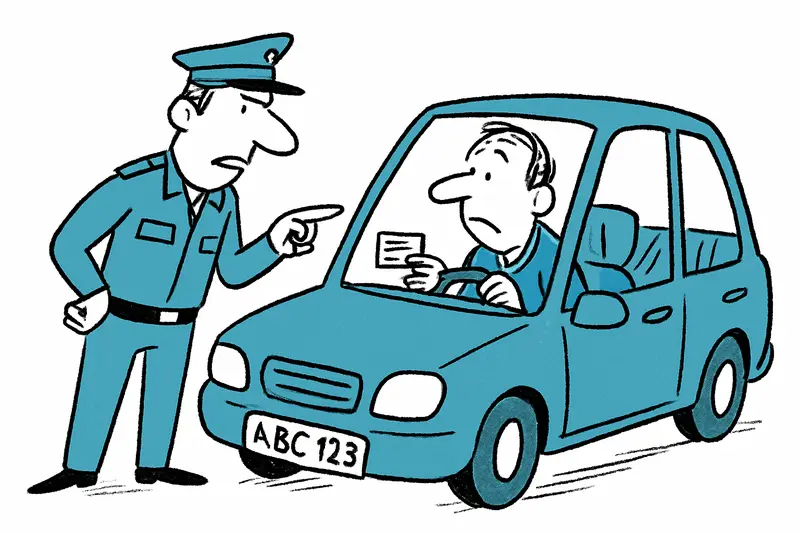
Fake license plates and driving without a driver's license on the Ma-13: What this case reveals about Mallorca's enforcement practices
During a Ma-13 check in Marratxí on December 21, the Guardia Civil stopped a 55-year-old man with fake license plates and no valid driving permit. A reality check on gaps, risks and practical solutions for the island.
Fake license plates and driving without a driver's license on the Ma-13: What this case reveals about Mallorca's enforcement practices
Key question: How could a vehicle with mismatched plates and a driver whose license had been revoked by a court reach one of Palma's busiest access roads?
On December 21 a Guardia Civil traffic patrol stopped a vehicle on the Ma-13 near Marratxí whose license plates did not match the make and model and which also did not display the correct sticker from the technical vehicle inspection (ITV). The driver, 55 years old, was according to the files not authorized to drive — his driving licence had been revoked by a court. The car was impounded; investigators opened proceedings for document forgery and driving without a valid licence. Legally, forged plates carry prison sentences of six months to three years and fines; driving without a licence can result in fines, imprisonment or community service.
Sounds like an isolated case? Yes and no. It is not the first time vehicles with tampered documents have turned up on Mallorca; see Fake Driver's Licenses in Palma: Fifth Case – An Isolated Incident or a System?.
The Ma-13 is a lifeline in the mornings and evenings: lorries rumbling, commuters, delivery vans, the honking at the Marratxí exit. On a cool December day you see the officer in a yellow safety vest standing next to the Guardia Civil patrol car, the coffee steaming at the service station, and yet such cars sometimes slip through. Why?
In short: because checks are punctual, data are not always immediately available, and fraudsters often look for small time windows. Automatic number plate recognition (ANPR) systems are helpful, but not deployed island-wide. The ITV sticker may reveal defects, but it does not replace a simple real-time cross-check of plates against vehicle databases. And if one of the parties involved — seller, registered keeper, driver — performs verification steps inadequately, room for abuse opens up.
What is often missing in public debate is the perspective of everyday safety. A tampered sticker or a false plate is not a mere administrative offence; it exposes other road users to risk. If an accident happens and the vehicle cannot be correctly identified, the investigation becomes more complicated. It is also rarely discussed how often vehicles are driven by people without a valid licence and what gaps exist in follow-up monitoring when a licence has been revoked; recent reporting highlighted More than 350 drivers without a driver's license in the Balearic Islands: Why the problem on Mallorca shouldn't exist.
A scene: It is early morning at the Marratxí exit, a light northeast wind blows, palms rustle along the access road. A school bus winds by, two construction workers grab croissants at the service station, and the Guardia Civil conducts checks, car by car. Spotting an out-of-place vehicle among all the regular drivers prompts the officer to take a closer look: is the sticker correct? Do the numbers match? Such moments decide whether a potential fraud is exposed — or remains undetected.
Concrete measures that could have a quick effect on the island are pragmatic and not always expensive: first, more coordinated checks at key points like Ma-13 exits, with Guardia Civil and Policía Local sharing data; second, targeted use of mobile plate recognition systems during traffic stops so checks can be made immediately; third, tighter linking of ITV, registration and driving licence databases so licence revocations automatically trigger follow-up actions; fourth, faster administrative steps to immobilize vehicles when the keeper or driver is not authorised.
At the community level, Marratxí can help with simple means: residents and lorry drivers often know the vehicles that park in industrial areas at night. A digitized reporting platform — without bureaucratic overhead — could gather tips and forward them to the responsible units. Also, dealers selling used cars should as standard verify the buyer's entitlement or have clear information obligations so vehicles are not accidentally handed to the wrong people.
Objections will arise: data protection, cost, resources. These concerns are legitimate but solvable. The aim is not surveillance for its own sake, but a safety net for everyone who uses the Ma-13 daily. Transparent rules, clear checks, short paths between IT systems and police forces — these reduce opportunistic abuse and increase the rate of resolution when something does happen.
Conclusion: The case of the 55-year-old in Marratxí is not just an anecdote. It reflects gaps resulting from punctual checks, fragmented data and sometimes outdated practice. Mallorca's roads will not become safer through declarations of intent, but through concrete, locally adapted measures: intelligent checks on the Ma-13, better data networking and involvement of the neighbourhood. That way, fewer discoveries will be by chance and more interventions will be planned — to protect everyone who travels here.
Frequently asked questions
Can you drive on Mallorca if your licence has been revoked?
How do police spot fake licence plates in Mallorca?
Is it legal to drive in Mallorca with fake or altered licence plates?
Why do some illegal cars still reach the Ma-13 in Mallorca?
What happens when police stop a car with fake plates in Mallorca?
What is the ITV sticker and why does it matter on Mallorca?
What should I do if I see a suspicious car in Mallorca?
Why is the Marratxí exit on the Ma-13 often mentioned in Mallorca traffic checks?
Similar News
Near-miss on Lanzarote: Landing Ryanair Jet and Iberia Takeoff — what really went wrong
On Lanzarote there was a dangerous incident: A Ryanair flight (FR5910) from Dublin landed on runway 03 while an Iberia E...

Eurowings introduces new Premium Business seats on Mallorca routes
From December 1, selected Eurowings flights to Palma and other destinations will feature eight particularly generous sea...
Car on MA-13 near Inca in flames – a safety check for the island
A vehicle caught fire on the MA-13 towards Alcúdia on Tuesday afternoon. The driver was uninjured, the car was destroyed...

Real Estate in Mallorca: Fewer Buyers, Higher Prices — What's Behind It?
Sales on Mallorca are falling, yet prices continue to climb. Why fewer transactions do not equal relief — and what shoul...
Just Bought — Already Trouble: Water Damage in the Heiters' Villa and What Owners in Mallorca Should Know Now
A newly purchased sea-view property — and within days a water damage. What risks lurk in new properties in Mallorca, and...
More to explore
Discover more interesting content

Can Cap de Bou

Townhouse Lleo 72
