
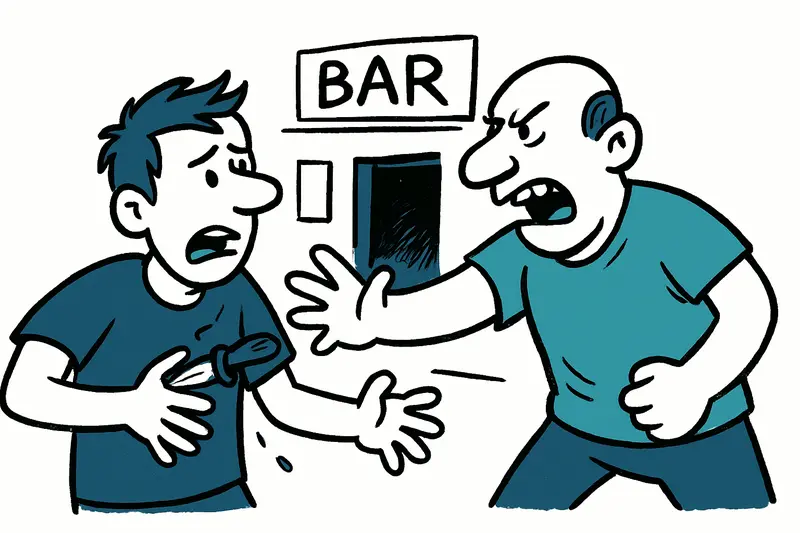
Fatal knife attack in Son Gotleu: Young man dies after dispute in bar
In Son Gotleu a young man was stabbed to death after an argument in a bar. The Policía Nacional arrested a suspect shortly after the incident. The motives are unclear. A reality check: What is going wrong in Palma's troubled neighborhood?
Fatal knife attack in Son Gotleu: Young man dies after dispute in bar
Key question: Why do disputes in Son Gotleu escalate so quickly — and what is missing to make such incidents rarer?
On the night into Monday, a young man was critically injured in a bar in the Son Gotleu neighborhood and was declared dead shortly afterwards. According to the Policía Nacional, the victim was stabbed in the chest; emergency services transported him to the Son Espases University Hospital, where he succumbed to his injuries shortly after midnight. Police arrested a person in the vicinity a few minutes after the incident who matched the circulated descriptions. Both the victim and the detained person are said to hold Algerian nationality. The homicide investigation unit is conducting forensic work and interviews; the motives are not yet known.
The bare facts are disturbing enough. But a look at the situation in Son Gotleu — a district many here describe as a social hotspot — shows that such isolated incidents do not arise out of nowhere, as recent cases such as Threat in Son Gotleu: Youth Group Robs Phone and Threatens with Knives illustrate.
Critical analysis: The quick arrest shows that forces on the ground acted promptly. Investigations are ongoing. But a pure police tally does not answer the question of why conflicts so often turn violent there. A lack of prevention programs, precarious working and living conditions, young people without prospects — all of this creates a powder keg. Bars open late at night, poorly controlled alcohol sales and a culture in which violence is quickly used to resolve conflicts also play a role. From an urban planning perspective, sidewalks that are too narrow, inadequate lighting and a lack of public meeting places weaken social control and neighborhood structures; other incidents in the area, such as Fall in Son Gotleu: A dramatic morning and the question of roof safety, show the variety of safety challenges residents face.
What is often missing in public debate: concrete discussions about preventive measures, not just repression. Talks about increased street work, de-escalation training for bar and club staff, free counselling services for young men struggling with aggression — these issues often remain on the margins. Nor is there enough open discussion about the role of neighborhood projects, community centers or funding that could offer alternatives to young people.
An everyday scene from Palma that captures the feeling: on an early evening on Carrer de Balears the air smells of fried fish from the snack bar, children play in front of the small supermarket, older men sit on plastic chairs and discuss football. When night falls, the faces on the street change; some bars fill up, the volume rises, and on some corners the sense of safety is missing — similar nighttime escalations have occurred elsewhere, for example in Brawl at Playa de Palma: Why a verbal exchange could have ended fatally. In such hours a spark is enough — an insult, a misunderstanding — and the situation can turn.
Concrete solutions: First, more presence of community policing teams that not only control but build relationships with residents. Second, targeted funding for youth work: sports programs, mentoring schemes, projects to support entry into the workforce. Third, mandatory de-escalation training for staff in bars and taxis; staff are often the first instance for calming conflicts. Fourth, better street lighting and monitoring at particularly conflict-prone points — this not only reduces opportunities for crimes but also gives residents a feeling of safety. Fifth, low-threshold counselling centers for aggression prevention and alcohol problems that are also reachable late at night.
Important: these measures do not replace police work after a crime. They complement it. Prevention costs money and patience, but it reduces the likelihood that an argument will end in death. City administration, social services and neighborhood organizations must work more closely together — with clear responsibilities and transparent timelines; lessons from other investigations, such as Arrest after knife attack in Pere Garau: How safe is Palma's neighborhood?, should inform those plans.
Pointed conclusion: The incident in Son Gotleu is a tragic isolated case and at the same time a warning signal. In the short term, investigations and the rule of law are needed; in the medium term, a serious plan against the root causes of violence. Anyone walking through Son Gotleu at night not only hears sirens — they sense that something needs repairing. If politics and society ignore this, another spark may be enough to destroy lives again.
The editorial team is monitoring the investigations and will report on verified findings as soon as authorities release details.
Frequently asked questions
When is the best time to visit Mallorca for pleasant weather and fewer crowds?
Do I need a car to explore Mallorca or is public transport enough?
What should I pack for a Mallorca trip across seasons?
Is it safe to swim in Mallorca’s sea and what should I know about beaches?
What are the practical options for getting from Palma Airport into the city or around the island?
Can I do day trips from Mallorca to see more of the island?
What are must-do experiences for first-time visitors to Mallorca?
How does Mallorca's weather vary through the year and what should I expect?
Similar News
New Cappuccino in Port d'Andratx: Larger Terrace and Views of Harbor Life
After more than a year of renovation, an expanded Cappuccino Grand Café has opened in Port d'Andratx. The terrace, inter...

Unknown suitcase on board – how a piece of luggage forced an Ibiza jet to Toulouse
A Eurowings flight from Ibiza to Düsseldorf had to make an unscheduled stop in Toulouse because a piece of luggage on bo...
Autumn approaches on the island: Still sun, but a rain band will soon bring relief
The last warm days on Mallorca are still here – around 30°C by day, just under 20°C at night. According to AEMET, a rain...
TV documentary on the Mediterranean: How threatened is Mallorca really?
A new television documentary follows marine research off Mallorca and shows: sea temperatures are rising, and farmers ar...
After Ceuta: Intelligence Activities in Mallorca – A Reality Check
The CNI, National Police and Guardia Civil have intensified their surveillance in Mallorca. What does this mean for isla...
More to explore
Discover more interesting content

Can Cap de Bou

Townhouse Lleo 72
