
Fatal poisoning at holiday finca near Petra: What is going wrong with heating and safety checks?
Fatal poisoning at holiday finca near Petra: What is going wrong with heating and safety checks?
In a finca between Petra and Son Serra de Marina a 49-year-old man and his two dogs were found dead. Authorities suspect carbon monoxide poisoning. A reality check on risks, prevention and what is often overlooked on Mallorca.
Fatal poisoning at holiday finca near Petra: What is going wrong with heating and safety checks?
Between facts and questions
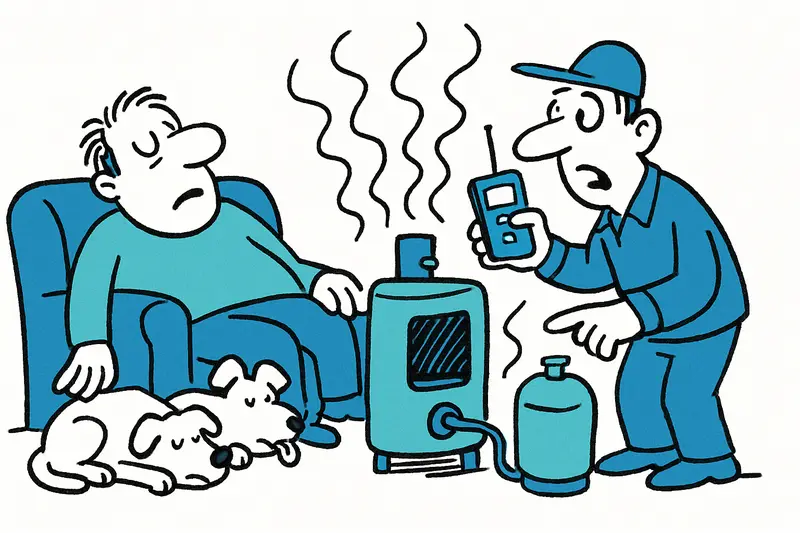
On Thursday the Guardia Civil discovered the bodies of a 49-year-old man and his two dogs in a holiday finca between Petra and Son Serra de Marina. A friend of the partner found the victims lifeless upon entering the house. Rescuers and the fire brigade smelled a strong gas odor; measuring devices were used. The bodies were handed over to the Institute of Forensic Medicine; an autopsy is to clarify the exact cause of death. At present, carbon monoxide poisoning is at the center of the investigation.
Key question
Why do such fatal incidents repeatedly occur on the island — and what immediate measures are being taken so the next alarm does not repeat the same tragedy?
Critical analysis
The facts are clear, the causes not yet fully determined: strong gas in the house, victims found lifeless on the sofa and floor, a technical suspicion of a heating or stove malfunction. On Mallorca there are many houses without central heating; instead wood stoves, butane gas heaters or outdated tiled stoves are used. These appliances create a risk of carbon monoxide formation in cases of incomplete combustion. Authorities acted correctly on arrival — but the incident exposes a larger, structural problem: protective measures and inspections are often patchy, especially in rural areas with holiday properties that are rarely occupied year-round. Similar concerns were raised after Nighttime fire in Llucmajor: pets die, questions remain.
What is missing in the public discourse
There is much discussion about storm warnings and road safety, but far less about the everyday dangers inside houses that stand empty outside the tourist season. The lack of a mandatory installation of CO detectors in holiday properties, irregular technical checks of heating appliances and the invisibility of temporarily used fincas create a dangerous grey area. We also do not speak openly enough about language barriers or missing instructions for seasonal workers and people who live and work in such houses — simple operating errors or overlooked maintenance needs can end fatally. High-profile incidents such as Fire in hotel at Playa de Palmanova: Evacuation, no injuries — and unanswered questions have prompted debate on safety rules.
Everyday scene on Mallorca
Imagine the market square of Petra on a cool morning: dogs barking, a delivery van passing by, olive trees casting long shadows, and somewhere the scent of wood smoke rising. In these villages neighbors heat their homes with a fireplace or gas stove; it is part of the winter picture. But behind the rustic walls of some fincas invisible gases can lurk — and no one notices until it is too late.
Concrete approaches to solutions
- Mandatory CO detectors in all holiday accommodations and work areas: local regulations or minimum standards in the Balearic rules could help here. - Regular inspection of fixed and mobile heating appliances by registered technicians, especially before rental periods and after longer standstills. - Information obligations for landlords: clear operating instructions in multiple languages, visible warning notices on stoves and heating devices. - Training and awareness-raising for seasonal workers, neighbors and local associations: recognizing symptoms such as drowsiness and headaches and proper behavior (ventilate rooms, inform emergency services). - Promotion of simple protective measures: subsidized CO detectors for low-income households and for landlords of holiday properties. - Stricter inspections for longer vacant holiday fincas: municipal walk-throughs, especially in winter.
Pointed conclusion
The death of the man and his dogs is a bitter reminder, echoed by Pets Die in House Fire in Llucmajor — How Safe Are We Really?: dangers in the home are not spectacular, they are quiet and insidious. On Mallorca, winter means not only cold but also dealing with heating equipment that must be maintained and monitored. Authorities have launched investigations — what is needed now is a look beyond the isolated case: sensible minimum precautions, clear rules for holiday rentals and a bit of neighborly vigilance could save lives. If you walk past Carrer Major in Petra tomorrow and smell wood smoke, take a moment to think about the silent death that can be invisible — and check whether a detector hangs in your own home.
Frequently asked questions
What is carbon monoxide poisoning and why is it so dangerous in Mallorca homes?
How can I tell if a heater or stove is producing carbon monoxide?
Do holiday fincas in Mallorca need carbon monoxide detectors?
What heating systems can be risky in older Mallorca houses?
What should guests do if they smell gas or suspect a heating problem in a Mallorca finca?
Why are rural Mallorca fincas considered more vulnerable to heating accidents?
What happened near Petra in the fatal holiday finca case?
How can Mallorca landlords make holiday homes safer in winter?
Similar News

Are the Balearic Islands the Southern Border of Europe? A Reality Check on Immigration
The Balearic Islands are again calling for EU aid after a sharp rise in arrivals by sea. Conflicting priorities between ...

"Expensive chaos" and many open questions: What clients can do when a lawyer suddenly stops responding
Several clients complain that a well-known German lawyer in Mallorca has been unreachable for months. Key question: What...

TV tip: 'The Last Problem' — Mallorca as the setting of a classic crime
A classic whodunit on Mallorca: A new miniseries set in spring 1959 brings storm, an isolated hotel and a dense web of s...

Nipping Sea Creatures: Why Bathers in Cala Major and Elsewhere Should Be Cautious
In Cala Major, bathers have reported being nipped by small fish. What is behind it, how can problems be avoided — and wh...
Forced eviction in Santa Catalina: When a 65-year-old slept in her car and showered on the beach — a question of responsibility
The story of Pilar López from Santa Catalina represents a problem affecting many Mallorcans: How can an island with a bo...
More to explore
Discover more interesting content

Can Cap de Bou

Townhouse Lleo 72
