
Sea in Concern: Why Fecal Contamination on Balearic Beaches Rose Sharply in 2025
Sea in Concern: Why Fecal Contamination on Balearic Beaches Rose Sharply in 2025
The marine quality report shows: in 2025 the number of microbiological contaminations doubled. 92 cases, 20 bathing bans, 72 warnings — locations on Mallorca were particularly affected. An analysis with everyday scenes and concrete solutions.
Sea in Concern: Why Fecal Contamination on Balearic Beaches Rose Sharply in 2025
Key question: Are these weather anomalies or structural weaknesses endangering our bays?
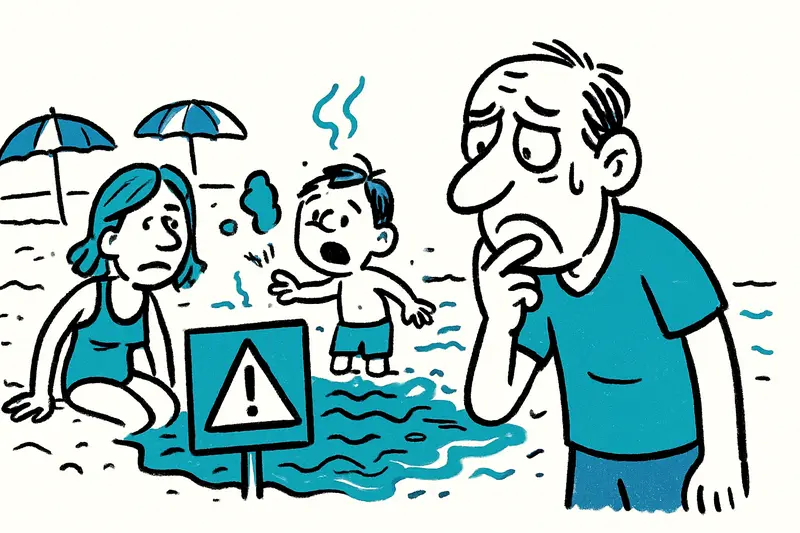
The new marine quality report paints a contradictory picture: on the one hand, around 70 percent of beaches had excellent water quality. This contrasts with analyses such as Can you still safely swim in the sea around Mallorca? A look at water quality in 2025. On the other hand, 92 cases of microbiological contamination were recorded during the survey period — twice as many as the previous year. In 20 cases bathing was prohibited, in 72 cases it was only discouraged. Particularly notable are places like Sóller, Santanyí and Calvià; all monitoring points with insufficient quality were on Mallorca, namely in Albercuix near Pollença and in Cala Egos near Santanyí.
Such figures cause understandable uncertainty. Someone walking the Passeig Marítim in Palma in the morning with a takeaway coffee notices the lively tourist scene — but also sand being washed into the sewers after heavy rain. On a windy afternoon at Cala Egos you can see fishermen in the harbour, sunshade vendors and occasionally a small warning sign on the beach: bathing not recommended. These everyday scenes show something that numbers alone cannot, as illustrated in What Lies Beneath Mallorca's Coast: Trash Slipping Out of Sight.
Critical analysis: three groups of causes are apparent. First: meteorological events; see Record Heat at 500 Meters Depth: Mallorca Faces an Invisible Danger. Heavy rain can overload sewage systems and favour untreated discharges. Second: infrastructure and maintenance. Old or insufficiently separated sewage systems cause rainwater and wastewater to reach the coast without proper treatment. Third: usage pressure and controls. More people, more short-term rentals and fragmented responsibilities between municipalities and regional authorities increase the likelihood of failures.
Public debate often focuses on the outcome — the polluted water — and less on how it got there. What is missing: transparent information on how quickly measurements are taken, where exactly problems repeatedly occur, and which investments in treatment plants or sewer separation are planned. Rarely discussed is how seasonal peaks in wastewater loads should be managed when, in a few weeks, the beach sees four times the annual average number of visitors.
Another blind spot: green infrastructure solutions such as retention basins, permeable promenades or biofiltering buffer zones are hardly mentioned, although they can mitigate stormwater before it reaches the bays. Also under-discussed is the question of fast, digital warning systems for bathers — visible, reliable and locally controlled.
Concrete, actionable approaches: in the short term, an improved measurement and reporting chain is needed: more samples in risk months, automatic sensors at sensitive points like Albercuix and Cala Egos, and clear, highly visible information signs at beach access points. In the medium term, municipalities and the Balearic government must present coordinated investment plans: separation of stormwater and sewage in critical settlement areas, expansion or modernization of treatment plants, targeted rehabilitation of old pipeline networks.
In the long term Mallorca can benefit from measures that are less spectacular but effective: removing paving from urban areas, creating retention areas in inland municipalities, promoting small treatment solutions for scattered settlements and mandatory wastewater concepts for tourist businesses. Financing proposals range from EU funds to regional grants to earmarked levy models for large tourism operators — clearly regulated and transparently used.
What would be immediately practicable: a uniform traffic-light system at all island beaches that informs in real time, combined with an app and clear signage on site. When bathing bans or recommendations are issued, they must be justified transparently and communicated as time-limited so that beachgoers and hoteliers can plan.
Practical everyday measures help: more public toilets at popular beach sections, regular inspections of small private treatment facilities, and stronger monitoring in municipalities with repeat cases. Citizen participation can support efforts: volunteer water testers, local reporting centres for leaking sewage or pollution increase transparency and local pressure for improvement. Local pressures on the south coast are also explored in South Coast at the Limit: When Boats and Plastic Overwhelm Communities.
Conclusion: the numbers are a wake-up call, but not a verdict. That 70 percent of beaches showed excellent values demonstrates that clean bays are possible. At the same time, the increase in microbiological cases shows gaps in infrastructure, prevention and communication. Those who sit on the beach, hear the waves and stroll along the promenade do not want to be caught between clean and unclean. The task is clear: targeted investments, better measurements, visible information and a bit more responsibility on the ground — then the coast will remain not only beautiful but also safe for swimming.
Frequently asked questions
Is it still safe to swim on Mallorca beaches in 2025?
Why can Mallorca beaches become contaminated after heavy rain?
What does a bathing warning on a Mallorca beach mean?
Which Mallorca beaches were mentioned as having poor water quality?
Why are Sóller, Santanyí and Calvià often mentioned in Mallorca beach water debates?
When is the risk of bad beach water highest in Mallorca?
What should I pack for a beach day in Mallorca if water quality may change?
What long-term fixes could help Mallorca’s beach water quality?
Similar News
Injured captain, big plans: Germania Mallorca before the away match in Consell
The newly founded FC Germania Mallorca travels to Consell on Saturday. Captain Bastian Müller is out injured, but coach ...

Palma, Palma de Mallorca, Palma‑Mallorca: What is it really about?
The debate over the city's name is more than grammar: it concerns identity, law and branding policy. A sober reality che...

Warning to Bathers: Nipping Fish in Cala Major and Other Coves — a Reality Check
In Cala Major and several beaches around Mallorca, bathers report painful “nips”. Who are the animals, why are they gett...

Rental Car Theft in El Arenal: What This Incident Reveals About Our Gaps
A teenager steals a running rental car in El Arenal, flees on foot, climbs over walls and is caught by the Guardia Civil...

Red Rope in Palma's Library: What Helps Against Selfie Tourism — and What's Missing
Palma's city library cordoned off an area with a red rope to keep selfie tourism away from reading and working activitie...
More to explore
Discover more interesting content

Can Cap de Bou

Townhouse Lleo 72
