
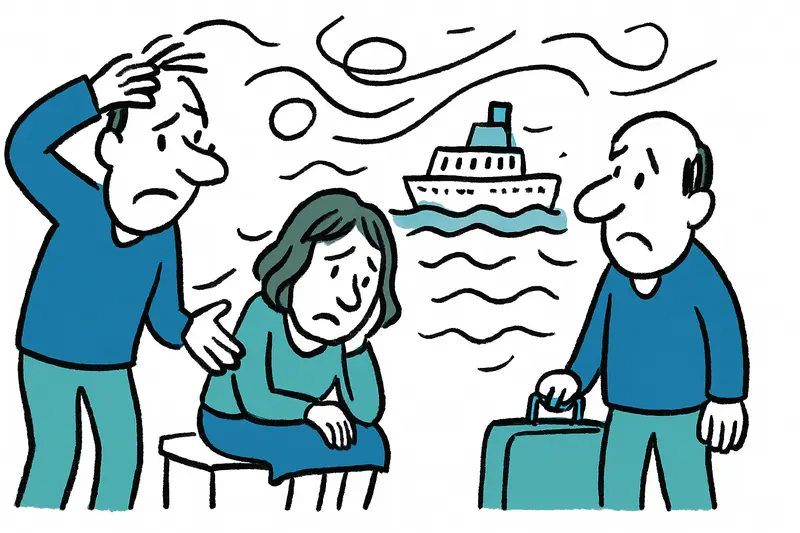
New storms cripple ferries: How prepared is Mallorca for supply and mobility outages?
Strong winds and heavy seas have again knocked out ferry connections between Mallorca and the mainland. A critical assessment: who is stranded, who is left in the dark — and what needs to be improved?
New storms cripple ferries: How prepared is Mallorca for supply and mobility outages?
Leading question: Are warnings and last-minute cancellations enough — or do island residents and the economy need stable plans for such storm periods?
In the morning the shipping company announced the suspension of all departures and returns on the Palma–Ibiza–Dénia route. The reason given was strong gusts of around 60 km/h and seas with waves up to four meters high. This did not come out of nowhere: the Spanish weather service has issued an orange warning for the region, with possible peak gusts up to 90 km/h and broader coverage of warning levels and heavy rain.
The facts are clear and brief: yesterday the Barcelona–Alcúdia connection was canceled, today Palma's departures are affected, and further restrictions are expected for tomorrow. For many this sounds routine — for others it is an everyday reality with consequences: commuters, small traders, supply chains and people with medical appointments on the mainland.
Critical analysis: cancellations alone are not enough. The shipping company reacted correctly to the sea conditions; safety comes first. But the perspective of those affected is often missing from the public debate. Ferry operators communicate schedule changes, AEMET issues warnings. What is lacking is a coordinated crisis management system that links island, port and transport authorities in real time and offers concrete alternatives.
A practical example from Palma: around 8 a.m. the wind howled along the Passeig Marítim, and the usual voices in the port — fishermen, tour operators, a few commuters with bags — were there but tense. The waterfront was emptier than on a typical Tuesday. A woman at the taxi rank said she had relatives in Dénia who depend on the ferry, and now she had to find a hotel overnight or rebook at high cost.
What often remains invisible: ports are more than departure points. They are hubs for fresh produce, spare parts and medicines. Short-term outages strain local markets and pharmacies. Small businesses that rely on daily deliveries from the mainland suddenly find themselves without supplies.
What is missing from the public discourse
1) Concrete alternative plans for critical goods: There are rarely binding rules on which shipments have priority or how they should be rerouted via air freight or other ports in case of ferry failures.
2) Better coordinated information for commuters: Weather warnings are precise, but the bridge to ticket buyers and ports should be more immediate — SMS, notices at ticket counters, clearly designated hotlines.
3) Support for temporary accommodation: When sailings are canceled, overnight requests rise. Municipalities could have emergency agreements with hotels or hostels to better prevent precarious situations.
Concrete solution approaches
Coordination center for island ports: A permanent operations center where representatives from the port authority, ferry companies, AEMET and consumer protection sit and immediately define measures, priorities and information channels when warning levels rise.
Prioritization of critical freight: A clearly regulated system that prioritizes medicines, perishables and spare parts and provides alternative transport routes — with transparent cost rules for affected actors.
Improved communication: Automated push notifications to registered passengers, visible information boards at berths and coordinated updates in ports and train stations. This reduces queues and frustration.
Network for immediate accommodation: Agreements with regional accommodations that offer a contingent of rooms during major disruptions. For commuters this creates a plannable, low-cost solution.
Everyday reality on the island
Walking through Palma's port in the morning, you first hear the wind, then the warning sirens of small fishing boats, and finally the distant horn of a ferry that was due to depart later. These sounds are warning signs for people who rely on connections every day. For tourism businesses it means rebookings, angry guests and extra work for reservation teams. For local producers, it can mean perishables are stored longer or even lost.
Politics and business must be more pragmatic here: not just bureaucracy, but forward-looking agreements that take effect during stormy weeks. It's not about imposing bans, but about robust alternatives.
Pointed conclusion
Weather warnings and safety cancellations are necessary. But Mallorca needs more than cancellations: a functioning network of communication, prioritization and practical emergency rules. Otherwise not only the ferry stays in port, but a piece of everyday life grinds to a halt — from market stalls to medical appointments. Safety must not become synonymous with standstill; it must be linked to responsibility, planning and concrete solutions for those who depend on the connections.
One concrete thought to finish: when the next storm front moves over Mallorca, all parties should not only ask “Is the ferry sailing?” but also “Who gets priority — and how will that be organized in practice?”
Frequently asked questions
Why are ferries to and from Mallorca being cancelled during storms?
How do storm warnings affect daily life in Mallorca?
What should I do if my ferry from Mallorca is cancelled at short notice?
Is Mallorca prepared for supply disruptions when ferries stop running?
What happens at Palma port when storms force ferry cancellations?
How bad can wind and waves get before ferries in Mallorca are stopped?
Are there better ways to inform ferry passengers in Mallorca during bad weather?
Could Mallorca use emergency accommodation when ferries are cancelled?
Similar News
Reality check: Palma's "white" torrent — harmless salt or neglected warning sign?
White crusts on the Torrent de Sa Riera are causing a stir. Emaya describes them as salt deposits. Our reality check: wh...
When Ryanair's fleet grows: What Mallorca's travelers should know
Ryanair will soon receive 737 Max 10 jets. The larger aircraft offer potential savings — but also new risks for flight o...
Rising fuel and housing costs: Why Mallorca's overland buses are suddenly overcrowded
More and more people are leaving Palma — and boarding TIB buses: Between January and August 2026, the network recorded o...
Carriages Without Horses: Palma Plans E-Carriages – a Reality Check
Palma plans to switch to electric carriages in 2027. The prototype was shown near the cathedral. What is the technology ...

Record season, empty coffers: Who really benefits from the tourism boom?
Full hotels and more flights: the numbers sound impressive — yet many locals feel no benefit. A reality check with an ev...
More to explore
Discover more interesting content

Can Cap de Bou

Townhouse Lleo 72
