
After Rockfall in Menorca: One Dead, Many Questions
After Rockfall in Menorca: One Dead, Many Questions
A large boulder tore into a bedroom in Cala Sant Esteve in the early morning hours. A 66-year-old man died, his wife was seriously injured. Why do such accidents happen — and who protects people on the slopes?
After Rockfall in Menorca: One Dead, Many Questions
Summary
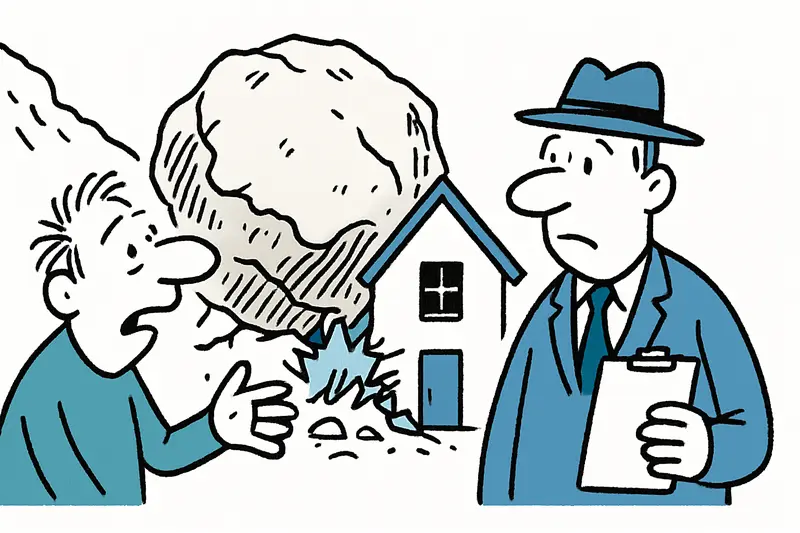
In Cala Sant Esteve, at the foot of the slope above the port of Maó (municipality of Es Castell), a several-meter-large boulder crashed into a residential building in the early hours. A 66-year-old man was killed under the rubble, his 62-year-old wife suffered serious injuries and was taken to Maó hospital. She could only be rescued from the collapse site about two hours after the emergency call. At the time of the accident, seven people were in the three-story house in total; the upper floors remained largely intact. Authorities evacuated neighboring buildings and secured the slope with heavy machinery.
Key question
How safe are settlements at the foot of steep coastal slopes when unusually heavy rain periods repeatedly hit the archipelago's islands?
Critical analysis
The immediate trigger is sought in the water-saturated rock: persistent rainfall increases suction in the subsurface and reduces the shear strength of rock and loose material. On small islands like Menorca, it is compounded by the fact that development, paths and drainage have often evolved historically and are not always adapted to changed climatic conditions. Technical protections such as drains, retaining structures or retention grids are expensive and complex, and failures elsewhere — for example Concrete stacks in Santa Margalida: When the safety chain fails — underline the stakes. Rescue workers worked for several hours under the constant danger of further slides — an indication that risk areas must not only be mapped but actively protected and monitored.
What is missing from the public debate
Media often report on storm warnings and road closures, but rarely on the condition of slopes, long-term inspections of private and public property or binding protection requirements for new buildings. Also seldom discussed: a clear plan to relocate residents from particularly vulnerable locations and financial assistance for preventive protection work. Discussions about responsibilities — municipality, island council, owner — remain vague, as recent cases such as Fatal accident in Santa Margalida: concrete slabs bury worker – calls for improved workplace safety have shown. And finally: how are warning chains organised for residents sleeping at night when a slope fails?
Everyday scene
Anyone walking through Maó in the morning now smells the damp sea and earth after weeks of rain; fishermen at the port clean their nets while old men quietly talk on the benches at the Passeig. In Es Castell the road to Cala Sant Esteve feels quieter than usual, sounds muted, wellington boots behind doors, and people wondering whether their house on the slope is still safe. Such small observations show: for many neighbors the risk is present but not tangible enough to force major decisions.
Concrete solutions
1) Immediate: systematic assessment of all steep, inhabited slopes by geologists and engineers; prioritisation by hazard and population density. 2) Short-term: temporary evacuation plans, alarm chains and provisional protective measures (embankments, sandbags, coverings and rapid drainage). 3) Medium to long term: investments in drainage systems, retaining structures and retention systems; mandatory risk assessments before building permits; clear financing models for owners (state grants, low-interest loans) are needed, as argued after Fatal accident in Santa Margalida: Concrete slabs bury worker – How safe are our construction sites?. 4) Communication: transparent hazard maps, regular information evenings in municipalities and an emergency hotline for slope problems. 5) Planning policy: re-evaluation of development plans in coastal areas with high slope inclination and gradual relocation offers for particularly endangered households.
Who pays?
The question of costs is central. It must not fall solely on homeowners; the island council and municipalities must cooperate with national funding programs. The Balearic Islands already have funding options for disaster protection, but they must be used faster and more targeted.
Concise conclusion
The tragedy in Cala Sant Esteve is a personal tragedy, but also a warning signal for the entire island group: not only has the weather changed, the fragility of many slopes is real. What is needed is more systematic action instead of spotlights so that neighbors do not only talk about how wet the winter was but about how to permanently reconcile living space and slopes. Mayors and authorities have expressed condolences and promised help — that must now be followed by clear measures, transparent studies and money that actually reaches endangered families.
Frequently asked questions
Are steep coastal areas in Mallorca safe after heavy rain?
What should residents in Mallorca do if they live below a steep slope?
Why can heavy rain increase the risk of rockfalls in Mallorca?
What are the warning signs of an unstable slope in Mallorca?
Is Cala Sant Esteve in Menorca a risky place during periods of heavy rain?
Who is responsible for slope safety in Mallorca?
What can be done to reduce rockfall risk in Mallorca?
When should people in Mallorca call emergency services about a slope problem?
Similar News
Magaluf: Watchtower Alarm – Lifeguards Pull Unconscious Beachgoer from the Water
After a drama in the late afternoon, two lifeguards at Magaluf beach rescued an unconscious 44-year-old man. He was stab...

Turquoise in the City: How dangerous is the color play of the Sa Riera?
The Sa Riera in Palma suddenly turned turquoise — a pretty motif, but behind the effect lies a discharge of saline waste...

Jeckliner at Sunnesching: Cologne spirit sets sail from Palma
In September 2027 the Mein Schiff 2 briefly becomes a floating carnival stage: four days with Cologne bands, comedy and ...
Finally Home: Mike and Leyla Heiter Buy Villa with Sea View in Mallorca
The reality TV couple Mike and Leyla Heiter have bought a house in Mallorca with a roof terrace and sea view. An Instagr...
Arrest after series in Palma: Who protects apartments from repeat offenders?
The National Police arrested a man in Palma who investigators say may have broken into several apartments. In one incide...
More to explore
Discover more interesting content

Can Cap de Bou

Townhouse Lleo 72
