
Finger Loss After Bus Accident in Cala Vinyes: Who Bears Responsibility?
Finger Loss After Bus Accident in Cala Vinyes: Who Bears Responsibility?
A passenger lost a finger while trying to steady a TIB bus. Weeks passed without an insurance decision, and the family now lives in emergency housing in Palma. A reality check from southwest Mallorca.
Finger loss after bus accident in Cala Vinyes: Who bears responsibility?
Key question: Why is a victim left in limbo for months while the insurer fails to decide?
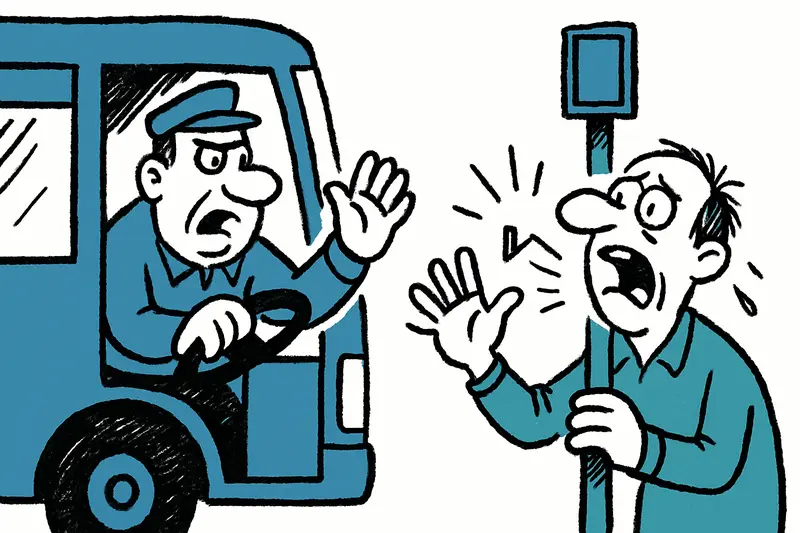
In September a rescue attempt on the coastal road at Cala Vinyes ended painfully: a passenger on line 105 who wanted to help the bus driver lost the index finger of his left hand when the bus brushed a pole and struck him. The man, who introduces himself as Sebastián, underwent emergency surgery at Son Espases University Hospital; the finger could not be saved and a wound infection developed later. The family had to leave their flat and now live provisionally in social housing in Palma.
The facts are sparse but explosive: according to Sebastián there is still no final police report, and the motor insurance responsible for the regional TIB bus fleet has not yet decided whether it will pay. A lawyer is reviewing the case; if the insurer refuses, court proceedings are likely. Until then, time for everyday life, job searches and normality is shrinking.
Critical analysis: several failures converge here. First: the incident itself — an evasive maneuver because of an ambulance that ended in contact with a traffic sign. Why did a passenger get out to hold the pole? Apparently he felt compelled to because the bus no longer rolled freely. That a person is so seriously injured while helping raises questions about driving behavior and restraint by the vehicle staff, in incidents similar to Eight Injured after Hard Braking in Palma – Heated Debate over TIB Working Conditions.
Second: the reaction afterwards. A driver whose vehicle injures someone has, by common standards, the duty to provide immediate assistance and to clarify the situation on site. That the injured passenger was taken to hospital later rather than immediately on scene, and that according to the affected person there is still no formal closure report, looks like a standstill in a process that should proceed promptly.
Third: the consequences for the family. Sebastián, his wife and three children — who say they come from Uruguay and are in an ongoing residency procedure — are currently not allowed to work regularly. That makes them existentially dependent on quick decisions by the insurer. Without financial bridging, people quickly slip into precarious housing; that is precisely what has happened here.
What is missing from the public debate: there is a lot of talk about traffic safety or free buses, but hardly any about the aftermath for individual victims or how social-law and insurance procedures interact. It is also rarely discussed how the status of migrants creates additional hurdles in claims cases — from delayed access to work to longer waiting times in administrative procedures.
Everyday scene from Mallorca: imagine the approach to Cala Vinyes on a cool September morning. The voices of beach fishermen have subsided, an ambulance hums in the distance, a few people wait at the stop for the 105. The bus jerks, brushes a sign, a neighbor runs over to help — and an ordinary morning becomes an ordeal for a whole family. Later in Palma at the social center it smells of coffee, plastic chairs and the small comfort of volunteers bringing blankets and warm soup.
Concrete solutions:
1) Immediate assistance for victims: Municipalities should set up binding emergency funds or rapid assistance so families do not immediately fall into homelessness while liability issues are examined.
2) Accelerated documentation: Police, transport authorities and the operator (TIB official website) must have clear deadlines within which accident reports are produced and made available. Delays harm victims twice over.
3) Mandatory reporting and information duties for insurers: Insurers should provide an initial assessment within a fixed period and at least provisional support payments until liability is clarified.
4) Protection for people in pending residency procedures: Social services and legal offices should ensure rapid access to emergency accommodation and legal advice, regardless of residency status while procedures are ongoing.
5) Internal review by transport companies: The regional operator should examine whether driver training on driving behavior and handling incidents is sufficient, and set clear rules for conduct after accidents.
Concluding summary: This case is not unique in its drama, but it is a lesson in structural gaps, echoed by other local events such as Son Gotleu: Five Injured After Bus Collision – A Wake-Up Call for Palma's Streets and the Serious Accident Near Porto Cristo: When a Holiday Day Becomes a Test of Emergency Response. A lost finger hurts physically and financially — and reveals how fragile the safety net for victims is. In Mallorca, where bus routes carry people over narrow roads and neighbors are often the first responders, insurance and administrative limbo must not decide whether a family keeps a roof over their head. Helping does not stop at holding a pole — afterwards, victims need fast, clear answers and tangible support.
Frequently asked questions
What should you do after a bus accident in Mallorca if you are injured?
Who may be responsible for injuries in a Mallorca bus accident?
What happens if an insurer in Mallorca delays deciding a compensation claim?
How long does it usually take to get an official accident report in Mallorca?
What should a bus driver do after an accident in Mallorca?
Can a family in Mallorca get emergency housing after a serious accident?
Is it possible to claim compensation in Mallorca while waiting for residency paperwork?
What kind of support can accident victims in Mallorca ask for besides compensation?
Similar News
By Boat Instead of the Road: Palma's Water Bus — a Reality Check
The 'Bus Nàutic' launches in two stages — but questions remain over interim operations, fares and environmental requirem...
Several Days of Rain Approaching: How Well Is Mallorca Prepared?
Aemet says: rain from Thursday until at least Tuesday, especially heavy on Monday. Temperatures remain mild. A reality c...
Nervous Reaction at a Traffic Stop: Why Campos Is Not Just a Sniffer-Dog Problem
At a traffic stop in Campos a 37-year-old German was arrested with a bag full of drugs. Our reality check explains why s...
Cameras Against Illegal Dumping: Porto Cristo Monitors Problem Areas – a Reality Check
Manacor has installed four surveillance cameras at particularly problematic waste spots in Porto Cristo. A local check a...
Reality check: Palma's "white" torrent — harmless salt or neglected warning sign?
White crusts on the Torrent de Sa Riera are causing a stir. Emaya describes them as salt deposits. Our reality check: wh...
More to explore
Discover more interesting content

Can Cap de Bou

Townhouse Lleo 72
