
Fitur with Mourning Band: How Mallorca Balances Respect and Interests
Fitur with Mourning Band: How Mallorca Balances Respect and Interests
The train accident in Adamuz dampens the mood at the Fitur tourism fair. Why the short-term cancellations make sense — and where the debate is still missing.
Fitur with Mourning Band: How Mallorca Balances Respect and Interests
Key question: How much restraint is appropriate — and what is lost as a result?
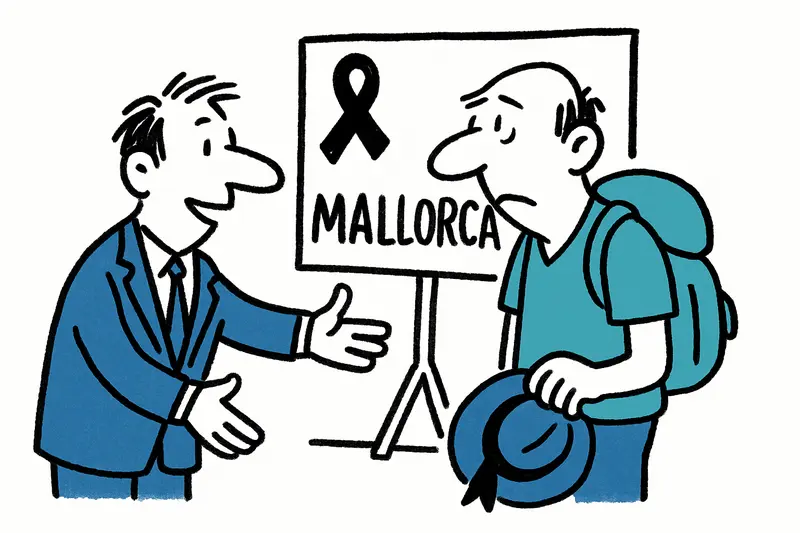
At the Balearic stand at Ifema the tone is low. The big stage for pictures and handshakes is there, but many program items with a celebratory character have been cancelled. Names like Marga Prohens, Antoni Costa or Jaume Bauzà remain present in Madrid, but bustle and galas are being avoided. The decision follows the serious train accident in Adamuz (Córdoba province) and resonates in Palma as deeply as it does in Madrid (see Mallorca's Share of Grief: Circus Artist Dies During Performance in Germany).
Viewed critically, the behavior is understandable: state representatives and municipalities want to show solidarity, enable moments of remembrance and avoid people celebrating at an international fair. At the same time, a gap arises. The fair is more than celebratory images: it is a yearly moment for specialist discussions, business deals and for the visibility of smaller providers who rely on Madrid to make contacts.
The public conversation so far has focused on cancelled events and prominent withdrawals — the Hotusa forum, the Exceltur forum, official Sant-Sebastià events in Palma, the postponement of the Moda Artesana de Mallorca brand are examples (coverage extends to sector analyses such as After Eleven Years at the Top: What Mallorca's Tourism Radar Really Needs to See).
What is rarely discussed: what concrete effects do these decisions have on hoteliers, transport providers, artisans or young start-ups that depend on trade fair appointments to secure sales and partnerships?
What is missing from the public discourse: first, clear criteria for when a public appearance should be cancelled or only modified. Second, a plan for cushioning the economic damage to smaller exhibitors. Third, visible, practical solidarity with the victims beyond symbolic cancellations — for example through donation mechanisms or psychosocial support for affected families and workers.
An everyday scene in Palma in the late morning: cutlery clinks at a street café on Passeig Mallorca, a delivery van trundles down the Ramblas, tourists with umbrellas head toward the cathedral. People speak little about fair policy, but the small bakery around the corner is proud of its participation in Madrid — and hopes that cancelled evenings do not automatically mean lost orders (this ties into debates such as When the Germans Stay Away: Opportunity or Risk for Mallorca?).
Concrete proposals to make future decisions less improvised:
1. Protocol for days of mourning at fairs: A graduated approach that distinguishes between moments of remembrance, a reduced program and a complete withdrawal. Clear criteria (scope of the tragedy, proximity of the victims, political status) help organizers and exhibitors plan.
2. Protection for small exhibitors: Short-term support funds or mediation services so that cancelled evening events do not automatically mean revenue losses for small businesses.
3. Communication guideline: Uniform, transparent information for visitors, partners and media — who says what and why. This reduces speculation and protects the reputation of local providers.
4. Practical solidarity: Instead of a pure cancellation, a communal stand could serve as a point for donations, condolence books or information offers. This preserves a presence without a festive character.
5. Psychosocial support: Response teams for employees of tourism businesses who are burdened by the reporting — moderated discussion rounds, short counseling sessions on site.
Conclusion: The reflex to forgo celebratory events is human and politically legitimate. But respect must not turn into speechlessness and a lack of planning. Mallorca and the neighboring islands face the task of combining a culture of mourning with economic responsibility. A standardized, transparent approach would help those who must not only represent in Madrid but also work there — from the island administration to the small bakery that will be baking pastries again tomorrow (see Reality Check: Why Mallorca Can Hardly Escape Massification).
Frequently asked questions
Why did Mallorca scale back its presence at FITUR in Madrid?
What happens to Mallorca’s tourism business when events at FITUR are cancelled?
Is Mallorca usually right to cancel festive events during days of mourning?
What kind of support do small Mallorca exhibitors need when a fair programme changes?
How can Mallorca show solidarity after a tragedy without losing its presence at a fair?
What should Mallorca do better when public events are changed at short notice?
Why does FITUR matter so much for Mallorca's smaller businesses?
What is everyday life like in Palma when Mallorca’s tourism politics dominate the news?
Similar News
Magaluf: Watchtower Alarm – Lifeguards Pull Unconscious Beachgoer from the Water
After a drama in the late afternoon, two lifeguards at Magaluf beach rescued an unconscious 44-year-old man. He was stab...
Turquoise in the City: How dangerous is the color play of the Sa Riera?
The Sa Riera in Palma suddenly turned turquoise — a pretty motif, but behind the effect lies a discharge of saline waste...

Jeckliner at Sunnesching: Cologne spirit sets sail from Palma
In September 2027 the Mein Schiff 2 briefly becomes a floating carnival stage: four days with Cologne bands, comedy and ...
Finally Home: Mike and Leyla Heiter Buy Villa with Sea View in Mallorca
The reality TV couple Mike and Leyla Heiter have bought a house in Mallorca with a roof terrace and sea view. An Instagr...
Arrest after series in Palma: Who protects apartments from repeat offenders?
The National Police arrested a man in Palma who investigators say may have broken into several apartments. In one incide...
More to explore
Discover more interesting content

Can Cap de Bou

Townhouse Lleo 72
