
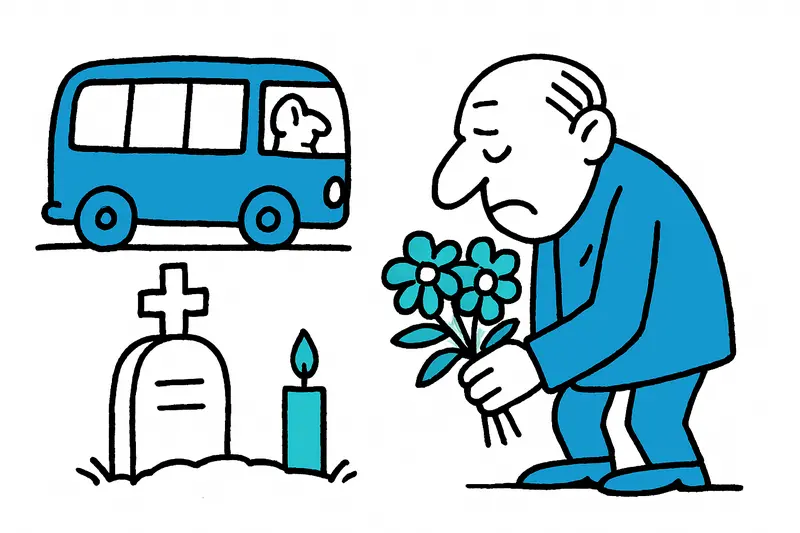
When Palma Wears Flowers — but Also Trash and Traffic: How Mallorca's All Saints' Day Can Become More Sustainable
All Saints' Day in Palma is a morning full of candles, croissants and kiosks — but also a test for buses, parking and the environment. Can small changes make the day calmer and greener?
When Palma Wears Flowers — but Also Trash and Traffic: How Mallorca's All Saints' Day Can Become More Sustainable
The lane at Passeig Mallorca smells of freshly brewed coffee, bakers put out the croissants, and people stroll along Palma's sidewalks carrying bouquets. On November 1 the island shows a very human side: remembrance meets everyday life. But questions hang in the air like wisps of fog over the Passeig — above all this one: Can All Saints' Day in Palma be organized more respectfully and at the same time more environmentally friendly?
A morning between candles and croissants
Those who arrive early at the Son Valentí cemetery hear the clatter of watering cans, murmurs in several languages and every now and then the beep of a bus timetable. The additional EMT services marked Cementeri are a reassuring ritual, almost as dependable as the scent of café con leche on the corner, as noted in a report on flowers, special buses and memorial moments at Mallorca's All Saints' Day. Still, the day sometimes feels like a puzzle where parking spaces, sidewalks and visitor flows do not quite fit together. Between carnations, chrysanthemums and the occasional plastic ribbons it becomes clear how much tradition and modern logistics collide.
The unresolved problem: plastic, space and noise
Plastic bows and disposable arrangements catch every visitor's eye. They are brightly colored but withstand neither wind nor rain — and later end up as waste. Less noticed is how quickly small facilities like portable toilets, information tents or mobile volunteer teams reach their capacity limits. The result: piles of rubbish in some corners, crowds in others and stressed older visitors who often miss the short routes that should actually be available.
Another often overlooked point is the seasonal strain on public transport: special buses do relieve the parking problem, but they are overcrowded at peak times. Seats are hotly contested, and stops fill up. All this shows: it's not only about feelings, candles and flowers. It's also about infrastructure — and decisions that have long-term consequences for the island, such as plastic waste and traffic.
Concrete solutions — what Palma could do now
No great miracles are needed, but a mix of urban planning, information and small incentives. Some proposals that could be implemented easily on a sunny November morning in Palma:
1. Compost and drop-off points: Collection islands for flowers and arrangements directly at the cemetery edge. A clearly marked area where plastic is immediately sorted out and plants are composted — less waste, better soil for the island, following the US EPA's guidance on home composting.
2. Incentives for long-lasting plants: Partnerships with florists: discounts for potted plants, discount codes in nearby bars for visitors with sustainable arrangements. Small economic incentives change habits.
3. Flexible bus planning: Real-time information on occupancy levels, more vehicles during peak hours and temporary boarding areas to speed up getting on and off. Less crowding means more dignity at farewells.
4. Volunteer network "Water and Change": Volunteers who water in the morning, accompany older people and do small repairs at gravesites. Visible, friendly, practical — and a relief for families.
Sustainable rituals in small steps
Change often starts at home, at the florist or at the bar where you have a coffee after visiting the cemetery. One idea: schools and neighborhood associations could offer workshops in advance — how to make long-lasting arrangements, how composting works or which plants are comforting and durable. It works: a pot of jasmine or a small olive at the grave is no less beautiful than a conspicuous plastic wreath — and much more sustainable.
Sometimes small gestures achieve a lot. A clearly marked place for candle storage, an additional water station, a team that cleans headstones — such services fit well with Mallorca's culture of togetherness. And they make the day a little easier for everyone.
One last look before the return trip
Before the bus leaves the sign Cementeri behind, it's worth taking a quick look back: at the candles, at the watering can, at the people who still sit a little on the stone. All Saints' Day is not just ritual. It is also a test run for an island that can create less waste and more humanity with a few smart steps. If Palma wants it, the ingredients are there: volunteers, city administration, local businesses — and a handful of good ideas. Then you return to everyday life with the last sip of coffee, and the island feels a little more like home again.
Frequently asked questions
What is All Saints' Day like in Palma, Mallorca?
Why does All Saints' Day create traffic and parking problems in Palma?
Are the special buses to the cemetery in Palma crowded on All Saints' Day?
How can All Saints' Day in Mallorca be made more sustainable?
What kind of flowers are best for graves in Mallorca on All Saints' Day?
What problems does plastic create at cemeteries in Palma?
What could Palma do to make cemetery visits easier for older people on All Saints' Day?
Where can families in Palma sort flowers and waste after cemetery visits?
Similar News
Release after bloody attack in Palma: Why the court's decision raises questions
An 18-year-old who allegedly inflicted a serious neck injury on a man at Plaza Gomila using a wristwatch wrapped around ...
Kidnappings in Inca: Three young men forced into car trunks and abused in the forest – a reality check
In Inca, three 18-year-old men were forced into car trunks by masked assailants at the Plaça des Bestiar, taken to a for...
Spreading Massification: The Brake That Still Has Much Work to Do
Marga Prohens announces limits on volume tourism. The measures sound harsh — but are they enough to save everyday life, ...
Through the Keyhole onto the Party Yacht: How Daniela Katzenberger Is Planning Her 40th on Mallorca
Daniela Katzenberger turns 40 and wants to celebrate it on the island — likely with a boat, cake and her mother. A relax...
By Boat Instead of the Road: Palma's Water Bus — a Reality Check
The 'Bus Nàutic' launches in two stages — but questions remain over interim operations, fares and environmental requirem...
More to explore
Discover more interesting content

Can Cap de Bou

Townhouse Lleo 72
