
Two killed on Formentera: Taxi hits motorcycle — what remains unclear, what needs to change?
Two killed on Formentera: Taxi hits motorcycle — what remains unclear, what needs to change?
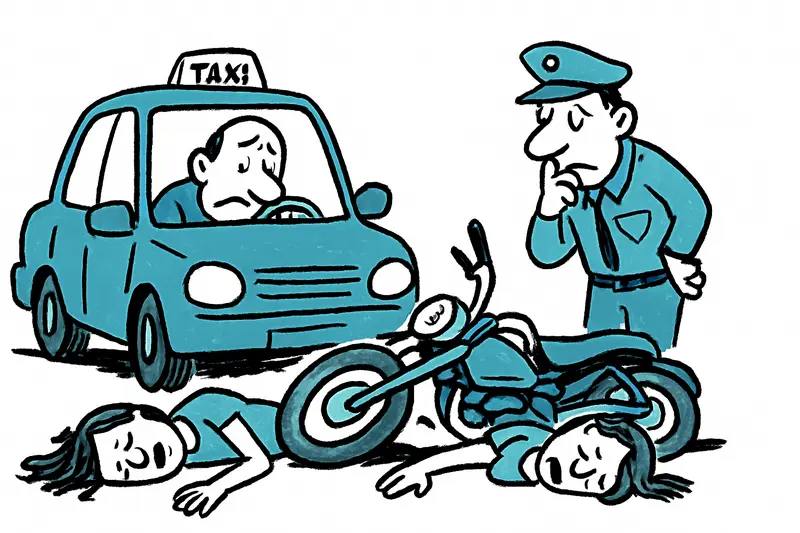
Two young women died in a collision between a taxi and a motorcycle on Formentera. The accident near Cala Duo raises many questions about safety on the small island.
Two killed on Formentera: Taxi hits motorcycle — what remains unclear, what needs to change?
The accident near Cala Duo and the unanswered questions
Late in the morning, emergency services reported a serious traffic accident near Cala Duo on Formentera: A taxi collided with a motorcycle carrying two young women. Despite resuscitation efforts by the SAMU 061 emergency team, the two could not be saved. The Guardia Civil and the Policía Local were on site and the road was secured.
Key question: Why can a serious accident be fatal on an island with limited traffic — and which gaps in prevention and response are now becoming apparent? This echoes wider seasonal trends noted in Too Many Deaths on Motorcycles: How Mallorca Can Stop the Summer Trend.
Critical analysis: information, responsibility, infrastructure
The factual situation is sparse: timing, the exact course of the accident and the victims' identities have not been made public. This information vacuum is particularly problematic. Without clear data on speed, lane position or visibility conditions, it remains unclear whether the incident was an accident, a rule violation or a technical fault. On a small island like Formentera, where vehicles are frequently rented due to permit restrictions, tourists often drive unfamiliar vehicles — which increases the risk. Similar calls for clearer information were made after investigations such as Why Are So Many Motorcyclists Dying on Mallorca? A Reality Check after the Llucmajor Accident.
There is also the question of responsibility: Taxi drivers operate under a concession and should be familiar with the routes. At the same time, motorcycles and scooters driven by visitors have a different risk profile. Who bears primary responsibility? Without a police report and eyewitness statements this cannot be answered reliably — but it must be clarified.
What is missing from the public debate
After accidents, people often quickly speculate about blame or negligence. What is more important now is a sober discussion about systemic causes: the condition of the roads (tight curves, missing markings), signage, speed limits on certain stretches and enforcement by the authorities. The role of rental companies is also rarely discussed: Are drivers adequately instructed? Are there mandatory briefings on local traffic rules when motorcycles are handed over? This is the same debate raised after other serious collisions, for example in Fatal accident in Alcúdia: Who is responsible — and what needs to change?.
A daily scene from the island
Anyone who comes to La Savina knows the scene: the shrieking of seagulls at the harbor, the smell of diesel and sea, the narrow streets full of rental bikes, the horn of the ferry. Especially in high season, people in flip-flops, families with strollers and drivers tired after a night drive mix here. This combination of calm and tourist bustle makes the island special — but it also demands increased caution on the roads.
Concrete solutions — quick to implement and medium-term
- Visibility and markings: More reflectors, clearer road markings and additional warning signs at critical points such as the access roads to Cala Duo.
- Speed controls and presence: Mobile speed checks during the season, increased patrols by the Guardia Civil at times with high traffic volume.
- Information at vehicle handover: Mandatory information from rental companies and taxis about local particularities (narrow roads, pedestrians, daytime dipped headlights).
- Training and testing: Regular refresher courses for taxi and bus drivers on the island, training in defensive driving on narrow coastal roads.
- Emergency strategy: Positioning a rapidly reachable medical response point for the southwest and west coasts of the island, so that response times are reduced in the event of serious accidents.
Why these measures are realistic
Many measures are low-cost but require political will and coordination between the island council, police and businesses. Formentera is small enough to implement pilot projects: a few signs, temporary measuring devices, information leaflets at rental stations — these can have a quick impact.
Concise conclusion
The accident near Cala Duo is tragic and shows: On small islands, a momentary lapse or an unlucky collision can cost lives. Instead of quick finger-pointing we need honest clarification, better prevention and concrete steps so that such evenings do not become the norm. The island community has the opportunity to learn from the tragedy — with clear measures that apply equally to locals and visitors.
Frequently asked questions
What is the best time of year to visit Mallorca for good weather and swimming?
What should I pack for a Mallorca trip in warm weather?
Are Mallorca’s beaches suitable for families?
What outdoor activities are popular in Mallorca?
How can I get around Mallorca without renting a car?
What should I know about Mallorca’s weather and water temperature?
When is Mallorca busiest with tourists, and how should I plan?
What local Mallorca foods should I try?
Similar News
From the Reality Studio to the Pitch: Aleks Petrovic Makes Mallorca His Base
The former participant in numerous TV shows moves from Dubai to the island and launches a project with FC Germania Mallo...
When the Phone Falls Silent: Concern for Sarah Joelle in Mallorca — and What It Reveals
After days without a response, the TV personality's unreachability in Mallorca sparked concern. Shortly afterwards an al...
Ultraluxury on the Ground: Four Seasons Jet in Palma — a Reality Check for Formentor and the Island
A high-priced flight crosses Mallorca and its guests stay for days at the Formentor resort. What does the island get bes...
Death of a Witness and the Justice Backlog: Why the Kegel Brothers Trial Matters in Mallorca
A witness in the Playa de Palma fire case has died, and the trial against eight German holidaymakers has been delayed un...

Champagne Reception, Red Carpet and Mini Originals: The Pre-Nit del Art at Gallery Mensing
Almost 400 guests, champagne, pop-art feats by Tom Boston and a raffle for the Parkinson's foundation: Gallery Mensing t...
More to explore
Discover more interesting content

Can Cap de Bou

Townhouse Lleo 72
