
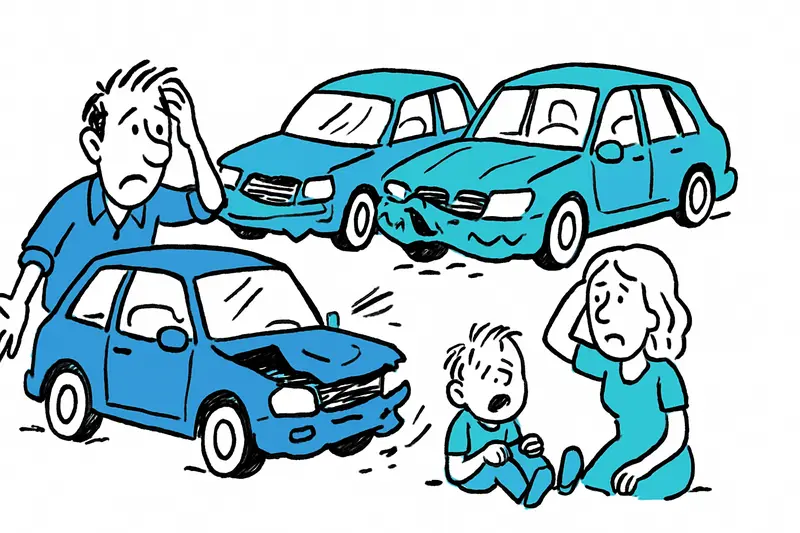
Pile-up near Costitx: Five injured — How safe are our country roads?
Four vehicles collided on the Ma-3011 near Costitx. Five people were injured, including two children. A follow-up analysis shows that lighting, speed limits and emergency access need to be examined.
Evening pile-up near Costitx: Five injured, two children — and many unanswered questions
It was a short, loud impact around 6 p.m. on a chilly November evening: on the Ma-3011 at kilometer 26, just minutes outside Costitx, four cars crashed so violently that residents came out of their homes with flashlights, as reported in Colisión múltiple en Costitx: cinco heridos — ¿Qué tan seguras son nuestras carreteras rurales?. The smell of petrol lingered in the air, screeching tires and the crunch of dented bodywork echoed between olive and carob trees. Five people were injured, including an eight-year-old girl and a six-year-old boy.
First aid was provided by emergency dispatch 061 with several ambulances; the Mallorca fire brigade had to free one person from a vehicle. Two children and their 48-year-old father were taken to Son Espases hospital, a 58-year-old woman suffered serious injuries and was transferred to Palma, and a 47-year-old man received treatment in Inca. The Ma-3011 remained closed for about an hour while responders removed an oil slick and secured the accident site.
Key question: Why do such accidents happen on small country roads — and what is too rarely considered?
The Guardia Civil is investigating the exact sequence of events, similar to its inquiry into the Head-on Crash on the Ma-11: Three Injured — and the Uncomfortable Question of Greater Safety. According to first findings, a Toyota Auris and a Citroën Berlingo collided; the Berlingo was apparently thrown into the oncoming lane and there collided with a Fiat 500 and a Peugeot 2008. But the simple sequence of vehicles does not answer the real question: where does the system fail so that a normal evening suddenly turns into a serious accident?
More than speed: Aspects that are too rarely discussed
Of course distraction, speed or a technical defect are possible causes — but there are factors that are often overlooked in public debate: the Ma-3011 at the accident site is sparsely lit; at night you quickly fall into a patch of darkness here. Road edges, markings and guide posts are aging in some sections, reflective signs are fading. These small things significantly reduce reaction time.
Also little considered is the emotional aftermath for children and residents: an accident that injures children leaves deep scars in the village. Parents who later take their own children to the school bus speak softly, many eyes are red. And the strain on local emergency services and hospitals — especially at night — is immense; teams first respond in the twilight, followed by aftercare, documentation and witness statements. This costs time and personnel.
Concrete weaknesses on site
Residents report that the spot at kilometer 26 is dark and winding. Large agricultural vehicles that move slowly in the evening, changing speeds of drivers and the lack of a central reservation increase the risk. This pattern was also evident in the Crash on the Ma-10: Bus collides head-on with a truck — What does this say about our roads?. Speed controls are also rare here; good advice at the bus stop is not enough to solve systemic problems.
What could help now: Measures instead of lip service
From the incident, concrete approaches can be derived that could take effect in the short and medium term:
1. Better lighting and visibility: Targeted installation of streetlights at accident hotspots, reflective guide posts and refreshed lane markings reduce night accidents.
2. Traffic engineering adjustments: Rumble strips, reduced speed limits in sensitive sections and clear sight triangles at junctions create buffers for mistakes.
3. Controls and prevention: More mobile speed checks, targeted inspections of heavy transports and awareness campaigns about correctly securing children and loads.
4. Improve response and aftercare: Shorter response times for rescue services through optimized routing, joint exercises by fire and rescue teams for trapped persons and psychosocial emergency teams for those affected — especially children.
5. Community involvement: Small measures like better street lighting, safer bus stops and local information campaigns can often be coordinated with the municipality, island administration and the Guardia Civil.
Aftermath in Costitx: Attention instead of fatalism
The day after the accident, conversations in Costitx are quieter but more determined. People drive more carefully to work in the morning, and voices at the bus stop turn to “wasn’t it always dark there?” The fire brigade is reviewing operational tactics, the Guardia Civil is asking witnesses to come forward — and families are trying to return to normality.
Such accidents are unpleasant wake-up calls: they show that infrastructure, enforcement and rescue chains must work together. The central question remains: do we wait for the next incident — or do we systematically change small things that can have large consequences?
If you saw anything or can provide information, please contact the Guardia Civil. For those affected the slow work of recovery now begins — and for all of us the task of learning from the incident.
Frequently asked questions
Why are country roads in Mallorca often seen as more dangerous at night?
What should I check before driving on rural roads in Mallorca?
What should I do if I come across a road accident in Mallorca?
Are some roads around Costitx more difficult to drive than others?
What happens when a rural road is closed after an accident in Mallorca?
How can rural road safety in Mallorca be improved?
Which hospitals treat injured people after accidents in Mallorca?
What should drivers do to help avoid accidents on Mallorca’s country roads?
Similar News
Three-ton llaut salvaged in Puerto Portals – volunteers clear microplastics from the harbor
During the weekend operation in Puerto Portals, divers pulled an approximately three-ton llaut from the harbor. Associat...
Naked Pillar in Bunyola: Why a Climbing Prank Is More Than an Accident
During the Sant‑Mateu verbena a 20‑year‑old fell at a protected wayside cross in Bunyola and pulled the stone cross off ...
Towel on It, Chair Gone? How Hotels Can Regulate Reservations of Sun Loungers
After a deadly dispute in Greece, the question has resurfaced in Mallorca: Are hotels allowed to ban or sanction the pra...
Illetas: Police Officer and Two Lifeguards Rescue Two Female Tourists from the Sea
Late on Friday afternoon emergency responders entered the water off the coast of Illetas: a local police officer and two...
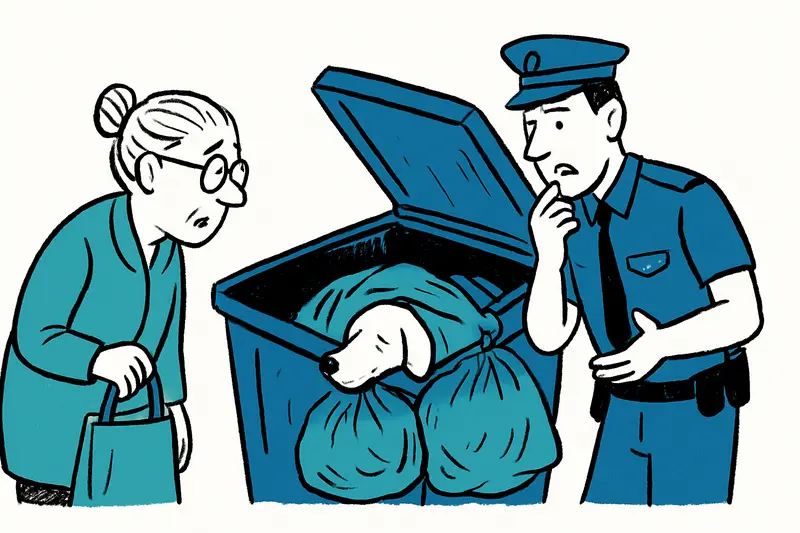
Inca: Severely injured female dog found in garbage bags in a container – who has seen anything?
In Inca, a severely injured female dog was discovered wrapped in two garbage bags inside a container on Avenida Rei Jaum...
More to explore
Discover more interesting content

Can Cap de Bou

Townhouse Lleo 72
