
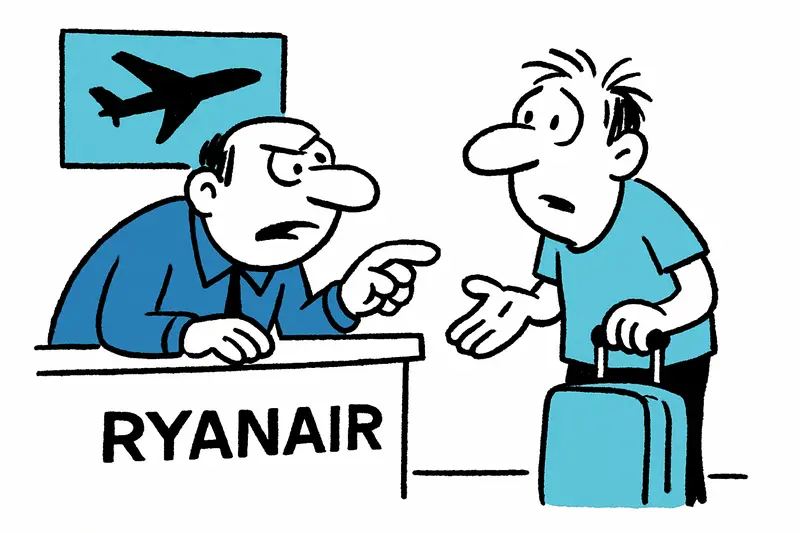
Ryanair tightens check-in: Why Mallorca travelers now need to plan more
Ryanair tightens check-in: Why Mallorca travelers now need to plan more
From 10 November 2026 Ryanair will close the counters 60 minutes before departure. Those checking baggage should arrive at Palma much earlier — and airports will have to adapt.
Ryanair tightens check‑in: Why Mallorca travelers now need to plan more
Main question: Is a 20‑minute buffer enough, or does the measure hit the most vulnerable first?
From 10 November 2026 new deadlines apply to all flights of the Irish low‑cost carrier: check‑in desks and baggage drop will close 60 minutes before the scheduled departure instead of the previous 40 minutes. The airline's explanation is that longer queues at security checks and passport counters sometimes lead to passengers arriving late at the gate. As one responsible manager called the change, it is a "minor adjustment of 20 minutes."
That sounds technical and rational in a press release. For people who get on coaches on Mallorca, wait at the taxi rank or arrive in the morning by Aerobus, it means one thing: less margin. Travellers checking in hold baggage are particularly affected – according to the airline about 20 percent use this service. The remaining 80 percent, who travel only with hand luggage and have already checked in online, will hardly notice the change.
At Son Sant Joan airport the reality looks different. In the mornings, when several aircraft arrive and depart almost simultaneously, rolling suitcases cross the tiles, coffee aromas fill the air, announcements sound in Spanish and English and queues form at the counters. Those who are not digitally savvy stand in front of a self‑service terminal, look for a staff member or push into the queue – and those are exactly the minutes customers will no longer have.
In short: the rule shifts the pressure forward. The attempt to avoid delays at security checks by tightening check‑in deadlines misses the core problem: capacity bottlenecks and a lack of staff reserves at security and check‑in counters (Ryanair Ground Staff Strikes: What Mallorca Needs to Know). The airline is planning increased automation in parallel: by October 2026 more than 95 percent of airports in the network are expected to have self‑service bag drop machines, with baggage tags increasingly printed via the app. Palma already has such systems; they usually work – but not always (Digital Boarding in Mallorca: Ryanair Stops Paper Boarding Passes – Who Gets Left Behind?).
What is missing from the public debate? First: an honest assessment of how much time security checks really consume, and who is responsible for that – airports, security firms or the authorities. Second: protection for travellers who are less technically adept. Third: reliable figures on how many passengers actually miss flights because of longer checks and whether a blanket shortening of processing times is the best answer.
Concrete points we could improve on the island immediately:
1) Clear communication and signage: More visible notices about the new deadline should be placed at Aerobus exits, taxi ranks and in hotels. A sign at the luggage return in Playa de Palma or on Passeig Mallorca helps holidaymakers judge their time.
2) Human assistance at the machines: Airports and airlines must schedule extra staff at peak times to help with self‑service devices – not long FAQ leaflets, but real points of contact.
3) Pre‑booked baggage drop slots: Pilot a scheme where travellers can book 15‑minute slots for baggage drop. That would ease queues.
4) Cooperation between airline and airport: Share passenger flow data so staffing and opening hours can be aligned with actual needs.
5) Local service offers: Hotels and rental providers could offer early baggage delivery or interim storage – a small service that would greatly relieve travellers who want to spend time in Palma on their departure day.
These proposals may not sound spectacular, but they address everyday problems: not everyone can print a baggage tag in two minutes or knows where the self‑service counters are. On warm days, when the sun heats the terminal's glass facade and the security queue inches forward, every tip given by an airport or airline counts.
Conclusion: The extra 20 minutes before closing may seem small on paper. In practice they increase stress for passengers with checked baggage and place additional organisational pressure on airports and service providers. If Ryanair wants to gain time, closing counters earlier and rolling out machines is not enough; Ryanair threatens further cuts – How at risk is Mallorca? Anyone who truly wants to reduce the number of missed flights must work on the queues, not on the passengers. Otherwise the bill will be paid by older seniors, families with small children and all those travelling around Mallorca with a suitcase and only a thin time buffer.
Frequently asked questions
What is the weather usually like in Mallorca in autumn?
Can you still swim in Mallorca outside the summer months?
Is autumn a good time to visit Mallorca?
What should I pack for Mallorca in the autumn?
What is Alcúdia like in autumn?
Is Santa Ponsa still lively after summer?
What is the weather like in Port de Sóller in the shoulder season?
Can you still do outdoor activities in Mallorca when it is not hot anymore?
Similar News
Mueller continues expanding in Mallorca: Artà in 2026, Can Picafort in early summer 2027
The drugstore chain Mueller is opening two new stores in Mallorca: a 1,400 m² shop in Artà on 5 November 2026 and a bran...
The Painter Who Lived Mallorca: Franz Taussig and His Century-Old Secret
A hundred years ago a young Viennese arrived in El Terreno, sketched the island and called himself Francis Caron. Today ...
Airport dispute: Bridge, forecasts and the question of responsibility
A video by the Spanish transport minister has ignited the dispute over DORA figures, capacities and local governance pow...

The Painter Who Invented Himself: How a Young Viennese Drew Mallorca
A hundred years ago a 19-year-old draftsman arrived in El Terreno. His diary and sheets, long known under the pseudonym ...
Released with Conditions: The Plus Ultra Suspicion and a Mallorcan Finca as Residence
A Dutch entrepreneur, sought in connection with the Plus Ultra case, was extradited to Spain after his arrest in Germany...
More to explore
Discover more interesting content

Can Cap de Bou

Townhouse Lleo 72
