
Older German Found Dead in Seaside Apartment: How Can This Happen in a Busy Holiday Resort?
Older German Found Dead in Seaside Apartment: How Can This Happen in a Busy Holiday Resort?
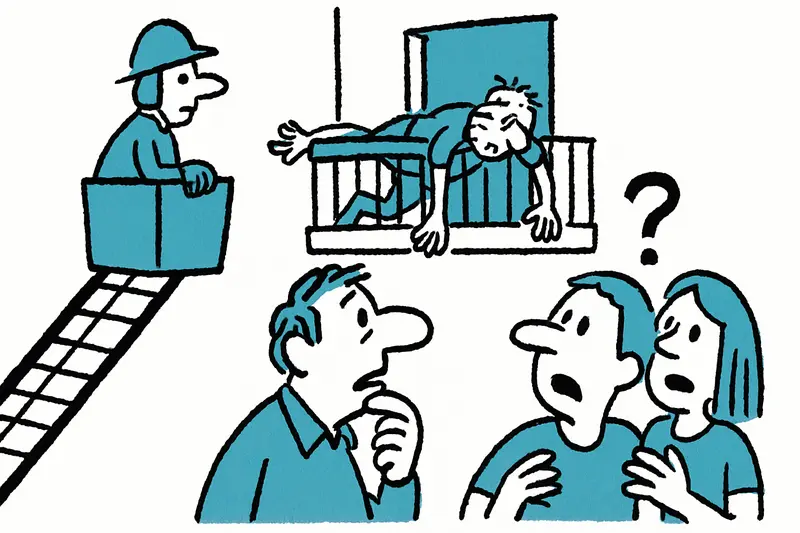
A 79-year-old German citizen was found dead in an apartment directly by the sea in Port d'Andratx. Firefighters and police accessed the flat via the balcony; indications point to a natural death and that the man had likely been deceased for about a month.
Older German Found Dead in Seaside Apartment: How Can This Happen in a Busy Holiday Resort?
Early on Wednesday afternoon an attentive landlord alerted emergency services after he could not reach his long-term tenant and neighbours reported a strong smell. The Guardia Civil, the local police of Andratx and a unit of the fire brigade responded; the teams gained access to the second-floor apartment via the balcony using an aerial ladder and found the body of a 79-year-old German citizen. Evidence suggests the man had likely been deceased for about a month. Initial assessments point to a natural cause of death.
Main question: How can an elderly resident in a well-frequented holiday area like Port d'Andratx remain unnoticed for so long?
Critical analysis: At first glance this case appears to be a straightforward sequence of facts — landlord alerts, fire brigade enters via the terrace, body found. But a closer look reveals several weaknesses: Many owners of second homes and long-term tenants operate in a legal grey area when it comes to regular checks. Landlords are not legally responsible for a tenant's health, may not enter a flat without permission and are caught between privacy and a duty of care. At the same time, many places lack binding registration or monitoring mechanisms for single-living seniors, especially for foreigners who spend their retirement here.
What is often missing from public debate: The discussion is frequently reduced to sensational facts — body found, fire brigade in action — while neglecting the underlying causes. There is little talk about what organisational measures municipalities, landlords and consulates could implement to ensure loneliness and delayed discovery of deaths do not become the norm (82-year-old tourist chokes in Port de Sóller).
An everyday scene from Port d'Andratx: On a typical morning fishermen sit on the pier repairing nets; the smell of freshly brewed coffee drifts from the harbour cafés, and retirees slowly push their e-bikes along the waterfront. Here, where life runs at a slower pace and many residents depend on one another, proximity does not automatically mean oversight. Neighbours greet each other, but not everyone asks whether everything is alright — especially when someone is used to living reclusively.
Concrete solutions: 1) Municipal check-in programmes: Towns could offer a voluntary register for single-living seniors in which relatives, landlords or doctors can enter emergency contact information. 2) Landlord guidelines: Legal guidance for landlords on how to act in case of unusual non-response, including clear procedures for alerting police or the consulate without violating privacy. 3) Consular accessibility: German diplomatic missions should more actively publicise what support and advice are available to older citizens abroad. 4) Strengthening neighbourhood initiatives: Local initiatives and neighbourhood networks — for example via community bulletins or church groups — can organise short, regular contact checks. 5) Technical aids: Affordable alarm or motion sensors that residents can install themselves and link to an emergency contact can save lives or at least speed up the discovery of a death. 6) Training for first responders and caretakers: Short guides on how to assess signs such as smells or prolonged absence and when to activate emergency chains.
These proposals cannot be implemented overnight, but they are practical and have been tested elsewhere. It is important that they are based on voluntariness, transparency and respect for residents' rights — coercive checks are neither legally nor ethically desirable.
Punchy conclusion: The sad discovery in Port d'Andratx is not a random one-off but a symptom of infrastructural gaps: we have beautiful promenades and lively cafés, but we lack reliable, respectful routines for people who live here permanently and may be lonely (see Mourning in Port de Sóller: 87-year-old dies while swimming and Tourist Dies at Port de Sóller: When Everyday Holiday Life Reaches Its Limits). Those who live on Mallorca or rent out properties should not treat the issue as an abstract risk but agree on concrete, simple steps — in case a person suddenly falls silent.
Information about the operation: Emergency services arrived at the scene around midday; the fire brigade used an aerial ladder to gain access to the flat via the balcony. Investigations into the cause of death are being conducted by the competent authorities.
Frequently asked questions
Why do lonely deaths sometimes go unnoticed in Mallorca apartments?
What should a landlord in Mallorca do if a tenant suddenly cannot be reached?
How can neighbours in Mallorca tell when someone may need a welfare check?
Are there special risks for older foreigners living alone in Mallorca?
What emergency services respond to a welfare check in Mallorca?
What is Port d'Andratx like as a place to live year-round?
Can a landlord in Mallorca enter a flat without the tenant's permission?
What can help prevent lonely deaths among older residents in Mallorca?
Similar News

Short Getaway with Sea View: Inmood Aucanada among Spain's Top Hotels for Dinner Breaks
A small hotel on the coast of Alcúdia was highlighted by a Spanish experience platform as particularly suitable for shor...
Cala Pi crowned Mallorca's most beautiful beach: A morning at the rocky cove
The travel portal Holidaycheck praises Cala Pi as Mallorca's most beautiful beach: a narrow, romantic cove, clear water,...
Injured captain, big plans: Germania Mallorca before the away match in Consell
The newly founded FC Germania Mallorca travels to Consell on Saturday. Captain Bastian Müller is out injured, but coach ...
Palma, Palma de Mallorca, Palma‑Mallorca: What is it really about?
The debate over the city's name is more than grammar: it concerns identity, law and branding policy. A sober reality che...
Warning to Bathers: Nipping Fish in Cala Major and Other Coves — a Reality Check
In Cala Major and several beaches around Mallorca, bathers report painful “nips”. Who are the animals, why are they gett...
More to explore
Discover more interesting content

Can Cap de Bou

Townhouse Lleo 72
