
Giant at Anchor: US Aircraft Carrier Sparks Debate in Palma
The USS Gerald R. Ford has been anchored off Palma since Friday. Between amazement, hopes for extra revenue and protests, the question grows: What does the visit mean for the island in the short and long term?
A colossus off Palma — and many questions
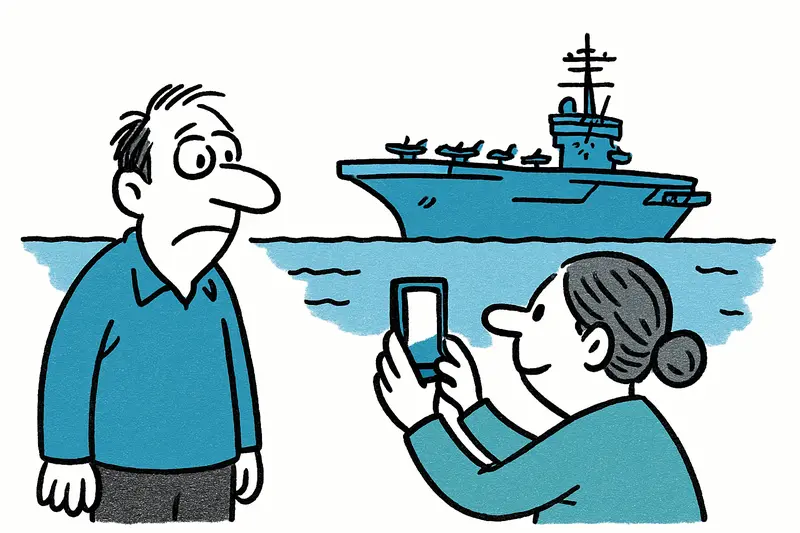
When morning lit up the Passeig Marítim, the air still smelled of coffee and freshly baked ensaimadas. Then something else suddenly drew the eyes: a dark hull, superstructures like small towns — the USS Gerald R. Ford off Palma: A Colossus That Casts More Than a Shadow lay at anchor in Palma Bay. Those looking toward Portixol had to take a second look. The ship is 337 meters long, nuclear-powered and can carry around 90 aircraft. For the city it is an unusual sight that is fueling conversation this weekend.
What remains unanswered: why, how long, with what consequences?
Official information is scarce. Authorities give the departure time — Wednesday, October 8 — and technical details, but largely remain silent about the reasons. Is it a short rest for the crew, an exercise in the region, or a political statement, as discussed in Aircraft carriers off Mallorca: When the sea becomes a political stage? In a time when foreign policy and military presence are often discussed sensitively, that silence is insufficient. It leaves a vacuum filled by imagination: some see security interests, others a provocational gesture.
Practically, the question of risks remains: the ship runs on nuclear power but is anchored offshore — not tied up in the port. What would happen in the event of a technical problem, an accident or unrest on land? Mallorca has emergency plans for peak tourist events and wildfires, but how well prepared is the island for incidents involving a nuclear propulsion system off its own coast? A sober look at crisis communication and responsibilities is needed: Who informs the population, and which measurement data will be made public?
Wallet meets society — economic opportunities and social tensions
Hoteliers and restaurateurs are smiling. It is easy to imagine thousands of crew members dropping into cafés, bars and souvenir shops. An extra week of revenue can be noticeable for small businesses at the edge of the season, noted in US aircraft carrier in Palma Bay: A quick sales boost — and the question of what comes after. Taxi drivers quickly add up possible fares, and the fisherman on the Passeig, who keeps cigarettes and rum in his small stall, rubs his hands.
But there is another side: experiences from previous visits by large naval units show that alcohol consumption, nighttime altercations and increased police presence are not unlikely. Some shops are preparing defensively, bars are planning limits and security forces are stepping up controls, a dynamic described during the visit in USS Gerald R. Ford in Palma: A Giant, 4,500 Guests — and Open Questions. Added to this is the political dimension: left-wing groups have called for protests and see the stay as a political signal — at a time when many prefer relaxation and dialogue.
What is often missing from the debate
Current discussions often lack the perspective of sustainability and long-term effects. A few days of revenue are welcome, but how does the image of Palma change if such military presences become more frequent? What impact does it have on the tourist perception? And who bears the costs of increased security measures or possible environmental damage?
At the same time, environmental risks are rarely discussed publicly. A nuclear-powered ship places different demands on monitoring and emergency planning than conventional vessels. Monitoring stations, lines of coordination between port authorities, the harbourmaster and the Balearic government — all of this should be disclosed so that fears do not grow and false rumors do not spread, as urged in Giant off Palma: USS Gerald R. Ford sparks cheers — and raises unanswered questions.
Concrete steps that would help now
Transparency is the keyword. Authorities should provide precise information: contact points, measurement data, emergency plans. A situation center that regularly issues updates would reduce speculation and build trust. Useful measures for the city would include a coordinated code of conduct for coexistence with temporary large stays, increased social services in areas with heightened conflict potential and a hotline for businesses needing support.
Additionally, the port authority and the local economy could agree on common rules: designated rest areas for the crew, clear opening hours for events, alcohol controls and information booths that inform in Spanish, Catalan and English about local rules. Such pragmatic arrangements reduce friction and protect livelihoods.
A silent giant — and a slice of everyday life
I cycled along the harbour in the morning. Gulls announced the tide, a motorboat cut the mirrored surface, the promenade slowly filled. A fisherman laughed: "The guys buy cigarettes and rum. That's good for us." An older lady on the shore shook her head: "We haven't seen anything like this for a long time." This coexistence — business, curiosity, concern — is typical for Palma. The days until October 8 will show whether the visit remains a surprising photo motif or whether it sparks more lasting discussions.
In the end the central question remains: how does an open, tourism-focused island deal with international displays of power taking position off its coast? The answer need not be only political. It should also be locally practical, transparent and tailored to the people who live here.
Frequently asked questions
Why is the USS Gerald R. Ford anchored off Palma?
How long will the US aircraft carrier stay off Palma?
Is it safe to have a nuclear-powered ship anchored off Mallorca?
What effect could the carrier visit have on businesses in Palma?
Will there be protests during the US carrier's stay in Palma?
How do people in Palma feel about the aircraft carrier visit?
Could the aircraft carrier change Palma's image as a tourist destination?
What can residents and visitors expect around Passeig Marítim while the ship is off Palma?
Similar News

When a Taxi Fare Dispute Turns Violent: What the Magaluf Case Reveals About Safety and Prevention
In Magaluf a 2023 dispute over a taxi fare escalated: an 18‑year‑old British man is accused of seriously injuring a taxi...

Bloody clash in Canòdrom Park: What is missing in addressing violence on Mallorca's streets?
At midday on October 23, an 18-year-old man was critically injured in Canòdrom Park in Palma. The attack raises question...

Palma raises bus fares: Who pays the bill for public transport?
Single tickets rise from €2 to €3, airport trips have a reference price of €4.50. It remains unclear whether residents w...

Palma's New Indoor Pool: Sea View, Sunbeds and Space for Everyone
At Aigua Dolça, near the Paseo Marítimo, Palma has a new municipal indoor pool. For a small fee people can now train, re...

How Four Burglars Emptied Ten Houses with a Simple Trick — and What It Means for Mallorca
Four men used the impressioning technique, posed as delivery workers and accepted two years in prison. A reality check f...
More to explore
Discover more interesting content

Can Cap de Bou

Townhouse Lleo 72
