
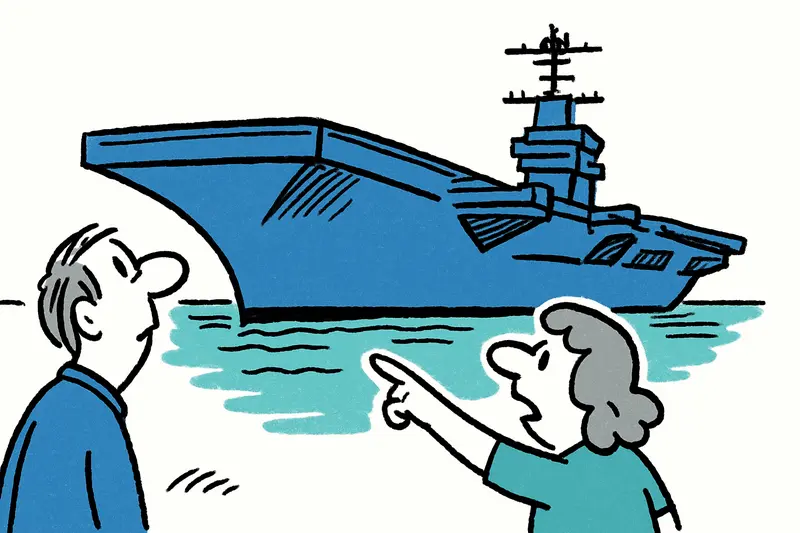
Giant off Palma: USS Gerald R. Ford sparks cheers — and raises unanswered questions
From October 3 to 8 the world's largest aircraft carrier will anchor off Palma. Vendors expect increased sales, while residents fear traffic and security checks. What will the visit actually bring — and who will pay the price?
When a steel giant fills the bay
On October 3 the silhouette that normally belongs in military documentaries will fill Palma Bay: the USS Gerald R. Ford (covered in USS Gerald R. Ford in Palma: A Giant, 4,500 Guests — and Open Questions), currently described as the world's largest aircraft carrier, plans a multi-day stay until October 8. Around 4,500 people are expected on board — a small city that suddenly pours onto the promenade and into the markets. Already one can imagine ice cream varieties disappearing faster along the Passeig Marítim, tables in Santa Catalina being pushed closer together, and extra shoe sizes being fetched from the stockroom on Calle de Sant Miquel.
The key question: who benefits — and at what cost?
The simple answer is: many benefit, some pay. Shops, restaurants and taxis see real potential for short-term gains. Rumors mention figures of up to ten million euros in spending — an attractive headline, but it also raises questions and has been the subject of coverage such as Giant at Anchor: US Aircraft Carrier Sparks Debate in Palma. Is that just gross revenue over a few days, or will any of it remain as net income for Mallorcan households? How much of it will be eaten up by additional costs for security, traffic detours and cleaning?
What often gets overlooked in public debate
While the smell of coffee from cafés and the clatter of cutlery paint an optimistic picture, three points often remain underexposed:
1. Public costs: Harbor police, customs, additional municipal cleaning services and coordination with the military are not free. For residents along Playa de Palma this means more checks, possible road closures and altered bus routes — direct impacts that do not always show up in headline revenue estimates and are discussed in USS Gerald R. Ford off Palma: Why the island is now divided.
2. Environmental and noise issues: A carrier of this size brings more than people: wastewater, fuel emissions, increased boat noise and potentially more litter at docking points. Sensitive parts of the bay could be affected, and that is an issue hardly measurable in euros but with effects that can last for years. The scale and potential impacts are examined in USS Gerald R. Ford off Palma: A Colossus That Casts More Than a Shadow.
3. Measurability of the economic effect: Broad estimates sound good but are often speculative. Without targeted surveys — for example spot checks in restaurants, taxis and markets or a binding cooperation with the port authority — it remains unclear how much actually flows into local coffers.
Concrete opportunities — and practical suggestions
The visit is also an opportunity: for a week there is attention that can be used smartly. Some concrete proposals so more of the benefit stays on the island:
Coordinated information management: Early communication by the city administration with residents about closures, shuttle offers and alternative routes reduces frustration. An information point at the Mercat de l’Olivar with a map and timetables would help — especially when the seagulls cry and the first cafés open in the morning.
Shuttles and dedicated pedestrian zones: Shuttle buses from designated parking areas to the promenade or viewpoints like Punta Gorda would reduce individual traffic. Designated zones for visitors protect residential areas from crowds and noise.
Economic transparency: Short surveys in restaurants and taxis during the visit as well as a follow-up survey could provide reliable figures — instead of gut-based extrapolations.
Pop-up cultural offers: Local providers could create targeted offers: small food stands with ensaimadas and fish dishes near the port, temporary markets with handicrafts from Santa Catalina or guided city tours — ideal for crew members who have little time but want a genuine Mallorca experience.
Memories and reality
In the end, images remain: a huge ship, flags in the wind, the dull thrum of the engine and people standing at the harbor with thermoses, or the young shoe shop salesperson who recounts how quickly the large sizes went. For many the visit will remain a pleasant anecdote; for some — such as small restaurateurs — it can be a real, if short-lived, boom. For residents it can be disruptive if communication channels are not clearly arranged in advance.
The real question is therefore not only how much money passes through, but how well Palma organizes this opportunity: with responsibility toward residents, clear logistics and measures to protect the bay, the short-term bustle could become a benefit with fewer side effects.
I will stand on the promenade on October 3 — with a thermos of coffee, eyes on the wide-open bay, and hope that the city seizes the opportunity without overwhelming the island's normal rhythm. A big visit can bring a lot — if we steer it wisely.
Frequently asked questions
When is the USS Gerald R. Ford expected to be off Palma, and how long will it stay?
Will the USS Gerald R. Ford bring economic benefits to Palma?
What kinds of disruptions can residents in Palma expect during the USS Gerald R. Ford visit?
Could the USS Gerald R. Ford affect the environment in Palma Bay?
What should visitors to Palma expect around the port when the USS Gerald R. Ford is there?
How can Palma organize large cruise or military ship visits better?
What local businesses in Palma are most likely to benefit from the USS Gerald R. Ford stay?
Why is the USS Gerald R. Ford visit to Palma controversial?
Similar News

Palma's Subway Project: Environmental Review Begins — More Questions Than Answers
The environmental review for Palma's planned subway extension to Son Espases has started, raising concerns and unanswere...

When Tents Return by the Sea: Palma Between the Congress Palace and Sleeping Places
Tents repeatedly appear in Albert Camus Park and on the beach at Can Pere Antoni. Why don't evictions solve the problem ...
Alleged Rape in Palma: How Home Videos Changed the Investigation
A woman reports an assault in Palma. Secretly recorded videos are said to have supported her account. Why migrant women ...

After Major Partners Exit: Palma Rewrites the Rules for the Waterbus
The port authority has changed the rules for the planned waterbus: removal of rigid minimum revenue guarantees, higher u...

Rats in Llucmajor: How Uncollected Garbage Became a Health Problem
In Llucmajor, uncollected trash bags, overflowing containers and rain are leading to increased rat sightings. An assessm...
More to explore
Discover more interesting content

Can Cap de Bou

Townhouse Lleo 72
