
Sometimes a Glass of Wine Is Allowed: How an Author Uses Mallorca as a School of Life
Sometimes a Glass of Wine Is Allowed: How an Author Uses Mallorca as a School of Life
Ulla Rahn-Huber has lived on Mallorca for decades and combines research on longevity with everyday life: gardening, community, Mediterranean cuisine and a touch of serenity.
Sometimes a Glass of Wine Is Allowed: How an Author Uses Mallorca as a School of Life
When in the early morning the fishing boats in the harbor of Andratx quietly clatter and the bells of the village church cut through the air, Ulla Rahn-Huber is already sitting in the garden among lavender and daisies. The small house she found between the village and the water is not a retreat in the classic sense, but a workshop for everyday life and the art of living – that is how she describes her coexistence with the island, echoing tips in Mallorca Vibes for the Living Room: Small Rituals, Big Impact.
Rahn-Huber grew up in Germany, worked as an interpreter and translator, and several decades ago found her way here after a chance encounter in Nuremberg. The Mallorcan family she had helped at the time later invited her; vacations turned into visits, visits into a permanent home. Many things on the island – the pine trees, the short paths to the sea, the village-like togetherness – she now sees as building blocks of a sustainable lifestyle.
Her interest in longevity began after her own illness and led her to travel studies in regions researchers call Blue Zones: places where people often live to a great age while remaining comparatively fit. From meetings with older residents in Japan and Mediterranean regions she has drawn her own conclusion: it's not about following strict rules, but about a balance of movement, community, simple cooking, an inner attitude and a sense of purpose in everyday life.
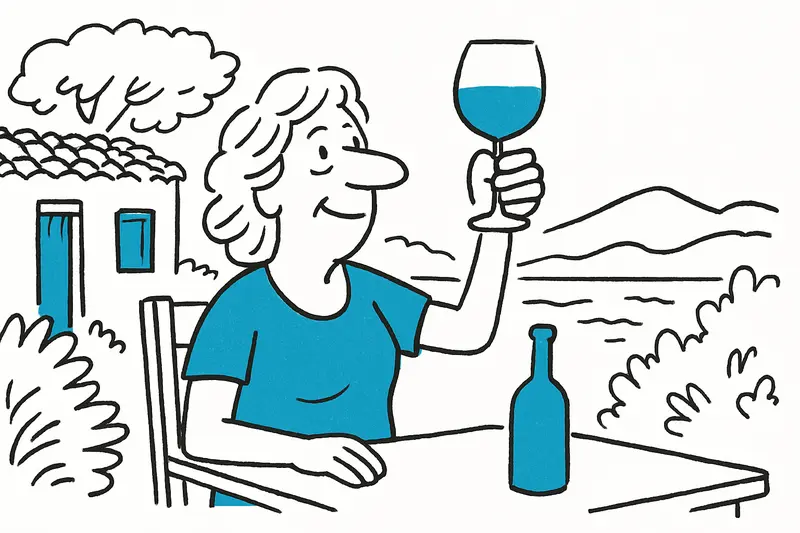
For her that means in concrete terms: no constant bans, occasional enjoyment, simple preparation with local ingredients. A quick pamboli in the evening replaces for her some fast-food rules – bread, garlic, grated tomatoes, olive oil. A glass of wine sometimes belongs to that; anything else would be too dry a doctrine for her. Regularity is also important: walks in the hills around Andratx, meetings with the English-speaking art group at the Artmadams Hotel in Palma and a large share of gardening that keeps body and mind moving.
Anyone who talks with Rahn-Huber quickly notices: she combines practical knowledge with curiosity. The Japanese idea of ikigai, the small, not loudly proclaimed life purpose, is for her not an abstract term but a tool that connects projects and everyday life. From interests in history and literature even a novel about Japan emerged under a pseudonym. Such creative tasks, she says, nourish motivation and are part of a functioning everyday life that sees aging not as a stigma but as a process.
That is good news for Mallorca. The island offers the ingredients Rahn-Huber cites for longevity: a climate that makes it easy to move outdoors; markets with fresh fruit and vegetables, as shown in Sunday Delights in Mallorca: Paprika in Felanitx, Wine in Consell, Nature in Inca; neighborhoods where contacts can be maintained. Local initiatives, meeting places and small community houses help ensure that a social network exists – not perfect, but present.
A small everyday scene: late in the afternoon neighbors sit on a bench at the plaça, flick olive pits aside and exchange recipes. Children roll past on bicycles, a dog shakes itself, and somewhere a motorbike delivers fresh bread. Connections arise that give support in daily life, far more important than a recipe book alone, as discussed in Why a Sparkling Water Is More Than Just Minerals — Mallorca's Small Everyday Lessons.
Rahn-Huber's approach is easy to try: take the stairs more often, try vegetables from the market, join a cultural group or start a small project. None of it costs much, and much of it immediately increases quality of life. Her stance is clear: longevity is not a secret recipe but the sum of small decisions and the courage not to press life into prohibitions. This can work on Mallorca – not as esotericism, but as an actionable way of life.
In the end there remains a feeling islanders know: a mixture of calm and activity, of enjoyment and effort. In this everyday life, Rahn-Huber says, lies the chance to stay healthy longer – and to enjoy life at the same time. An invitation that does not boast loudly, but sounds very Mallorcan: live, breathe, allow a glass of wine and still keep moving.
Frequently asked questions
What does a healthy lifestyle in Mallorca look like?
Is Mallorca a good place to live if you want to age well?
What kind of food is typical for a simple healthy diet in Mallorca?
Can you drink wine and still live healthily in Mallorca?
What can you do in Andratx for a more active everyday life?
Why is the market culture in Mallorca important for daily life?
How important is community for living well in Mallorca?
What is ikigai, and how does it relate to life in Mallorca?
Similar News
Magaluf: Watchtower Alarm – Lifeguards Pull Unconscious Beachgoer from the Water
After a drama in the late afternoon, two lifeguards at Magaluf beach rescued an unconscious 44-year-old man. He was stab...
Turquoise in the City: How dangerous is the color play of the Sa Riera?
The Sa Riera in Palma suddenly turned turquoise — a pretty motif, but behind the effect lies a discharge of saline waste...

Jeckliner at Sunnesching: Cologne spirit sets sail from Palma
In September 2027 the Mein Schiff 2 briefly becomes a floating carnival stage: four days with Cologne bands, comedy and ...
Finally Home: Mike and Leyla Heiter Buy Villa with Sea View in Mallorca
The reality TV couple Mike and Leyla Heiter have bought a house in Mallorca with a roof terrace and sea view. An Instagr...

Arrest after series in Palma: Who protects apartments from repeat offenders?
The National Police arrested a man in Palma who investigators say may have broken into several apartments. In one incide...
More to explore
Discover more interesting content

Can Cap de Bou

Townhouse Lleo 72
