
When Clouds Fill the City: Why Palma Was in Traffic Chaos on Friday
When Clouds Fill the City: Why Palma Was in Traffic Chaos on Friday
A suddenly overcast sky drove many people from the beach and suburbs into the city centre — causing traffic jams on access roads, full parking garages (Parc de la Mar, Passeig Mallorca) and crowded shopping streets. Time for a reality check: Is Palma prepared for such weather surges?
When Clouds Fill the City: Why Palma Was in Traffic Chaos on Friday
A brief shower in the sky, long traffic jams on the road — and a thousand people with umbrellas on Jaume III
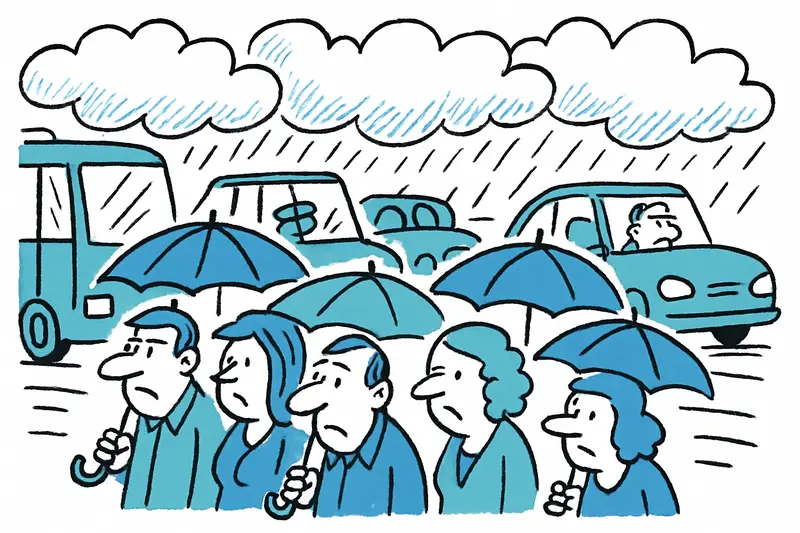
In the morning there was no storm in Palma, but something I recognise from everyday life here: dense clouds that drive sun-seekers from the beach and promenade into the city centre. Cars lined the access roads, rental cars, scooters and buses shared the asphalt, and those looking for parking found only long queues of cars circling the known garages, as reported in Palma in a weather jam: When gray days roll over the city.
Main question: Why is a minor shift in the weather enough to bring Palma to a noticeable standstill? The answer is not just the weather. It's an interplay of human behaviour, planning limitations and a lack of coordination between transport supply and short-term demand peaks.
Brief analysis: Many people react the same way to a cloudy sky — away from the beach, into the city. That increases point demand for parking spaces and reduces free capacity on the access roads. Palma's historic arteries are narrow, the approach roads have limited capacity, and central car parks fill up quickly. When buses and taxis also need the same space, backups form. In photos and in first-hand observation you see typical symptoms: honking cars on Avenida Jaume III, pedestrians with umbrellas between café tables, buses moving at walking pace.
What is often missing in public debate is the short-term side of demand. Many discussions revolve around long-term concepts — bike lanes, permanent parking bans, new bus lines. But there is little debate about how the city should react to sudden, predictable fluctuations: a cloud front in the morning, a cruise ship at midday, a game at the stadium. Such events need temporary, flexible measures, an issue that resurfaced during Christmas light-related closures Traffic and confusion on the Avenidas: Christmas lights trigger traffic chaos in Palma.
Everyday scene: I stood on the corner of Passeig del Born, a smell of brewed coffee drifted from a street café, two women with umbrellas in front of me, behind me the nervous clicking of a delivery scooter squeezing between parked cars. A man in a suit circled the Parc de la Mar car park, desperately looking for a blue-zone space, a child pointed at the cathedral and shouted: 'Mom, there are so many people!' The city sounded that day like a pendulum that briefly swings too far.
Concrete measures that could help immediately: tackle simple, pragmatic tools. First: real-time parking displays on the approach roads and via the city app so drivers don't head blindly into the centre. Second: activate temporary park-and-ride offers — connect vacant suburban lots with shuttles when a weather front is expected. Third: traffic-guiding signage and variable electronic boards that show alternative routes and available parking during such surges. Fourth: short-term reinforcement of bus services on key lines on days with unsettled weather; this can be done with on-call buses or additional minibuses, as discussed in More buses, same jams: Palma's traffic stuck in a dilemma. Fifth: clearly designated, short-term loading zones for deliveries to prevent alleys from being blocked when the centre is full of people.
On the urban planning level, long-term relief strategies should be considered: more decentralised amenities at the beaches (covered cafés, small cultural offers) to make staying there more attractive, and better coordination between tourism stakeholders and transport authorities. Communication is also important: a short, clearly worded message to tourists and residents — 'Cloud front today, use X' — can influence behaviour.
Conclusion: The image of full car parks at Parc de la Mar and Passeig Mallorca, the flood of umbrellas on Jaume III and the line of cars on the access roads are not a coincidence but a symptom. Palma is beautifully compact, but also sensitive to short-term visitor flows. The task is not technical magic, but pragmatic coordination: provide information, offer alternatives, enforce temporary rules. If that works, we'll still have our umbrellas — and not the honking.
Frequently asked questions
Why can cloudy weather cause traffic jams in Palma?
What is the best way to find parking in Palma when the city is busy?
Does cloudy weather in Mallorca make it less suitable for the beach?
What should I do if traffic in Palma suddenly gets worse during the day?
Is it better to use public transport in Palma on busy weather days?
What happens around Jaume III when Palma gets crowded?
Why do Parc de la Mar and Passeig Mallorca get so busy in Palma?
What could Palma do to reduce short-term traffic spikes?
Similar News
Magaluf: Watchtower Alarm – Lifeguards Pull Unconscious Beachgoer from the Water
After a drama in the late afternoon, two lifeguards at Magaluf beach rescued an unconscious 44-year-old man. He was stab...
Turquoise in the City: How dangerous is the color play of the Sa Riera?
The Sa Riera in Palma suddenly turned turquoise — a pretty motif, but behind the effect lies a discharge of saline waste...

Jeckliner at Sunnesching: Cologne spirit sets sail from Palma
In September 2027 the Mein Schiff 2 briefly becomes a floating carnival stage: four days with Cologne bands, comedy and ...
Finally Home: Mike and Leyla Heiter Buy Villa with Sea View in Mallorca
The reality TV couple Mike and Leyla Heiter have bought a house in Mallorca with a roof terrace and sea view. An Instagr...

Arrest after series in Palma: Who protects apartments from repeat offenders?
The National Police arrested a man in Palma who investigators say may have broken into several apartments. In one incide...
More to explore
Discover more interesting content

Can Cap de Bou

Townhouse Lleo 72
