
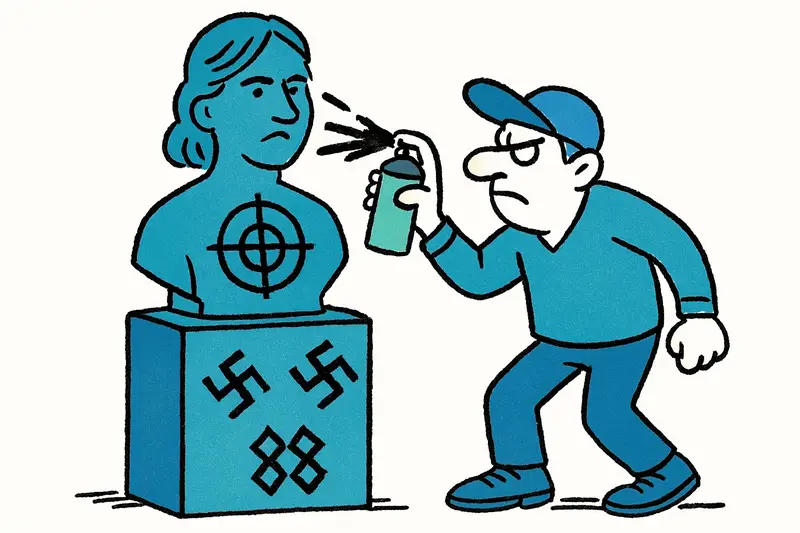
Attack on Picornell Bust in El Molinar: Cleaning Alone Is Not Enough
Graffiti with swastikas on the bust of anti-fascist Aurora Picornell shook El Molinar. The swift cleaning was important — but the question remains: how do we protect places of remembrance in the long term?
Disturbing scene on the Passeig: memorial site defaced
Late in the morning residents found black graffiti at the small memorial for Aurora Picornell in El Molinar, as reported in Grafitis nazis en el busto de Picornell en Palma: la memoria profanada: several swastikas, the number 88 and a target painted on the bust's chest. Between the clinking of cups in the café next door and the cries of the seagulls the scene felt like a cut into the otherwise familiar Passeig — as if someone had deliberately cast unrest over the place.
More than just paint: the pattern behind the act
The municipal services were quick on the scene and removed the paint within a day; a report was filed for a possible hate crime, as covered in Palma se limpia — ¿quién paga, qué queda?. That is necessary and right. But many people on site say that removal does not change the message behind the act: this was not spontaneous vandalism but a targeted sign against culture of remembrance and democratic values. An older man who walks along the sea every morning with his dog summed it up: “The paint is gone — but the message remains in the air.”
Aurora Picornell: why this bust is more than stone
Aurora Picornell, born in Palma in 1912, was a trade unionist and activist, executed in 1937. Her name appears on streets, in exhibitions and at this very Passeig, where the bust was erected in 2019 on the initiative of local bodies. For many Mallorcans she is a site of remembrance for anti-fascist resistance — not merely an artwork. That is why an attack here cuts deeper than a random act of destruction.
Key question: do we protect our sites of remembrance or just patch them up?
The incident raises a simple but pressing question: do we focus on prevention — or only react after something happens? Such actions are not daily occurrences in Mallorca, but when they do occur they are symbolic gestures: intended to intimidate and provoke. The fact that the perpetrators used right-wing extremist codes leaves little doubt about the motive. The consequence: remembrance is not only damaged — it is called into question.
What is often overlooked
Public debate often remains superficial. Two aspects too rarely come into view: first, prevention without surveillance paranoia. Nobody wants to cover every square inch with cameras, but can we leave memorials unprotected? Second, the role of digital radicalization. Symbols like 88 and other codes spread online at lightning speed and act as igniting ideas at home. Those who do not know the signs and their backgrounds can hardly respond.
Concrete steps – practical and local
There is no simple shield against hate. But there are measures that reduce the likelihood of such attacks without militarizing the places:
1. Preventive care: anti-graffiti coatings and short response times for cleaning crews ensure that symbols do not remain visible for long and thus have less impact.
2. Neighborhood sponsorships: schools, clubs or neighborhood groups could adopt memorials. Regular presence often prevents more than video surveillance.
3. Educational work: local workshops on Mallorca's history, on anti-fascism and on digital symbols strengthen understanding — especially among young people who may encounter extremist content online.
4. Targeted police presence combined with dialogue: more visible presence at sensitive sites, but accompanied by explanatory conversations rather than alarmism. Presence should protect, not intimidate.
5. Systematic documentation: every incident must be recorded and evaluated. Recognizing patterns helps act more effectively.
The bust stands again — but the work is just beginning
The cleaning was completed quickly, and the bust stands again, clean and intact. On the benches at the Passeig residents spoke in the evening about small vigils, flowers and gestures of solidarity. It is these everyday reactions — a chat over coffee, a dog happily sniffing at the shore — that give the island its resilience.
If Mallorca must ask itself a question, it is this: do we want to leave remembrance vulnerable or care for it deliberately? A clean bust is only the first step. Long-term protection requires education, neighborhood engagement and a clear stance from authorities. Otherwise, after the next coffee chat on the Passeig we may again be removing paint — and asking the same questions once more.
Frequently asked questions
What happened to the Aurora Picornell bust in El Molinar, Mallorca?
Why was the graffiti on the Picornell memorial considered more than ordinary vandalism?
Who was Aurora Picornell in Mallorca?
How quickly was the graffiti removed from the El Molinar memorial?
What can Mallorca do to protect memorials from graffiti and hate vandalism?
Is graffiti like this common in Mallorca?
What does the number 88 mean in extremist graffiti in Mallorca?
Why does the El Molinar memorial matter to people in Mallorca?
Similar News
Sant Salvador: The Christ That Becomes a Touchstone for Memory Politics
A statue, 33 applicants and a ministry under review: Why the crowned Christ on the mesa near Felanitx has suddenly becom...
Why the yacht "Sasha I" remains in Palma — a reality check
The luxury yacht "Sasha I" has been held in Palma since 2023. Spanish authorities maintain the seizure despite a propert...
Curious Derby: When the Away Game Is Only 150 Meters Away
On Saturday FC Germania Mallorca meets U.D. Pla de na Tesa — a local derby that is effectively decided on the doorstep. ...

Protection failed? A murder in Coll d'en Rabassa and the gaps within
A jury found a man responsible for his partner's death: 66 stab wounds, the crime carried out in front of their shared d...
Palma opens s’Aigua Dolça: New sports centre opens on October 15
The new municipal sports facility s’Aigua Dolça above the Paseo Marítimo opens on October 15 in several stages. Initiall...
More to explore
Discover more interesting content

Can Cap de Bou

Townhouse Lleo 72
