
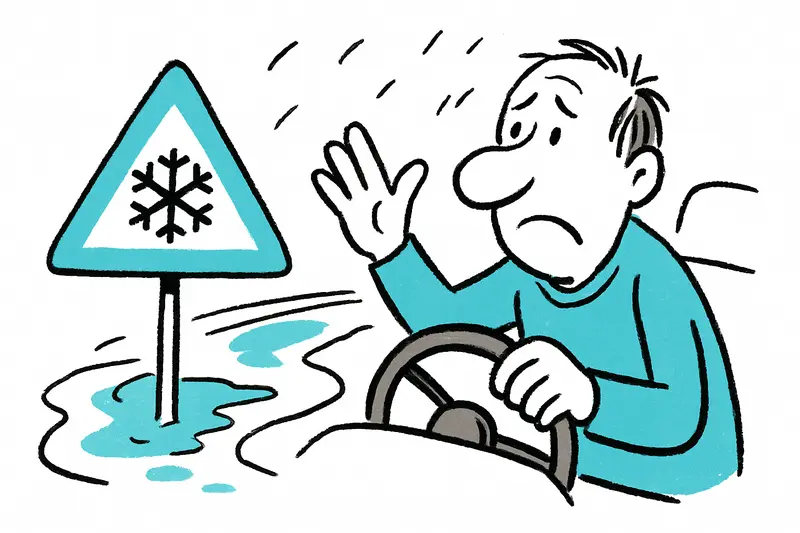
Hail warning for the north: Are Mallorca's roads ready for a sudden black ice shock?
Hail warning for the north: Are Mallorca's roads ready for a sudden black ice shock?
For Wednesday emergency services forecast local hail showers and sleet — AEMET remains silent. Anyone heading into the Tramuntana or toward Alcúdia should check now and be ready to brake.
Hail warning for the north: Are Mallorca's roads ready for a sudden black ice shock?
Key question: Are social media alerts enough, or do the island and drivers need clearer rules?
The Balearic emergency service posted a notice on X urging drivers to be cautious on Wednesday: local hail showers and sleet are expected in northern Mallorca and on Menorca, which can make roads slippery at short notice. According to current information, there is not yet a formal severe weather warning from AEMET warnings page. At first glance that sounds like "keep your eyes open and drive slowly." But on closer inspection it's worth questioning the situation more critically.
Analysis: What's behind the alarm? Hail showers on a Mediterranean island are not an everyday occurrence, but they happen in the mountains and on northern routes more often than you might think, as reported in North Storm and Cold Front: Are Mallorca's Roads and Trails Ready for the Winter Change?. When the snow line drops to around 1,200 meters (see Cold snap in Mallorca: Is the island really prepared?), roads in the Serra de Tramuntana — such as the Ma-10 at the Coll de Sóller or the access road to Lluc — can quickly become slushy and develop patches of black ice. The Ma-13 towards Alcúdia and connecting sections to the Pla de Mallorca are also sensitive when rain turns quickly into graupel.
What is missing from the public discussion: specific locations, road sections and preparation guidance. A warning on X reaches many people, but not all commuters or tourists. There are no reliable updates from road maintenance crews, no information on whether gritter trucks are ready, and no clear recommendations for bus companies and transport services. AEMET warnings are important because they are automatically processed by many systems (navigation, government apps). If only the emergency service posts, gaps remain.
Everyday scenes from Palma and the north: early in the morning the tables on Passeig del Born are still half covered with plastic, a delivery van is parked with its engine running, and in Port de Pollença the fishermen's nets rattle in the sharp north wind. On the Ma-20, Palma's city motorway, delivery trucks are moving more slowly because visibility is affected by suddenly appearing hail showers. In Sóller you can hear the creak of wooden houses when the gusts hit the windows. These small observations show: weather arrives locally, but not always with a clear, early announcement.
Concrete solutions for drivers and authorities:
For drivers: Before driving, check AEMET and the Consell Insular website as well as local X accounts. Compare routes with navigation and drive cautiously at known bottlenecks (Ma-10 between Deià and Sóller, Ma-13 near Inca and the Alcúdia approaches, access roads to higher elevations). Increase following distance, brake gently, avoid sudden steering maneuvers and use lights, even during the day. Those who regularly travel to the mountains: use winter tires or at least good all-season tires; carry snow chains if you plan to drive above 1,000 meters.
For public authorities: Consistent information flow: if the emergency service raises the alarm on X, road maintenance departments, municipalities (Ayuntamientos) and the Consell Insular should simultaneously send short, concise updates — which routes are affected, whether gritting trucks are operating, and whether certain parking zones are closed. Mobile warning signs at access roads to mountain routes, temporary speed limits and coordinated gritting services for the Ma-10, Ma-2133 (access to Lluc) could prevent accidents. A notice including the 112 emergency number and information on alternative transport options is also helpful.
What can be done immediately: authorities could check salt/sand stocks in mountain villages in the early morning hours and prioritize directions of travel. For tourism businesses: update guest information, check transfers and instruct chauffeurs. For buses: adjust routes or communicate cancellations transparently.
A small, honest piece of advice: if you rent a car for a short trip, don't automatically test it in the mountains. A fragment from everyday life: at the weekly market in Pollença regulars ask before their coffee whether the buses to Lluc are running. That is not excessive pessimism but practical caution.
Punchy conclusion: A single post on X is better than nothing, but it is not enough. The mix of missing AEMET warnings, local weather fluctuations and tourist traffic means authorities, road crews and emergency services need to work more synchronously. For drivers the rule is: slower, keep distance, lights on. And if you don't have to go, leave the car parked until it is clear exactly where the hail is falling.
Final reminder: in emergencies call 112 emergency number. Check current maps and weather apps before every trip, and remember: on Mallorca the last valley often decides the journey — and the difference between uncomfortable and dangerous.
Frequently asked questions
Is hail in Mallorca dangerous for drivers?
Which roads in northern Mallorca are most affected by black ice?
What should I do if hail starts while driving in Mallorca?
Where can I check official weather warnings in Mallorca?
Is the Ma-10 in Mallorca risky in winter weather?
Can the road to Lluc be affected by hail or snow in Mallorca?
Do I need winter tires or snow chains in Mallorca?
What emergency number should I call if there is an accident in Mallorca during bad weather?
Similar News
The End of the Cheap Ride? Why Mallorca Is Hit Harder by the Fuel-Price Shock
Gasoline and diesel average close to two euros per liter. What this means for commuters, supply chains and renters in Ma...
Relaxed liquid rules in Munich: What Mallorca travelers will notice
At Munich Airport the 100-milliliter rule will be lifted at all checkpoint lanes — thanks to new CT scanners passengers ...
For 45 Years on Mallorca — and Then This: How a Market Visit in Santa Ponsa Became a Lesson
A woman who has lived on the island for decades lost money and important documents at the Mercat Setmanal in Santa Ponsa...
10 percent surcharge on the beach: How legal and transparent is the extra charge at Playa de Muro?
A German part-time resident noticed days after a restaurant visit in Playa de Muro that the bill included a flat ten per...

Body near the Llevant Market: What this death says about our city
A man was found dead on Sunday afternoon near the Llevant Market. Police say the death appears natural. The scene raises...
More to explore
Discover more interesting content

Can Cap de Bou

Townhouse Lleo 72
