
Disguised as a Handyman: How a Thief Robbed Hotel Guests in Manacor — and What It Says About Our Security
Disguised as a Handyman: How a Thief Robbed Hotel Guests in Manacor — and What It Says About Our Security
A man posed as an electrician in Manacor, broke windows and doors and stole from hotel rooms. Time for a reality check: how well protected are hotels and guests?
Disguised as a Handyman: How a Thief Robbed Hotel Guests in Manacor — and What It Says About Our Security
Key question: How could an alleged electrician enter multiple hotel rooms unnoticed — and who is responsible?
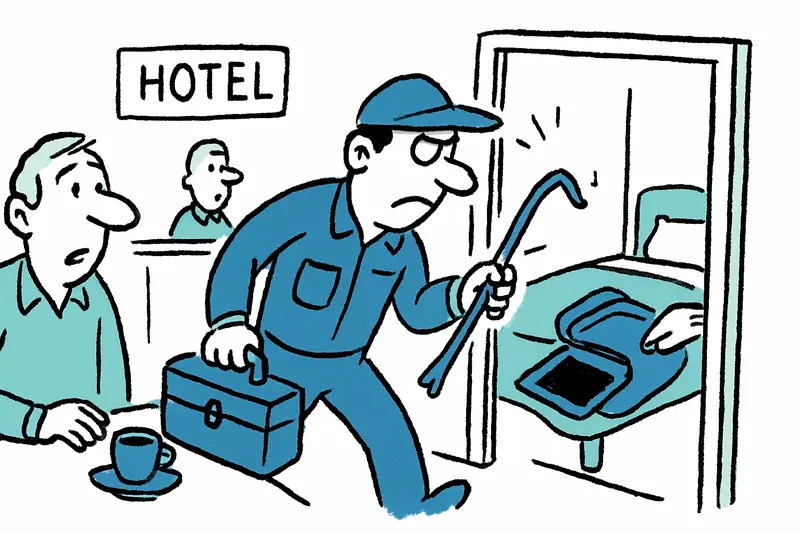
In Manacor, the National Police recently arrested a man accused of stealing from several guests in a hotel, as reported in National Police Arrest Suspected Hotel Thief in Palma – A Safety Check for Travelers. He is said to have posed as an electrician to gain access to the floors. To actually get into the rooms, the suspect forced or pried open doors and windows; among the victims, clothing and electronic devices were missing. Reports have been filed, investigations are ongoing, and the accused was detained under a warrant; this follows other incidents such as Disguised as a Guest: Con-Artist Spree Hits Mallorca's Hotel Industry.
Such reports sound abstract until you walk along the hotel corridor in Manacor early in the morning: the smell of freshly brewed coffee mixes with the cry of a seagull, the phone at reception rings. Staff come and go, tradespeople appear. In this everyday scene lies a security problem — easily overlooked, but real.
Critical analysis: There are several vulnerabilities this case exposes. First: verifying the identity of strangers in the hotel area. Who appears as an external service provider and how can that be checked without disrupting operations? Second: physical weaknesses in windows and side doors. Hotels are built for guest comfort, not always for burglary protection. Third: the flow of information — between reception, maintenance and security. If deviations are not documented or questioned, they open doors for perpetrators.
In public debate there is often a lack of sober discussion about responsibility. Instead of only reacting to individual cases, it is rarely asked systematically: What standards apply to outside companies working in hotels? Are there binding identification requirements or checklists for employees? And: how well are especially smaller establishments integrated into alarm chains with the police and the neighborhood?
Concrete everyday scene: An older woman from inland sits at breakfast and complains that her laptop is missing. The reception offers apologies, but the family wonders whether they can even leave valuables openly in the room. Such scenes are typical: insecurity predominates, trust in the accommodation falters, and often only a police report remains.
Practical solutions, feasible for Mallorca hoteliers and guests: Hotels should have a clear procedure for external technicians: visible work IDs, entry in a maintenance log, confirmation by reception before entering sensitive areas. A two-person rule for work in corridors — that is, staff plus a registered contractor — raises the threshold for offenders.
Technical measures help: better-secured windows, retrofittable locking mechanisms on balcony doors and easy-to-use in-room safes. Video recording in corridors and at entrances, combined with clear retention rules for footage, supports investigations without unnecessarily violating guests' privacy. For smaller properties, checklists, short staff trainings and an emergency number for the nearest police station in the duty manual are worthwhile.
Guests can also contribute: deposit valuables in the hotel safe when possible, ask at reception whenever supposed tradespeople visit and report suspicious noises or open doors immediately. Those who are unsure should take photos of damage and file a report promptly — evidence disappears quickly, especially after overnight stays.
What authorities and businesses should additionally do: better documentation of such crimes, exchange between hoteliers and police about patterns of operation and quick warnings to businesses in the region; see also Arrest at the Airport: Suspected Serial Hotel Burglaries — What You Need to Know. Only in this way can we prevent crooks using fake uniforms or bogus IDs from repeating similar acts. The arrest shows that the police are working — at the same time, prevention would be considerably cheaper for everyone than subsequent investigations.
Conclusion: The incident in Manacor is not a one-off movie plot but a wake-up call. Practical rules are needed in everyday hotel operations, clearer identity checks for outside firms and more awareness from guests. If reception, maintenance and police work more closely together, corridors will be calmer, windows safer and morning coffee will remain what it should be: a piece of normality — without nights of insecurity.
Frequently asked questions
What is the best time to visit Mallorca for beach weather?
Is swimming possible in Mallorca year-round, and where are the water temperatures friendliest?
What should I pack for a Mallorca trip?
How does Mallorca's weather affect outdoor activities like hiking or cycling?
What family-friendly activities are popular in Mallorca for kids?
What are good ways to get around Mallorca without a car?
What practical tips help when visiting Mallorca during peak season?
What should I know about Mallorca's beaches and coast?
Similar News
Catamaran on the Rocks: Who Pays for the Damage — and Who Protects the Sea?
A sailing catamaran has been lying on the cliffs near Ibiza since the last storms. The images show more than a stranded ...
Near-drowning off Formentera: 64-year-old in critical condition – Could he have been saved?
A 64-year-old tourist was pulled from the water off Formentera and treated in intensive care. A reality check on causes,...
Hammock in Sa Feixina: Fall exposes shortcomings in public space
A man fell from a hammock secured high in the Sa Feixina park and suffered serious injuries. The incident raises questio...
Legat furious: Germania feels robbed of victory in derby against Marratxí
After a heated local clash in Marratxí, coach Thorsten Legat accuses the officials of manipulation and numerous wrong de...
Why Sánchez Is Calling Elections Now: A Reality Check from Mallorca
Retreating into an election year is the response to social unrest and political deadlock. A look at the gap between prot...
More to explore
Discover more interesting content

Can Cap de Bou

Townhouse Lleo 72
