
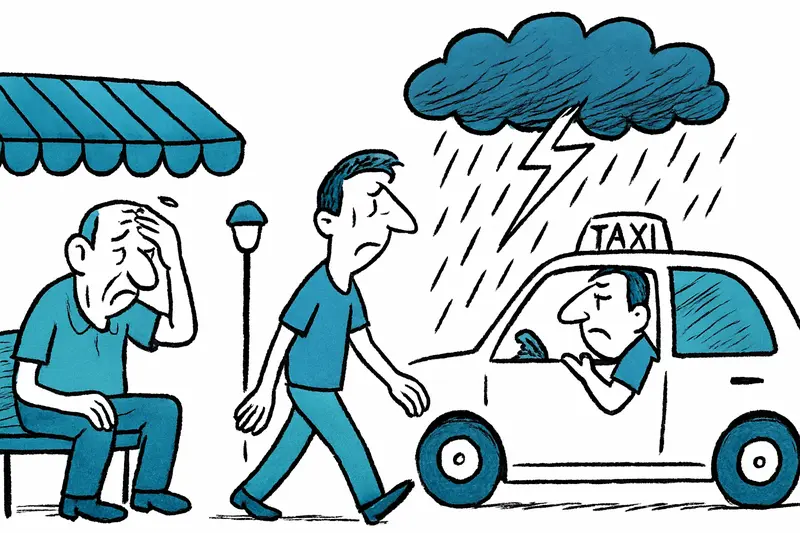
Heat, Storms, Temperature Drop: Mallorca Between Extreme Summer and Everyday Life
Heat, Storms, Temperature Drop: Mallorca Between Extreme Summer and Everyday Life
Aemet warns of another 37–40°C, with little nighttime relief. Then rain and a rapid temperature drop to around 30°C. One question remains: Is the island prepared?
Heat, Storms, Temperature Drop: Mallorca Between Extreme Summer and Everyday Life
How is the island preparing when the heat falls away all at once?
Aemet put it clearly: the north and northeast of Mallorca are under a high-heat warning – locally temperatures around 37°C, with peaks close to 40°C possible. Nights offer little relief; with 26 to 27°C, sleeping is difficult. Yet: already on the night to Friday the first stormy showers move in. Afterwards temperatures fall to about 30°C by Monday, with nights around 22 to 23°C. Wind: weak, variable.
These are not isolated summer outbursts. Since June the island has experienced four heat waves, more than last year. Meteorologists point out that air masses like these were rare before 2017. That is not a detail only climate researchers care about; that is weather that affects people's everyday lives.
The measurements are concrete: Porreres recently reported 38 °C, Llucmajor 37.8 °C, the Balearic University station 36.7 °C, Sineu 36.1 °C and Binissalem 36 °C. Such numbers mean sweating craftsmen on the plaza, overheated buses on the autovía and heat-sensitive people in cramped old-town apartments.
Key question: How resilient is Mallorca to these new fluctuations — heat-intensive days followed by sudden rain and significantly cooler temperatures? What safety nets are missing when an extreme weather phase strains medical services, power grids and water supply at the same time?
Critical analysis: public debate often revolves around temperature records and tourist numbers. Too rarely does it address systemic questions: Who checks whether hospitals and care homes have adequate air conditioning and backup power? Are building regulations for new hotels designed for heat resilience, for example better insulation or shading? How robust is the power grid if many air conditioners turn on at once? Banks, supermarkets and public administrations often remain marginal topics in discussions, even though they are essential at such times.
What is missing from the discourse: concrete plans for heat-related operations. Aemet provides warnings. Municipalities need fixed procedures: provisional drinking-water points in sweltering neighborhoods, extended hours at public pools, clearly communicated cooling centers. Concerns about forest fire risk are mentioned, but often without an integrated approach to water management and evacuation logistics.
A small everyday scene from Palma: at a bus stop on the Passeig Marítim pensioners sit under an awning, cicadas screech, taxis with open windows wait for customers, and in a bakery a clerk cools the counter with a fan. Such images are charming — but they also show that many decisions rely on individual improvisation rather than organized protective measures.
Concrete solutions for the coming weeks and months:
Short term: Municipalities should now set up mobile water fountains, designate cooling rest zones in community centers and adjust outdoor working hours (start earlier, finish earlier). Health services must be sensitive to heat impacts on the elderly and children; neighborhood networks (phone chains, volunteer lists) can be activated quickly.
Medium to long term: Expand urban greenery, promote shade-giving planting along main streets, consider lighter, more reflective surfaces in heavily trafficked areas. Building codes should more strongly account for shading, thermal insulation and ventilation for hot months. Public pools and beaches can be part of local preparedness plans with extended opening hours and transport links.
Infrastructure & policy: Grid operators must analyze bottlenecks and increase capacity for peak loads. Fire and rescue services need seasonal reinforcement plans. At the regional level a binding heat action plan would be useful, linking Aemet warnings with concrete urban and tourism measures.
What citizens can do: carry water, seek shade, call elderly neighbors regularly, schedule work and leisure to avoid the hottest hours. Hosts should actively inform guests — not only about beaches, but also about heat- and storm-related safety advice.
Pointed conclusion: heat and sudden rain now go together. The welcome detail is the cooling: 30 degrees feels like a gift after nearly 40. But that must not hide the fact that the island needs to adapt its everyday infrastructure. Aemet warns, the figures are clear, the symptoms are visible in our streets and plazas. Let's not wait until a power outage or heat-related illness forces the debate. Mallorca can protect itself — if administrations, businesses and neighborhoods act in a coordinated way now.
Frequently asked questions
How hot does Mallorca get during the summer and what are nights like?
What practical steps can Mallorca towns take now to cope with heat and sudden rain?
What safety tips help residents cope with heat waves in Mallorca?
How might Mallorca's infrastructure adapt to more heat and storm events?
Recent Mallorca temperature readings: which towns recorded the highest numbers?
Where can Palma residents expect cooling centers or extended pool hours during heat waves?
What does daily life in Palma look like during extreme heat, based on typical street scenes?
How are warnings and preparations coordinated in Mallorca to protect people and services during heat and rain?
Similar News
Complaint surge at Balearic airports: Who bears responsibility for broken suitcases?
In Palma and on the neighboring islands, travelers report significantly more luggage damage and losses this year. Figure...
Empty Seats, Full Worries – Why Mallorca Excursions and Taxi Rides Suffer This Summer
Buses stand idle, taxi drivers notice guests' caution: What are the consequences of the new frugality for the island's e...

Mallorca-bound carrier Ryanair provokes Argentine national team: Provocation or PR mistake?
A low-cost carrier's social media post is causing international outrage. The key question: Is a company allowed to poke ...
Royal shopping on the Born: Loewe returns — and Palma rejoices
Sofía, Elena and Victoria Federica were seen on the Passeig del Born as Loewe opened its new boutique. A sunny visit tha...
White Circles on the Roadway: Can They Reduce Motorcycle Accidents in Mallorca?
The Spanish road authority is testing white circles near center lines to keep bikers out of the oncoming lane. A look at...
More to explore
Discover more interesting content

Boat Tour with BBQ along Es Trenc Beach
Private transfer from Mallorca Airport (PMI) to Pollensa
