
Helicopter rescue near Cala Rajada: 60-year-old hiker brought down after ankle fracture
Helicopter rescue near Cala Rajada: 60-year-old hiker brought down after ankle fracture
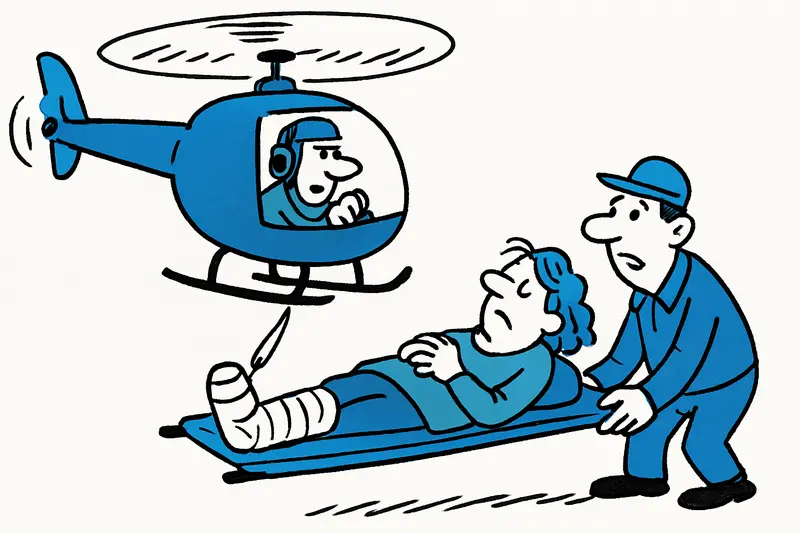
At Talaia de Son Jaumell a 60-year-old German woman fractured her ankle. Firefighters from Artà and the mountain rescue team airlifted her to the valley with the helicopter 'Sa Milana'.
Helicopter rescue near Cala Rajada: 60-year-old hiker brought down after ankle fracture
Early on Wednesday the coast around Cala Rajada showed itself in typical spring light: seagulls screeched, a cold northeast wind drove waves against the rocks, and the first day hikers were already on the paths above the Talaia de Son Jaumell. One of them did not return alone. A 60-year-old German woman fractured her ankle during a tour and was unable to make the way back on her own.
The situation was serious enough that firefighters from Artà and the mountain rescue group (GRM) were alerted. The rescuers worked swiftly: at the scene the woman received medical care, was placed in a stable position and secured on a stretcher. Afterwards the helicopter 'Sa Milana' flew the injured woman to the Cala Agulla parking area, where an ambulance was waiting and took her for further transport to a hospital.
Such operations rarely happen quietly: the sound of the rotors over the headland mixed with the roar of the sea, walkers stopped, some shouted encouragement to the helpers above, others willingly offered their jackets so the injured person would not get cold. The rapid response showed how well the procedures here – in a municipality like Capdepera with its steep coastal paths – work when people are in need, as during a helicopter rescue at Puig Major.
For the island this is more than a single operation, as other incidents such as a helicopter rescue in Cala Deià show. It is an example that different services – fire brigade, mountain rescue and emergency medical services – can work hand in hand. That protects not only locals but also the many visitors who are increasingly exploring the Tramuntana and the eastern cliffs on foot again.
A small everyday observation: in the Cala Agulla car parks you can currently see many cars with license plates from other European countries. Languages from all corners can be heard and people move slowly with maps in their hands. It is precisely in moments like these that functioning rescue chains matter – not as an abstract idea, but as concrete help when someone is in pain and cannot continue.
Anyone planning to tackle the Talaia or other coastal paths soon can draw practical lessons from the incident: wear sturdy shoes, take enough water, keep your mobile phone charged and avoid doing routes alone if possible. Past incidents, including a rescue in the Torrent de Pareis, underline these precautions. A small, pragmatic reminder: read the local information signs – sometimes seemingly harmless footpaths lead into rocky terrain.
And a thought to ponder, not as criticism but as a suggestion: more visible information boards at the car parks, a map with emergency points and notices about mobile phone dead zones would help many. This could be implemented in close cooperation between municipalities, conservation authorities and rescue services and would be a tangible plus for safety and tourism quality.
In the end there is a good feeling: the woman was rescued, the helpers were quick to respond, and everyday life on the coast continues – with people who will rediscover the paths more often but may be a bit more cautious after this incident. This is not dramatic, rather a small, useful learning moment for everyone exploring Mallorca on foot.
Frequently asked questions
What should I know before hiking coastal paths near Cala Rajada in Mallorca?
Is spring a good time to walk in Mallorca’s coastal and mountain areas?
What should I pack for a hike in Mallorca’s rocky coastal areas?
Are Mallorca’s hiking trails safe to do alone?
What happens during a mountain rescue in Mallorca?
Where is Cala Agulla in Mallorca and why do walkers know it?
What should I do if I get injured while hiking in Mallorca?
Why are some Mallorca hiking routes harder than they look?
Similar News
Rental Car Theft in El Arenal: What This Incident Reveals About Our Gaps
A teenager steals a running rental car in El Arenal, flees on foot, climbs over walls and is caught by the Guardia Civil...

Red Rope in Palma's Library: What Helps Against Selfie Tourism — and What's Missing
Palma's city library cordoned off an area with a red rope to keep selfie tourism away from reading and working activitie...
Fort San Carlos: Museum, Harbor Dispute — and a Conflict That Demands Answers
The military museum at Fort San Carlos sits right on Palma's harbor, with unexpectedly quiet rooms filled with cannons a...
Old Town Under Pressure: When a Doorway Becomes a Sleeping and Shower Place
For months a woman has been living with a parasol, a clothes rack and personal belongings next to the social welfare off...
When Shopping Weighs Heavier: Mallorca Demands a Tax Pause on Food and Fuel
Rising prices are putting pressure on households and agriculture. The Balearic Islands are calling for temporary tax rel...
More to explore
Discover more interesting content

Can Cap de Bou

Townhouse Lleo 72
