
Helicopter operation at Penyal del Migdia: 19-year-old recovered unharmed
Helicopter operation at Penyal del Migdia: 19-year-old recovered unharmed
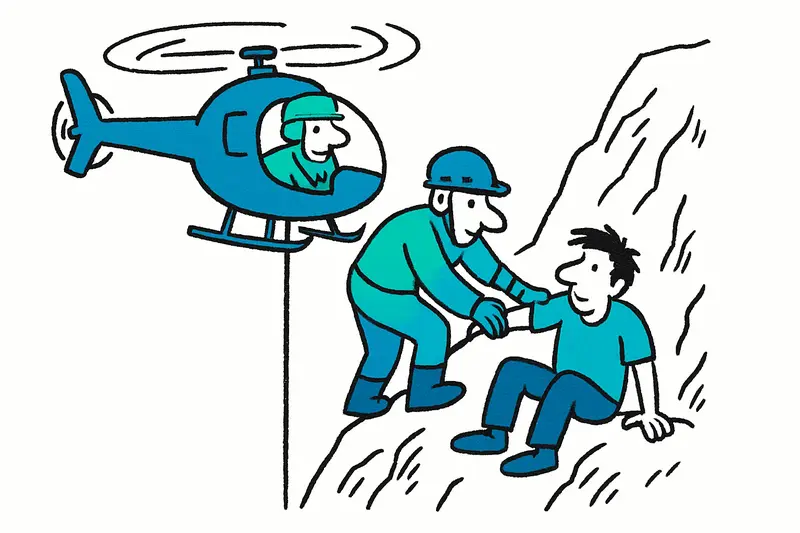
A 19-year-old hiker got into a dangerous situation on the Penyal del Migdia near Fornalutx. Firefighters from Sóller and a helicopter responded; two rescuers abseiled — the man remained uninjured.
Helicopter operation at Penyal del Migdia: 19-year-old recovered unharmed
First serious mountain rescue of the new year ends without harm
In the afternoon the roar of the helicopter could be heard above the orange groves of Fornalutx. The aircraft, bright red as in many photos of the Bombers de Mallorca, circled over the steep slopes of the Penyal del Migdia, the island's second-highest point. There a 19-year-old hiker had gotten into a situation from which he could not free himself by his own means.
Because a secured approach on foot was not possible, the rescue teams decided on an aerial operation. Fire brigade specialists were flown in from the air; two of them were lowered on ropes onto the rock face, secured the young man and prepared the controlled descent. Additional helpers climbed down to ensure the return route to the valley.
The good news first: the hiker was uninjured. After the recovery he was brought to safety, handed over to relatives and given a medical check — a routine examination, the emergency teams explained. For the rescue crews it was the first larger mountain rescue operation of the year, a mission that required the combination of technology, training and experience.
Those who stood that afternoon on Platja d'en Repic or on the Passeig in Sóller looking out to sea may have noticed only the distant droning. But anyone who drove closer to the Tramuntana heard the rotor noise, smelled resin and felt the fine dust cloud of the rocky landscape. Scenes like this are part of everyday life here, as in Helicopter over Cala Deià: Rescue in the Tramuntana and the Uncomfortable Questions, but they also show: the Tramuntana is beautiful and demands respect.
The firefighters from Sóller who were involved in the operation worked with practiced calm. Abseiling down steep walls is part of their training, yet every rock face has its peculiarities: jagged edges, loose stones, sudden gusts of wind. In this case, concentrated experience was enough to minimize the risk and bring the young man into the valley without incident.
The rescue proceeded as one would hope in an ideal case: quickly, professionally and without injuries, as noted in Dramatic Helicopter Rescue at Puig Major: Lessons from an Afternoon in the Tramuntana. Nevertheless, the emergency teams issued an appeal: plan hiking routes, check the weather forecast, honestly assess sure-footedness and, if in doubt, choose an easier route. Too often people underestimate how quickly a harmless outing can become complicated.
For locals this is no new advice. The old woman who sells bread in the center of Fornalutx often says: "The weather changes here in ten minutes." This local calm mixes with respectful caution and is actually the best preparation.
The incident at Penyal del Migdia also shows how well networked the rescue systems on Mallorca are: helicopter, fire brigades from surrounding towns and mountain rescuers work hand in hand, as described in From Mountain to Hospital: What the Rescues at Puig de Galatzó and Torrent de Pareis Reveal About Mallorca's Hiking Tourism. Such operations are feats of strength, often take longer than one expects, and require personnel willing to go out even on cold, windy days.
For the island it is positive news: the operation ended without casualties, the equipment worked, and the people who help could show what they can do. At the same time it is a small wake-up call to everyone who goes into the mountains: respect for the terrain saves lives.
For those planning trips, the advice is: study the map, wear shoes with good tread, pack water and tell someone an approximate return time. And if the rotors are ever spinning above you: stay calm, get secured and trust the professionals. In Fornalutx people will likely talk about this unexpected helicopter spectacle for a long time — with relief and an extra cup of hot coffee afterward.
Frequently asked questions
Is hiking in Mallorca’s Tramuntana safe for casual walkers?
What should I check before hiking in Mallorca’s mountains?
What kind of shoes do you need for hiking in Mallorca?
What should I do if I get stuck on a mountain trail in Mallorca?
Where is Penyal del Migdia in Mallorca?
Why do helicopters often appear during rescues in Mallorca’s Tramuntana?
Is Fornalutx a good base for hiking in Mallorca?
What should I pack for a mountain walk in Mallorca?
Similar News
By Boat Instead of the Road: Palma's Water Bus — a Reality Check
The 'Bus Nàutic' launches in two stages — but questions remain over interim operations, fares and environmental requirem...
Several Days of Rain Approaching: How Well Is Mallorca Prepared?
Aemet says: rain from Thursday until at least Tuesday, especially heavy on Monday. Temperatures remain mild. A reality c...
Nervous Reaction at a Traffic Stop: Why Campos Is Not Just a Sniffer-Dog Problem
At a traffic stop in Campos a 37-year-old German was arrested with a bag full of drugs. Our reality check explains why s...
Cameras Against Illegal Dumping: Porto Cristo Monitors Problem Areas – a Reality Check
Manacor has installed four surveillance cameras at particularly problematic waste spots in Porto Cristo. A local check a...
Reality check: Palma's "white" torrent — harmless salt or neglected warning sign?
White crusts on the Torrent de Sa Riera are causing a stir. Emaya describes them as salt deposits. Our reality check: wh...
More to explore
Discover more interesting content

Can Cap de Bou

Townhouse Lleo 72
