
House fire in Alcúdia: Why a coal stove can become a death trap at night
House fire in Alcúdia: Why a coal stove can become a death trap at night
A fire broke out in Alcúdia during the night, triggered by a coal stove. Eight people suffered smoke inhalation, including two local police officers. A reality check on the dangers of heating devices and what's missing on Mallorca.
House fire in Alcúdia: Why a coal stove can become a death trap at night
Key question: How many small risks add up before an entire stairwell becomes a rescue zone?
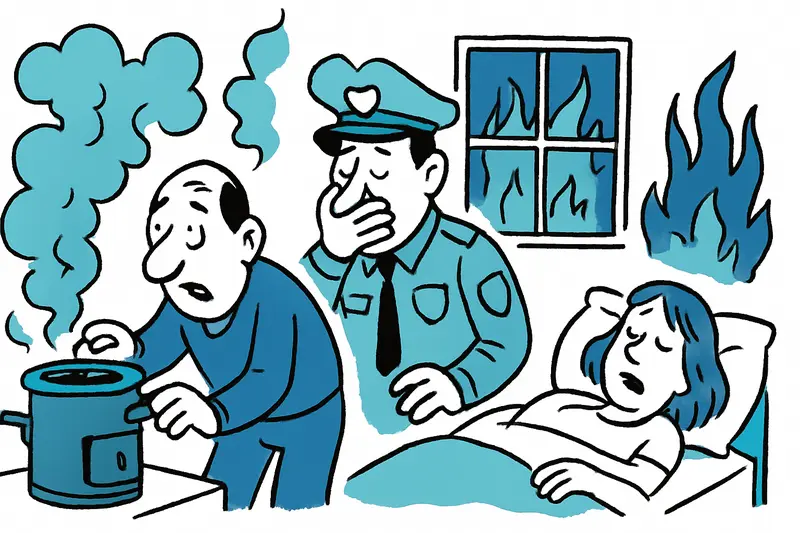
In Alcúdia it was shortly after two in the morning when thick smoke crept from a bedroom into the stairwell. Neighbors opened the windows, tried with buckets and blankets to save what they could. Firefighters, ambulances and the local police arrived a short time later. Eight people suffered smoke inhalation — two of them are members of the local police; several were taken to hospital in Inca. A coal stove in the affected room has been identified as the cause.
These scenes on the island are not just a headline but an echo of everyday habits: driving away the last chill in the evening, a cheap stove, a brief warm-up, leaving doors open to get heat into the corridor. On the Plaça in front of the town hall the debate can already be heard in the morning: was it carelessness, a lack of information, or simply the necessity to save on heating costs?
Critical analysis: a single device may have ignited the fire, but the catastrophe arises from several factors acting together. Coal stoves produce smoke and carbon monoxide; they require a fixed connection, adequate ventilation and a stable, safe placement. In narrow residential buildings with tight stairwells, one puff of smoke is enough to make escape routes impassable. Missing or outdated smoke detectors make the situation worse. Add nights when local services are already stretched by other calls — every lost minute counts. Local coverage of recent evacuations, such as Fire at Alcúdia Hotel: Evacuation Succeeds — What Lessons Will the Island Learn?, has emphasised similar systemic failures.
What is often missing from public discussion are concrete instructions on how people should handle solid fuels at home in general. It's not just about bans, but about practical rules: how do I ventilate correctly? Which devices are unsuitable for indoor use? Where should CO detectors be placed? Equally rarely discussed are the social reasons: who heats out of necessity to save money, who because they have no alternative heating? These questions shift the perspective from blame to prevention.
An everyday scene from here: a neighbor from a side street reported how she still tasted smoke hours later, how the sirens rolled down the Calle and young police officers, both tired but professional, administered first aid. Images like these show that help on site often begins before the professionals arrive — and that is risky when no protective equipment is available.
Concrete solutions for Mallorca: first, awareness campaigns before the heating season with clear, simple instructions for the safe operation of stoves and heating devices. Second, promotion and distribution of CO and smoke detectors, especially in older rental apartments and households with low incomes. Third, inspections and guidance from property managers and municipalities: sockets, clearances, and safe locations. Fourth, free information days at marketplaces and community centers, combined with practical demonstrations on how to extinguish small fires and how to ventilate correctly without compromising fire safety — lessons reinforced by incidents such as Fire at Hotel near Cala San Vicente: A Wake-up Call for Fire Safety in the Off-Season.
For emergency services it would be helpful if alarm plans were more strongly geared toward incidents involving coal, wood or other solid fuels: peak times, typical sources of errors and precise guidance for helpers on site (e.g. keep windows closed, do not attempt to extinguish fires without equipment). Recent events like Fire in Port d'Alcúdia: Why the big scare is also a wake-up call for fire safety underline this point.
Punchy conclusion: the fire in Alcúdia is not an isolated accident but a warning signal. A coal stove in the bedroom is a small everyday risk that can quickly become very big. Prevention needs more than appeals: practical help, material equipment for vulnerable households and local education. If neighbors perform the first rescues, we should also give them the means and knowledge to do so without unnecessary risk.
The sound of the sirens remains in the ears; the question is whether we learn enough from such nights so that fewer people wake up the next winter morning with the taste of smoke in their throat.
Frequently asked questions
Are coal stoves safe to use in Mallorca homes at night?
What are the warning signs of carbon monoxide from a stove?
How should you heat a bedroom safely in Mallorca during cold nights?
Do Mallorca apartments need smoke detectors and carbon monoxide alarms?
What should you do if you smell smoke in an Alcúdia apartment building?
Why are stairwells in Mallorca buildings so dangerous during a house fire?
When is the risk from heating devices highest in Mallorca?
What kind of fire safety advice should Mallorca households follow before winter?
Similar News
Palma, Palma de Mallorca, Palma‑Mallorca: What is it really about?
The debate over the city's name is more than grammar: it concerns identity, law and branding policy. A sober reality che...
Warning to Bathers: Nipping Fish in Cala Major and Other Coves — a Reality Check
In Cala Major and several beaches around Mallorca, bathers report painful “nips”. Who are the animals, why are they gett...
Rental Car Theft in El Arenal: What This Incident Reveals About Our Gaps
A teenager steals a running rental car in El Arenal, flees on foot, climbs over walls and is caught by the Guardia Civil...
Red Rope in Palma's Library: What Helps Against Selfie Tourism — and What's Missing
Palma's city library cordoned off an area with a red rope to keep selfie tourism away from reading and working activitie...
Fort San Carlos: Museum, Harbor Dispute — and a Conflict That Demands Answers
The military museum at Fort San Carlos sits right on Palma's harbor, with unexpectedly quiet rooms filled with cannons a...
More to explore
Discover more interesting content

Can Cap de Bou

Townhouse Lleo 72
