
Humid Heatwave: Why Mallorca Feels the Heat Differently Now
Humid Heatwave: Why Mallorca Feels the Heat Differently Now
Extreme humidity makes summer heat on Mallorca sticky and dangerous. A critical assessment: who suffers, what's missing from the discourse and what helps immediately.
Humid Heatwave: Why Mallorca Feels the Heat Differently Now
Key question
Why do the currently recorded temperatures on Mallorca feel so much more oppressive — and what is missing when heat warnings report only temperature numbers, as explored in When Mallorca Cooks: How Prepared Is the Island for the Next Heatwave??
Critical analysis
A list of numbers is not enough: AEMET issues heat warnings for the island's interior as well as the north, northeast, east and south; local coverage is available in Heat alert on Mallorca: How well is the island prepared for infernal heat days?. At the same time, humidity and nighttime minimums are rising; several locations have reached the 40 °C mark, and Binibona was recently one of the hottest places, as documented in Nearly 40 °C: Mallorca's Daily Life Under Heat Stress — How the Island Can Respond. This is the equation: high humidity plus high air temperature results in significantly higher perceived temperatures. Instruments report 33–39 °C, people describe feeling much more. At first glance this looks like a weather issue. In reality, several problem areas coincide — health protection, urban heat islands, tourist behavior and inadequate preparation of public facilities.
What's missing from the public discourse
Too often the report ends with the warning color. Important aspects remain underexposed: concrete action instructions for the vulnerable (elderly, small children, outdoor workers), the availability of cool public spaces, the condition of our apartments without air conditioning and the burden from warm seas. The locally felt heat — for example in Sa Pobla or Llucmajor, where AEMET names perceived temperatures over 40 °C — is transmitted only as a short figure, not as a practical problem for everyday life and work.
A scene from daily life
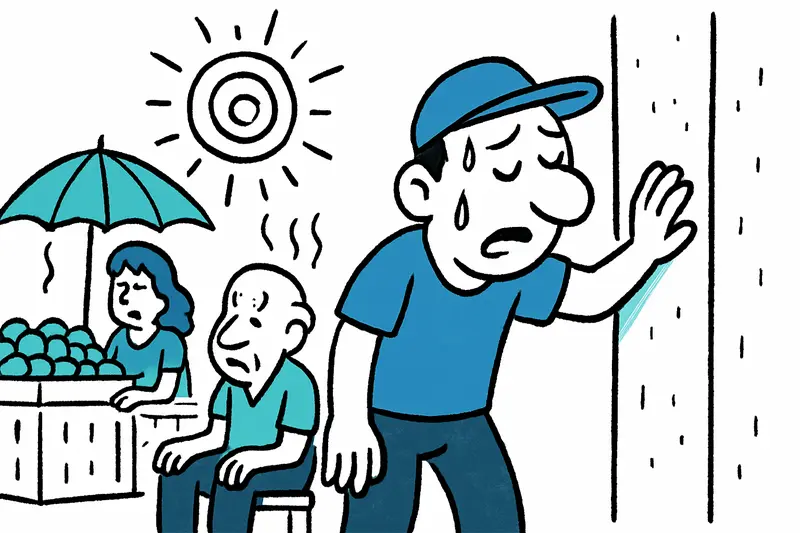
Late morning on the Passeig del Born: the cicadas howl, a coffee left by the window goes undrunk because the air is still. At the Mercat de l’Olivar female vendors seek shade among fruit crates, a delivery driver leans against a house, his brow moist, and older men sit earlier than usual on the Plaza de Cort to make use of the relatively cool morning air. In Colònia de Sant Jordi a lifeguard sticks his head out from the observation tower: the sea is warm, swimming provides little relief. Such scenes repeat themselves: heat here is not an abstract chart but a constant companion on daily routes.
Concrete approaches — immediate and medium-term
Short-term (immediately implementable): clear, practical instructions in warnings (e.g. "Do not work outdoors at midday," "Take shade breaks every 30–60 minutes," "Call elderly people twice daily"). Municipalities should adjust opening hours of cool public buildings and consider temporary drinking stations in busy places. Tourism businesses and landlords must actively inform guests: where is the nearest pharmacy, what behavior helps during tropical nights?
Medium-term (season to years): organized neighborhood networks for the vulnerable, more trees and shading in places like Llucmajor and Sa Pobla, promotion of building insulation and heat-resistant architecture instead of sole reliance on air conditioning. For outdoor workers, mandatory rest breaks and heat respite periods should be introduced. At the infrastructure level we need better measurements of perceived temperature in inhabited areas so that AEMET warnings become more local and useful, a point emphasized by Heatwave reaches 42 °C: How Mallorca should cope with the new temperature peak.
Why the warm seas also matter
Buoys show around 30 °C, in Port de Pollença it was 31.7 °C. Warm water does not cool as much as usual, cooling from swimming is reduced and nighttime cooling on the coast is diminished. For the island's economy this means: emergency services and beach operators must plan for higher strain, and visitors should abandon the idea that a jump into the sea automatically brings relief.
What politics and administration should do now
Concrete mandatory points: more detailed AEMET warnings in cooperation with the island government; a plan for temporary cooling centers in city centers and municipalities; mandatory heat protection rules for construction projects and an information campaign for tourists and employers. All this sounds technical, yet it determines hospital admissions, work absences and behavior on beaches and terraces.
Conclusion
The current situation is not a cosmetic weather problem. High humidity turns already high temperatures into a real health risk, especially for those without access to cool rooms. We need less alarm color and more practical measures: clear behavioral guidance, available cooling rooms, urban shading and better local data. Those who think about solutions now will prevent emergencies in August — and become less dependent in the long term on short-sighted comfort solutions like massive air conditioning.
Frequently asked questions
Why does Mallorca feel hotter than the thermometer suggests during a heatwave?
What practical steps can people take to stay safe during Mallorca’s heatwaves?
Where on Mallorca are the hottest spots during heatwaves and how is it measured?
How does warm sea water affect cooling during hot days in Mallorca?
What should tourists and property owners know about tropical nights in Mallorca?
What long-term measures could help Mallorca cope with heat beyond air conditioning?
Why do heat warnings need more than just temperature numbers on Mallorca?
How does Mallorca’s heat shape daily life, from markets to the coast?
Similar News

Rental Car Theft in El Arenal: What This Incident Reveals About Our Gaps
A teenager steals a running rental car in El Arenal, flees on foot, climbs over walls and is caught by the Guardia Civil...
Red Rope in Palma's Library: What Helps Against Selfie Tourism — and What's Missing
Palma's city library cordoned off an area with a red rope to keep selfie tourism away from reading and working activitie...
Fort San Carlos: Museum, Harbor Dispute — and a Conflict That Demands Answers
The military museum at Fort San Carlos sits right on Palma's harbor, with unexpectedly quiet rooms filled with cannons a...
Old Town Under Pressure: When a Doorway Becomes a Sleeping and Shower Place
For months a woman has been living with a parasol, a clothes rack and personal belongings next to the social welfare off...
When Shopping Weighs Heavier: Mallorca Demands a Tax Pause on Food and Fuel
Rising prices are putting pressure on households and agriculture. The Balearic Islands are calling for temporary tax rel...
More to explore
Discover more interesting content

Can Cap de Bou

Townhouse Lleo 72
