
Change at IB‑Salut: Why the e-prescription stalls on weekends — and what's missing now
Change at IB‑Salut: Why the e-prescription stalls on weekends — and what's missing now
IB‑Salut is switching the electronic prescription system. The change is causing delays at pharmacies. A critical look: What does this mean for patients in Mallorca and which solutions would help?
Change at IB‑Salut: Why the e-prescription stalls on weekends — and what's missing now
Key question: How trustworthy is an electronic prescription system if, during a migration, people are left waiting in line at the pharmacy?
Critical analysis
The electronic prescription system of IB‑Salut was migrated over the weekend. The result: pharmacies could not dispense medications as usual via the health card. Paper prescriptions remain available for emergencies. At first glance this sounds like routine system maintenance. At second glance it shows that digital infrastructure in practice is rarely a purely technical matter. When patients encounter locked digital doors, it raises the question whether the rollout or migration was tested and accompanied adequately. That is not an abstract risk; Six Months Too Late: When Waiting Becomes Fatal — What IB‑Salut Must Now Answer shows the real-world consequences when systems fail.
Technical migrations happen. What matters is how well those affected are informed and which fallback options are available. The message "patients will see their prescriptions in an app from Monday" is useful, but not enough if medication dispensing stalls over a weekend. An app only helps if it works reliably, users can find it, and pharmacies have parallel access.
What is missing from the public debate
The debate often focuses on functionality and security — both important. Meanwhile, ongoing pressure from Waiting lists in the Balearic Islands: Too many patients, too little OR time — and what must be done now increases the stakes. But too rarely does it address everyday scenarios: What happens on a Friday evening with an elderly person without a smartphone? Who helps a tourist whose ID is left in the holiday apartment? And: what burden is placed on pharmacists when two systems run in parallel or one suddenly fails? These practical questions hardly come up, although they determine whether a system becomes viable in daily life.
Everyday scene from Palma
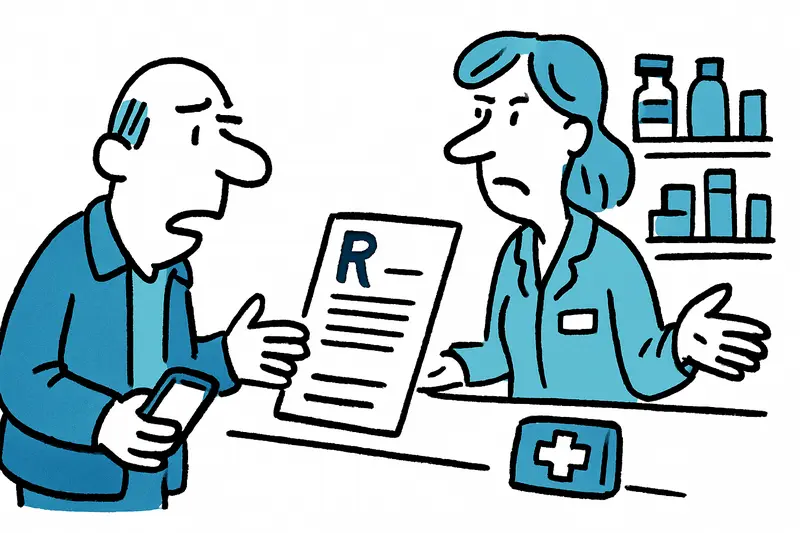
Imagine the pharmacy on Carrer de Sant Miquel: it's just before closing time, a delivery van beeps outside, two elderly customers and a tourist who gestures to explain his Spanish are waiting inside, and the pharmacist is on the phone at the counter. The register beeps, the door clacks in the square's wind, and paper prescriptions pile up on the counter. This picture is not an exception — these are the small moments in which digital systems must pass their everyday test.
Concrete solution approaches
1) Transparency before the migration: pharmacies, general practitioners and emergency services must receive clear procedures and contact channels at least 48 hours in advance. An SMS notification to registered patients with alternative instructions would be simple and effective.
2) Transition rules and redundancy: operate digital and paper-based processes in parallel for at least one week. Predefined exceptions for elderly people and tourists, for example a simplified identification procedure at the pharmacy.
3) Helpdesk and mobile support: an accessible technical support for pharmacies during the migration weekend, complemented by mobile teams that can provide short on-site assistance across the island. Local reports about the Hospital hotline crippled: Why appointment scheduling on the Balearic Islands is failing suggest communications channels can already be fragile.
4) Usability practice check: the announced app should be tested with users of different ages before a full rollout — not only in the lab but at real counters and in pharmacies across Mallorca.
Concise conclusion
Digitalisation is not an end in itself. In Mallorca, between market stalls and tourist buses, technology above all needs one thing: robustness in everyday life. If an electronic prescription system leaves people waiting at the pharmacy, the support for the migration has failed — not the technology itself. A smaller, well-communicated step with clear fallback options would have been better. Then "from Monday in the app" would become a solution that actually reaches people.
Frequently asked questions
Why did IB-Salut's e-prescription system stop working on weekends in Mallorca?
What should patients in Mallorca do if the electronic prescription is not available at the pharmacy?
Are paper prescriptions still valid in Mallorca when the digital system fails?
What went wrong with the e-prescription rollout in Mallorca pharmacies?
How should Mallorca prepare pharmacies for a digital prescription migration?
What problems does Mallorca's e-prescription system create for elderly patients?
What happens with e-prescriptions in Mallorca if a tourist needs medication?
Why does a weekend system change matter so much for pharmacies in Palma?
Similar News
Fewer Airlines, Fewer Destinations: What Palma's Winter Flight Schedule Means for Mallorca
Analysis shows: Winter at Son Sant Joan Airport will be quieter, with significantly fewer airlines and destinations. Who...
German tourist dies in Sa Calobra – a reality check for emergencies on Mallorca's beaches
A 40-year-old tourist died at the Torrent de Pareis. The emergency call, a doctor who happened to be present, a defibril...
Deadly Tractor Accident in Bunyola: What Needs to Be Done Now
In a work accident on an estate near Bunyola, a roughly 40-year-old man lost his life. His wife and a small child were o...
Head-first dive into the shallow part of Cala Fonoll: An accident and the unresolved question of responsibility
A young tourist dove into Cala Fonoll and was seriously injured. Key question: Why are clear warning signs missing at da...
Mistaken identity with fatal consequences: Brutal assault in S'Aranjassa — what's missing in the follow-up?
At S'Aranjassa a visitor to a finca was tied up, beaten and thrown out of a van. Three men have been arrested, including...
More to explore
Discover more interesting content

Can Cap de Bou

Townhouse Lleo 72
