
Half a Tonne of Cocaine at Playa d'en Bossa: Who Benefits — and What Must Change?
523 kilos of cocaine at Mallorca's most popular party beach: the find raises questions about security gaps, environmental risks and fragmented authorities. What is missing are faster forensics, coordinated coastal surveillance and witness protection.
Half a Tonne of Cocaine at Playa d'en Bossa: One Find, Many Open Questions
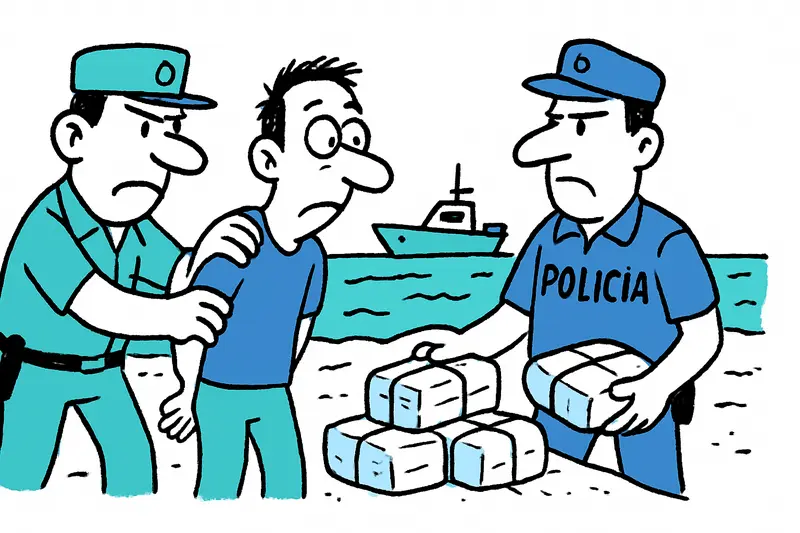
It was one of those early mornings on Playa d'en Bossa: seagulls screeched, the wind played with the parasols, and only a few early workers were already walking along the promenade. Then the police tape, floodlights, officers with rubber gloves wading in the shallow water — and bundles slowly appearing at the investigators' feet. Strollers and local fishermen had discovered an abandoned boat, and in its seams, by early estimates, around 523 kilos of cocaine were found, as reported in a local report on the 523 kilos at Playa d'en Bossa.
Key question: How can so much cargo end up on our beaches?
This is the question now troubling not only hoteliers and bartenders but above all the investigators. Was it a failed maneuver in rough seas, or a deliberate offloading by organized gangs? Probably both: criminal networks use wind, darkness and island topography to make cargo appear as drift. Fishermen's reports of engine noises at night and residents who heard unusual movement of the waves are clues that in practice are often more valuable than the initial press memo — but they are rarely highlighted in public debate.
The type of packaging — weatherproof, tied up, designed for quick transfer — points more to professional structures than to accidental deliveries. That makes the find not only a criminal case but a security and environmental problem with longer-term consequences.
What has so far been neglected
When the cameras leave, two things are often overlooked: the environmental hazards and the institutional fragmentation. Plastic coatings and possible chemical contamination pose a direct threat to the beach, marine life and fisheries. Who ensures that contaminated packages are properly neutralized and disposed of without causing further harm?
At the same time, the sense of security among the public suffers. An image of police on the sand, a cordoned-off section of the promenade — such things stay in the minds of tourists, the vendor who sets up parasols in the morning, or the young waiter worried about his evening shift.
Concrete weaknesses in Mallorca
The Balearic Islands favor such actions: many small coves, narrow access routes and dense ferry traffic that can mask unusual boat movements. Private boats and fishing vessels are often not permanently visible on radar or MarineTraffic AIS networks. At night, visual checks are limited. And: responsibilities are fragmented — Guardia Civil official website, Policía Local, port authorities, customs and forensic units operate in parallel, not always in sync.
For investigations, traces on the boat — fingerprints, fuel residues or GPS devices — are crucial. But such evidence weathers quickly. Every hour of delay reduces the chance of reconstructing the chain of origin.
Which measures would actually help?
"More police" alone is no panacea. What is needed is a bundle of short-, medium- and long-term steps that work together:
Short term: Targeted night-vision patrols along known offloading routes, prioritizing mobile drone teams over expensive helicopters, and above all a binding, rapid data exchange between Guardia Civil, Policía Local and the port authority. An anonymous hotline for fishermen and residents with guaranteed protection against reprisals could increase the number of helpful tips.
Medium term: Expansion of local forensic capacities to analyze samples faster, plus mandatory EU guidance on waste management for the safe neutralization and disposal of contaminated packages. Public transparency after the conclusion of initial investigations would build trust — not with PR, but with reliable facts.
Long term: Investment in coastal surveillance (radar, networked sensors), a regional information network between Balearic ports and the mainland, and strengthened international cooperation targeting the origin and financial routes of the networks. Monitoring unusual charter movements, fuel purchases and logistical deviations can also provide grounds for suspicion.
Opportunities in the crisis
Such a find is also an opportunity: authorities can show that they act — and do so transparently. Local initiatives, such as an anonymous informant network among fishermen, could help permanently. If environmental groups and security authorities develop joint protocols, it would be possible to prevent the island from facing a double crisis: criminal activity plus ecological damage.
In a small bar behind the promenade people speak quietly about the find. The woman who sets up the parasols in the morning shakes her head: "This doesn't belong here," she says. And that sums it up: it's not just about who landed the packages, but about how Mallorca can be better protected in the future — from the goods, from the networks behind them and from damage to nature and reputation.
The Guardia Civil has announced increased checks. Parts of Playa d'en Bossa remain cordoned off. Anyone who observed anything unusual should come forward — every small detail can now be crucial to the investigation.
Frequently asked questions
Why do drug packages sometimes wash up on Mallorca beaches?
What should I do if I find suspicious packages on a Mallorca beach?
Are Mallorca beaches safe after a police drug seizure?
How do investigators trace where a cocaine shipment found in Mallorca came from?
What environmental risks can drug packages pose on Mallorca’s coast?
Why is Playa d'en Bossa a sensitive place for a major police find?
What can residents and fishermen in Mallorca report to help police?
How can Mallorca improve coastal surveillance against smuggling?
Similar News

Release after bloody attack in Palma: Why the court's decision raises questions
An 18-year-old who allegedly inflicted a serious neck injury on a man at Plaza Gomila using a wristwatch wrapped around ...
Kidnappings in Inca: Three young men forced into car trunks and abused in the forest – a reality check
In Inca, three 18-year-old men were forced into car trunks by masked assailants at the Plaça des Bestiar, taken to a for...
Spreading Massification: The Brake That Still Has Much Work to Do
Marga Prohens announces limits on volume tourism. The measures sound harsh — but are they enough to save everyday life, ...
Through the Keyhole onto the Party Yacht: How Daniela Katzenberger Is Planning Her 40th on Mallorca
Daniela Katzenberger turns 40 and wants to celebrate it on the island — likely with a boat, cake and her mother. A relax...
By Boat Instead of the Road: Palma's Water Bus — a Reality Check
The 'Bus Nàutic' launches in two stages — but questions remain over interim operations, fares and environmental requirem...
More to explore
Discover more interesting content

Can Cap de Bou

Townhouse Lleo 72
